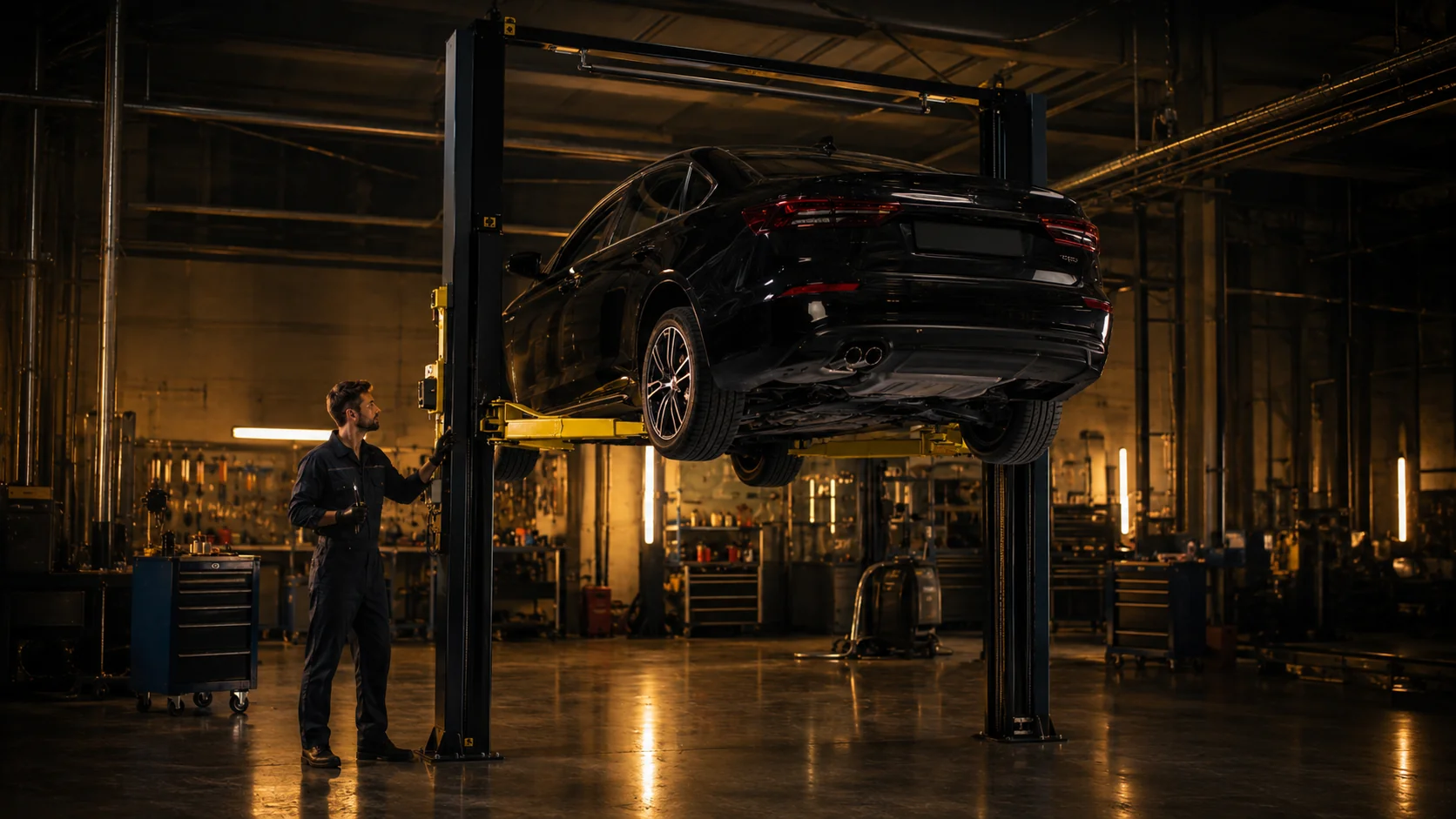







A lift is to a workshop what an operating table is to a surgeon. Without it, most repairs would be impossible, uncomfortable, or simply dangerous. We explain how car lifts work, how they differ, and why their quality genuinely matters for safety.
The operating principle
Most workshop lifts work hydraulically or electromechanically. In a hydraulic system, a cylinder forces oil under pressure, allowing a multi-ton car to be raised effortlessly. In the electromechanical version, motors drive lead screws or spindles.
Force from leverage and pressure
Thanks to the laws of hydraulics, a small force applied to the system turns into enormous lifting capacity — the same principle as in a hydraulic press.
Types of lifts
In workshops you’ll most often find three types:
- Two-post — versatile, gives full access to the underbody and wheels
- Scissor — low and compact, great for alignment and tyre service
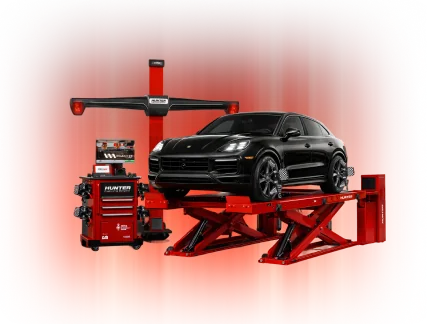
- Four-post — very stable, ideal for diagnostics and wheel alignment
Choosing the right lift for the job
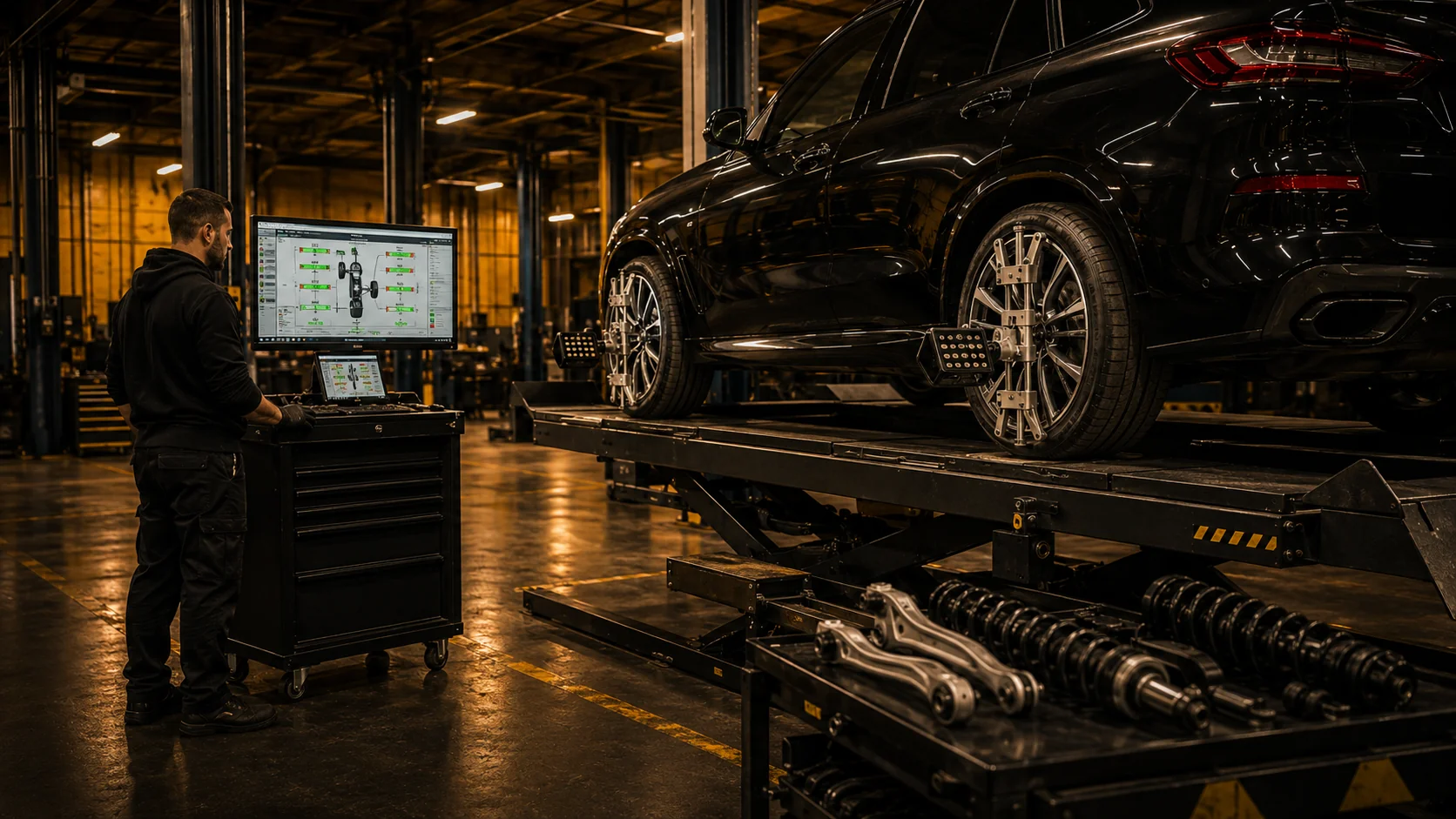
Wheel alignment is best done on a flat or four-post lift, and replacing suspension parts — on a two-post.
Safety first
A good lift is more than capacity — it’s safety systems:
- mechanical ratchet locks at every height
- overload protection valves in the hydraulic system
- regular technical inspections and certifications (UDT)
- correct positioning of the car’s support points
Support points aren’t a detail
Wrongly positioned lift arms can damage the sills or the car’s floor. That’s why their position is always matched to the specific model.
Why this matters for the customer
A working, certified lift guarantees your car is raised safely and the mechanic has full access to the underbody. That means a more accurate diagnosis and a repair without the risk of damage. Good equipment isn’t a luxury — it’s the foundation of honest work.

Need a professional underbody check?
On a professional lift we’ll check the car thoroughly — from suspension to exhaust.