




The most common cause of DSG "kicking" when pulling away and in traffic is worn clutches (especially in dry-clutch gearboxes like the DQ200), degraded or overheated oil, a mechatronic unit fault, or a missing adaptation after a battery disconnect. Each of these causes produces a slightly different pattern of symptoms, so "it jerks" alone isn't enough for a diagnosis — what matters is the speed, the gear, and the conditions it happens under. In this article we show how to tell these causes apart, why some DSGs jerk more than others, and when putting off a visit really does cost more.
What It Actually Means When a DSG "Kicks"
"Kicking" is the colloquial term for a jerk, vibration, or momentary hesitation while transferring power — most noticeable when pulling away from a stop, driving slowly in traffic, or gently adding throttle at low speed. Unlike a classic automatic with a torque converter, a DSG uses physical clutches (one or two, depending on the type) that need to engage and disengage smoothly with every gear change. When something in that process isn't quite right, the result is a noticeable jerk instead of a smooth shift.
This design difference is exactly why the problem exists at all. A classic torque-converter automatic transfers power through oil, so it naturally "forgives" imperfections and rarely jerks even with significant wear. A DSG relies on physical clutches precisely because they're more efficient and shift faster — but in exchange they need precise control and regular maintenance, or that advantage turns into a drawback.
The Most Common Causes of DSG Jerking
Worn Clutches
The clutches in a DSG wear the same way as in a manual gearbox, just controlled electronically instead of by a pedal. A worn clutch disc loses its ability to transfer torque smoothly, which shows up as jerking when pulling away — especially when the car is stuck in traffic and the gearbox has to repeatedly engage and disengage the clutch over short distances.
Degraded or Overheated Oil
Oil in a DSG lubricates the mechanism, and in wet-clutch gearboxes it also cools the clutches themselves. Old oil loses its lubricating and cooling properties, so the clutches operate under worse conditions and wear out faster — and at the same time, oil overheating on its own (say, after a long drive in traffic on a hot day) can trigger temporary jerking that goes away once the system cools down. Changing the oil regularly per the manufacturer's recommendations is one of the cheaper ways to slow clutch wear.
A Mechatronic Unit Fault
The mechatronic unit is the electro-hydraulic control module that decides when and how hard to clamp each clutch. Worn valves (solenoids) or damaged electronics inside the module can send imprecise signals, which shows up as jerking unrelated to the condition of the clutches themselves — sometimes even right after the clutch has been replaced. This is usually the most expensive of the possible causes, so it's worth ruling out or confirming with a computer diagnostic before deciding to replace the clutches on your own.
Missing Adaptation After a Battery Disconnect
The DSG control unit learns the individual clutch engagement points for your specific car — this is called adaptation. After a battery disconnect (say, for a battery replacement or electrical repair), those learned values can get reset, and the gearbox spends a while "relearning" them, which shows up as temporary, irregular jerking. It usually clears up within a few dozen to a few hundred kilometers of normal driving, but if it doesn't, it's worth checking whether the adaptation actually completed correctly.
The Gearbox "Learns" Your Driving Style
It's normal for a DSG to feel a bit less smooth for a while after a long break from driving or after a new battery is connected. The problem is when the jerking doesn't clear up after a few dozen kilometers, or gets worse over time.
Dry or Wet Clutch — Why Some DSGs Jerk More Than Others
Not all DSGs are equal in this respect. Dry-clutch gearboxes (fitted mainly to less powerful engines) don't have oil directly cooling the clutches, which makes them more sensitive to overheating in traffic and city driving — these are the units that most often end up in the workshop for jerking at low speed. Wet-clutch gearboxes (fitted mainly to more powerful engines) have clutches submerged in oil, which dissipates heat better and usually means calmer behavior in stop-and-go traffic, though it doesn't eliminate wear entirely.
- Dry clutch — more prone to jerking in traffic and with frequent stop-starts; the clutches wear faster under aggressive city driving.
- Wet clutch — handles traffic driving better thanks to oil cooling, but needs regular oil changes for that cooling to keep working effectively.
Is It Really the DSG? Symptoms That Are Easy to Mix Up
Not every jerk you feel when pulling away comes from the gearbox. Before assuming it's the DSG, it's worth ruling out other, cheaper-to-fix causes.
- Worn engine/transmission mounts — loose drivetrain mounting can produce a noticeable jerk when pulling away, deceptively similar to a clutch problem.
- Rough engine running — ignition or intake problems can show up as jerking that has nothing to do with the gearbox; we covered this in why the engine stalls and runs rough at idle.
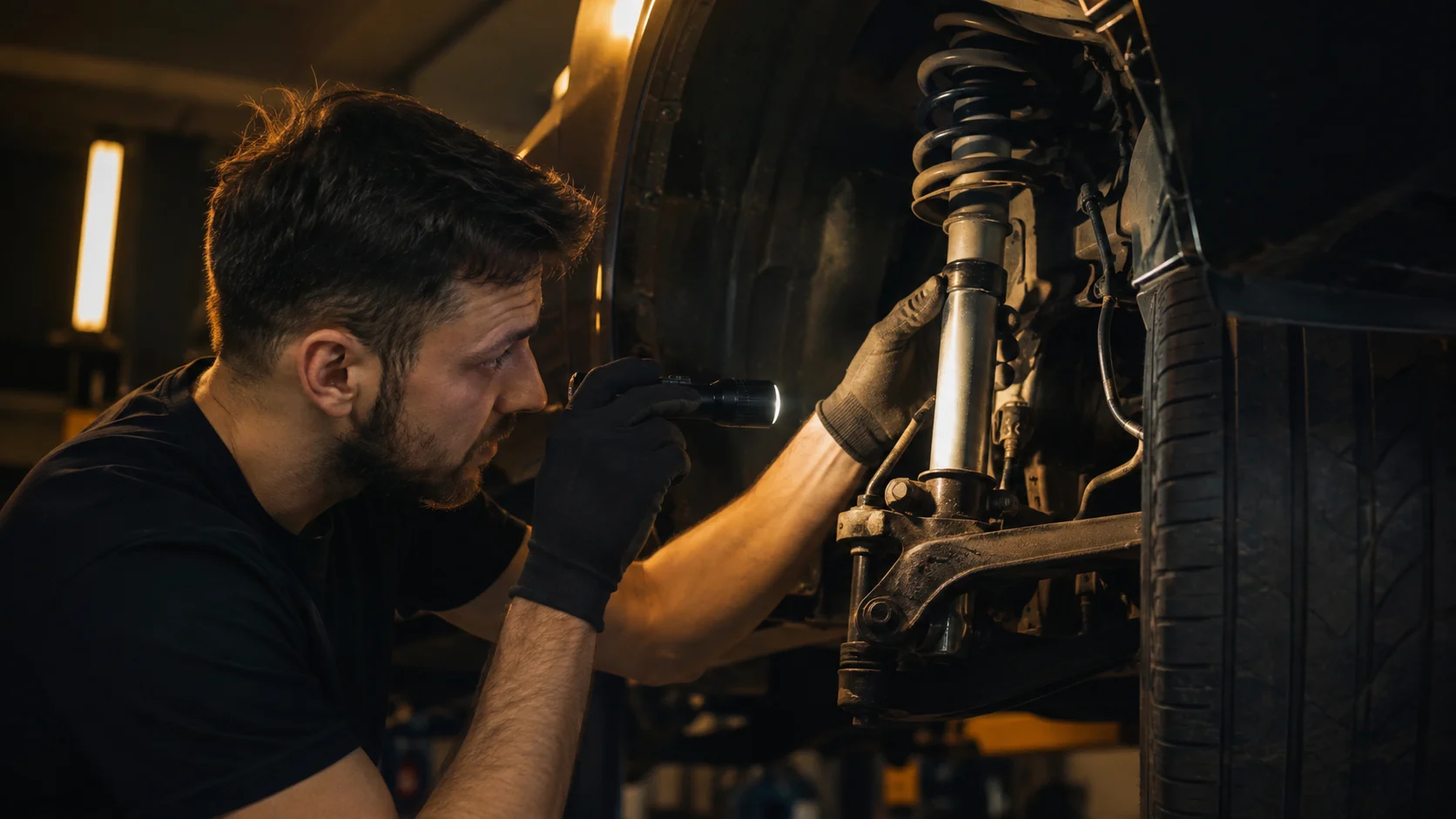
- Worn suspension or driveline components — play in the driveshafts or CV joints can sometimes feel like a jerk under acceleration, even when the gearbox itself is working fine.
When Jerking Is a Sign Not to Wait
An occasional light jerk now and then is one thing; regular, worsening kicking is another. The longer you drive on worn clutches, the higher the risk that the mechatronic unit starts wearing along with them — and repairing the whole module is usually much more expensive than replacing just the clutches.
- The jerking gets worse week by week instead of staying at a steady level.
- There's a noticeable smell of burnt clutch, especially after driving in traffic.
- A warning message about a gearbox fault or reduced power appears on the dashboard.
- The jerking is accompanied by a delayed response when you press the accelerator.
A Gearbox Warning Is Not the Time to Wait
If a gearbox warning appears on the dashboard, limit driving to the essential minimum and book a diagnostic as soon as possible. Continuing to drive with an active fault increases the risk that a minor issue turns into an expensive mechatronic unit repair.
How to Reduce the Risk of DSG Jerking
You can't eliminate clutch wear entirely, but a few habits genuinely extend their life, especially in dry-clutch gearboxes, which are the ones that most often end up in the workshop for jerking.
- Avoid "riding" the clutch in traffic — repeatedly balancing on a half-engaged clutch in stop-and-go traffic heats it up more than smooth starting and stopping.
- Don't keep your foot on the brake while pressing the throttle — this loads the clutch the same way as riding a half-released clutch pedal in a manual gearbox.
- Change the oil per the manufacturer's schedule — regular changes are one of the cheaper ways to keep the clutches in better thermal condition for longer.
- Don't ignore the first isolated jerks — clutch wear caught early costs less than the repair you'll need after the problem drags on for months.
What DSG Jerking Diagnostics Looks Like at the Workshop
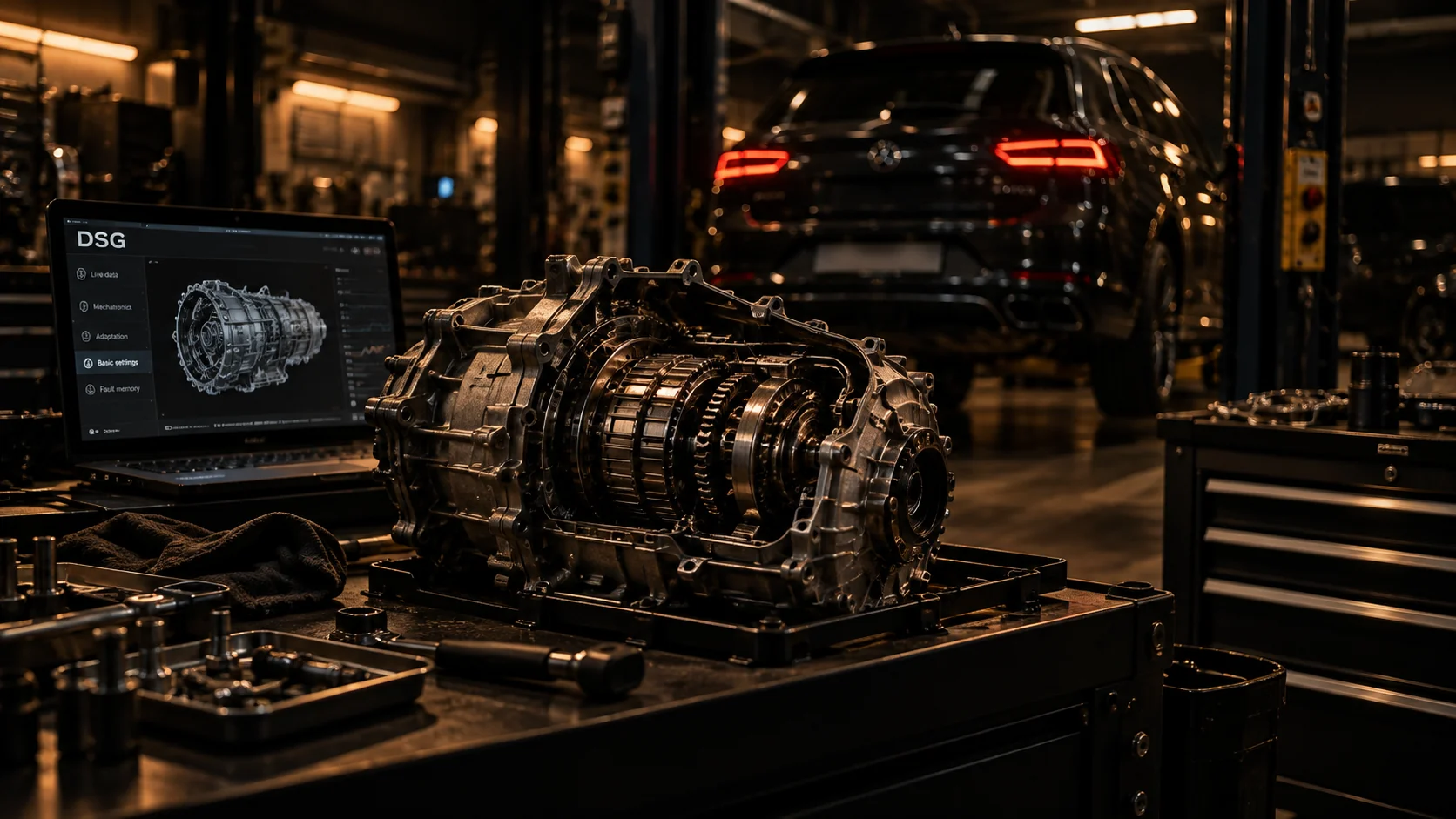
Before anyone proposes replacing the clutches, it's worth starting with a computer diagnostic, which reads fault codes stored in the gearbox control unit and shows clutch operating parameters in real time. This makes it possible to tell a mechanical fault (worn clutch) apart from an electronic one (mechatronic unit) before the gearbox is ever opened up, and it also checks whether the cause is something simpler — like a pending adaptation or the state of the oil.
Does DSG jerking always mean the clutches need replacing?
No. The cause can also be degraded oil, a mechatronic unit fault, or an adaptation that wasn't completed after a battery disconnect. A computer diagnostic identifies what actually needs repair before you commit to replacing the clutches.
Why does the DSG jerk mainly in traffic and not on the open road?
In traffic, the gearbox repeatedly engages and disengages the clutches over short distances, which puts more thermal strain on them — especially in dry-clutch gearboxes. On the open road, where there are fewer gear changes, the symptoms are often less noticeable.
Is jerking after a battery replacement normal?
Brief, irregular jerking after a battery disconnect is normal — the gearbox is relearning its clutch engagement points. It should clear up within a few dozen to a few hundred kilometers; if it doesn't, it's worth getting checked.
How is clutch jerking different from a mechatronic fault?
A worn clutch usually produces a repeatable jerk when pulling away, while a mechatronic fault tends to be less predictable and can occur regardless of the clutches' condition. Telling the two apart requires a computer diagnostic.
Is it safe to keep driving with a jerking DSG?
Occasional mild jerks usually don't pose a direct safety risk, but worsening symptoms increase the risk of a more serious and costlier failure. If a gearbox error message appears on the dashboard, it's worth limiting driving and booking a diagnostic quickly.

DSG Jerking? Let's Check It Before It Gets Worse
A computer diagnostic will show whether the problem is the clutches, the oil, or the mechatronic unit — no guesswork.