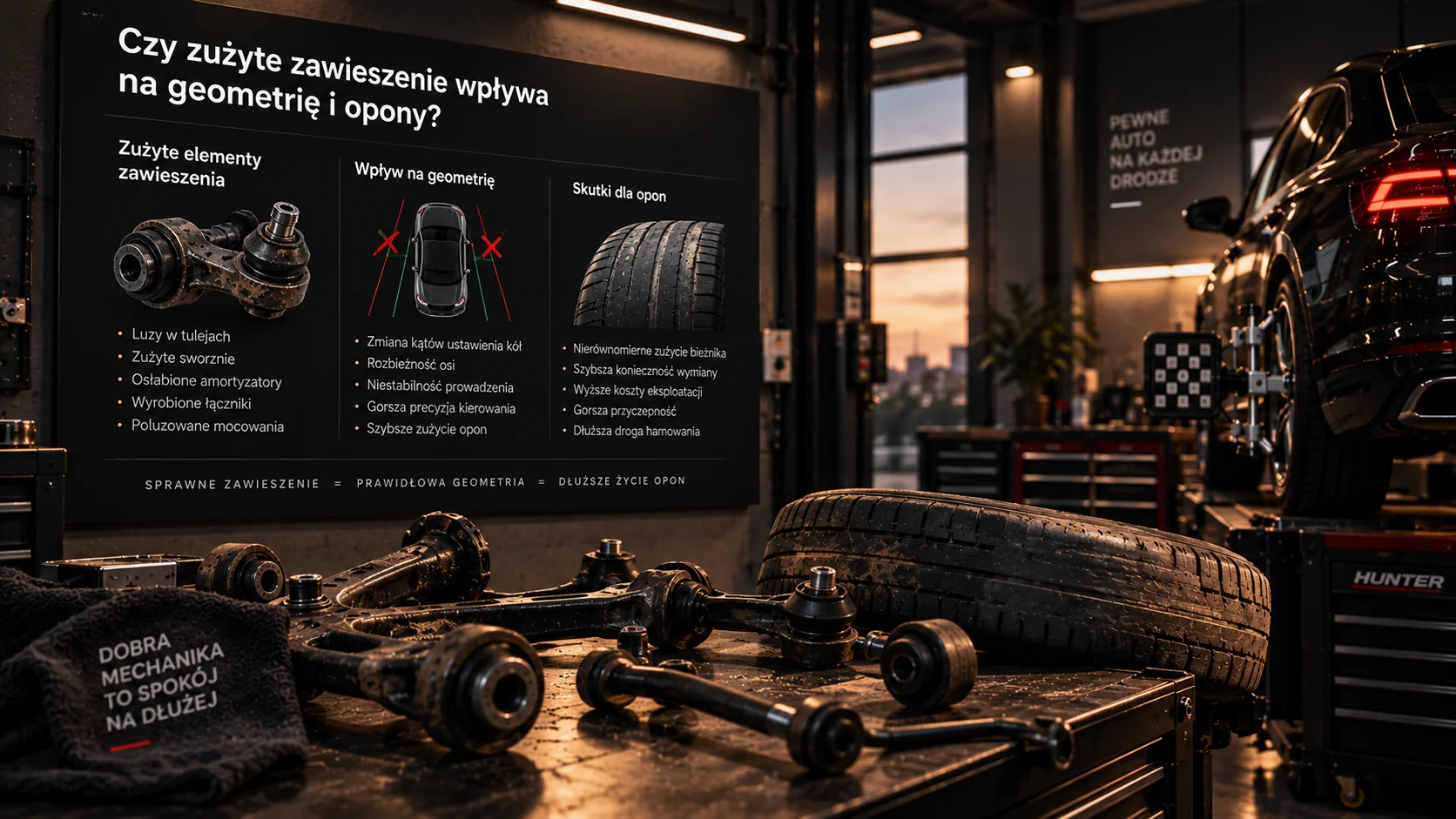






Yes — a worn suspension directly throws off wheel alignment, and through it ruins your tyres. Play in control arm bushings, tie rod ends or ball joints means the wheel can’t hold its set angles: the measurement may look fine at a standstill, but when driving, braking and over bumps the toe and camber “drift”. The result is unevenly worn tread, the car pulling to one side and vague handling. That’s why the workshop order is always the same: first diagnose and repair the suspension, only then do the alignment.
Why does suspension play throw off the alignment?
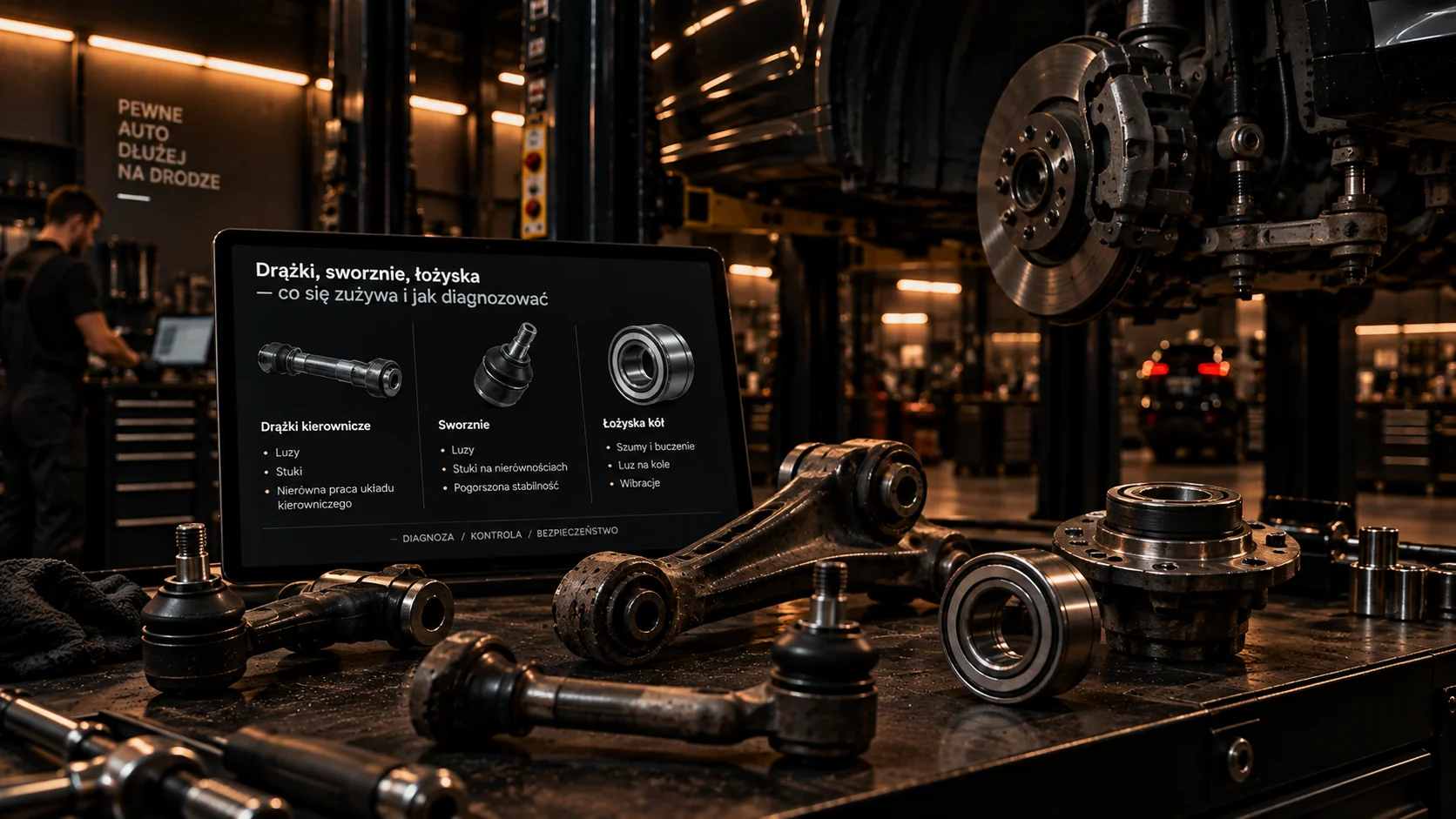
Wheel alignment is simply the set of angles at which a wheel rolls along the road. Those angles are defined by the suspension and steering components: control arms and their bushings, ball joints, tie rods and tie rod ends, wheel bearings and strut assemblies. As long as these parts are rigid, the wheel is “locked” to the set values. Once play appears — even 1–2 mm — the wheel gains freedom of movement it shouldn’t have.
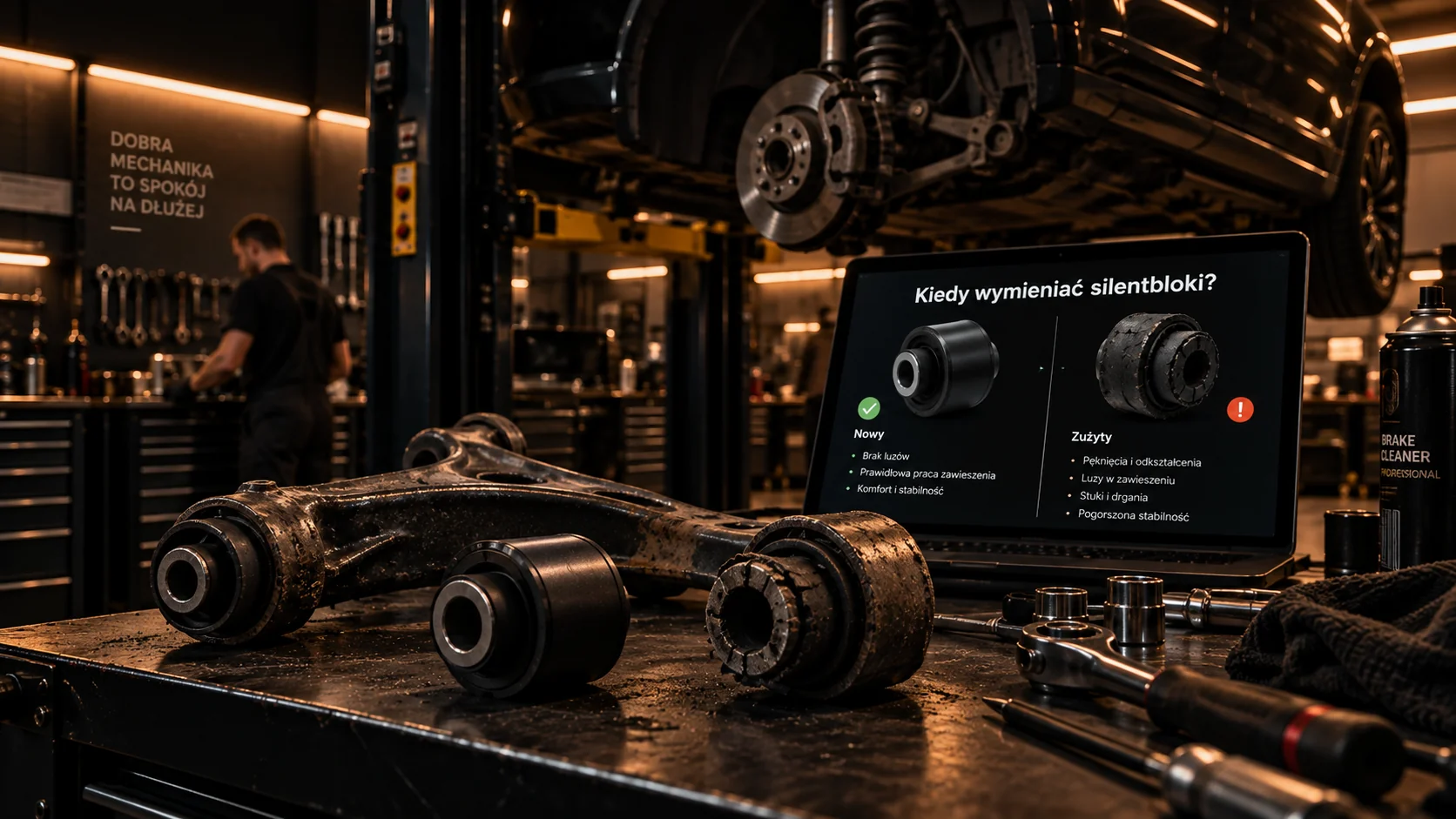
- Worn control arm bushings — under braking the wheel moves back, under acceleration it moves forward. Toe and caster change as a result.
- Play in tie rods and tie rod ends — toe changes with every steering input and every bump. It’s the shortest route to “feathered” or saw-tooth tread wear.
- A worn ball joint — the wheel can tilt slightly, which changes camber, so the tyre runs on one edge.
- Tired springs and a sagging suspension — the car sits lower than from the factory, so camber and toe fall outside tolerance even without any play.
- Weak shock absorbers — they don’t change the angles themselves, but the wheel loses contact with the road and bounces, leaving characteristic “scallops” on the tread.
A static measurement doesn’t show everything
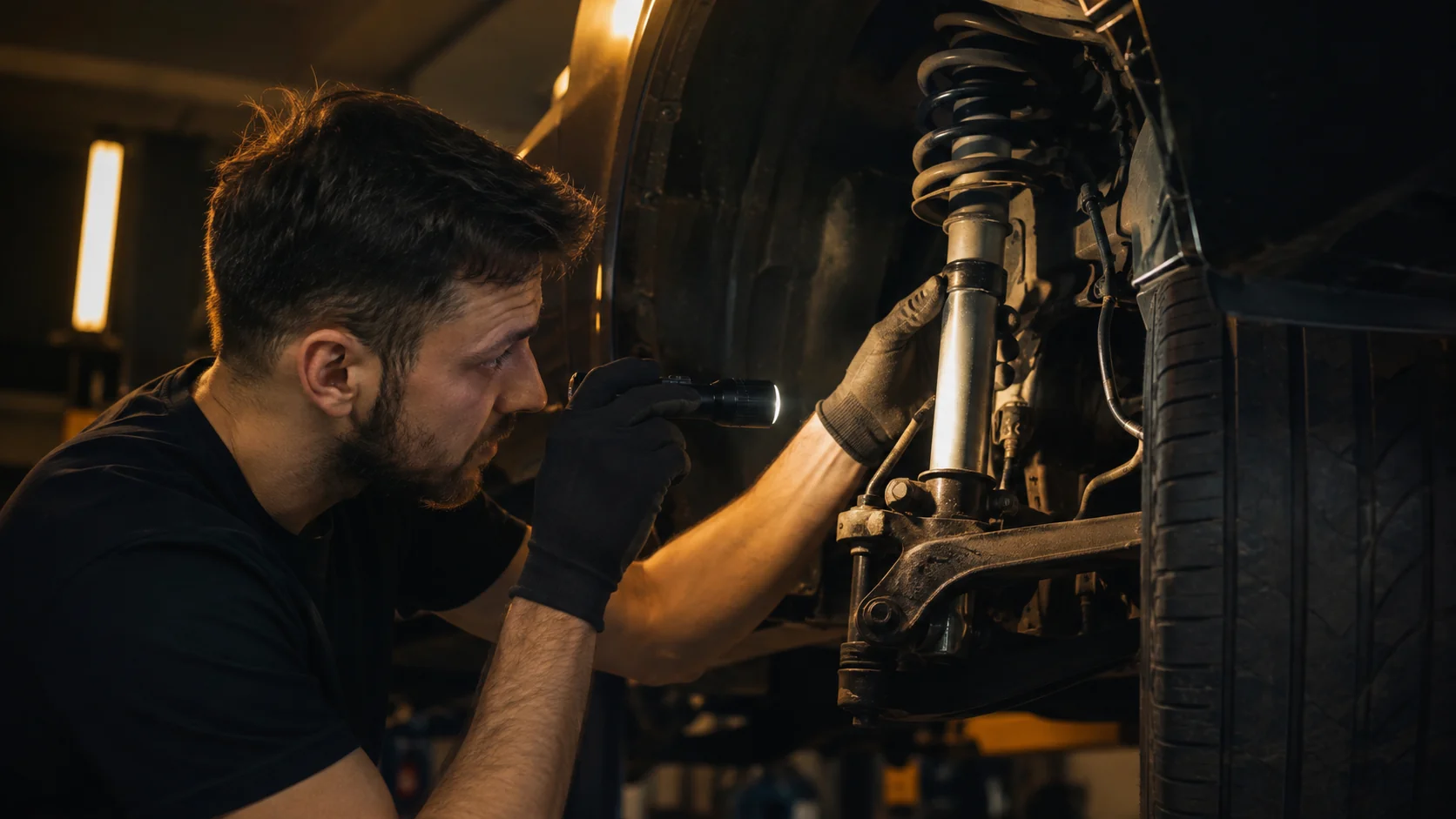
An alignment machine measures the car while it stands on the bay. Suspension play only shows up under load — when braking, cornering or hitting a pothole. That’s why before measuring we always check the suspension on the lift: with a play detector, a pry bar and by hand, part by part.
How does a worn suspension show up on the tyres?
A tyre is the best “recorder” of what’s happening to the suspension. From the tread wear pattern an experienced mechanic can often name the cause before even lifting the car.
- One edge worn (inner or outer) — usually incorrect toe or camber, often caused by play in a control arm, a ball joint or a sagging spring.
- Saw-tooth tread wear (blocks worn in steps, you can feel it by hand) — a typical sign of play in the steering and incorrect toe.
- Patches and dips at irregular intervals — a sign of weak shock absorbers: the wheel bounces and scrubs in one spot.
- Fast wear on only one axle or one wheel — points to a specific part on that side, e.g. a worn bushing or tie rod end.
If you want to pin down more precisely which suspension part is on its way out, we’ve collected the symptoms in a separate article: signs of a worn suspension — when to see a mechanic. We also cover what wears out most often in the steering in tie rods, ball joints, bearings — what wears out and how to diagnose it.
Is it worth doing an alignment when the suspension is worn?
In short: no. An alignment set on a suspension with play only lasts until the first pothole. What’s more, with significant play it can’t even be set properly on the machine — the values “jump” with every movement of the wheel. You pay for a service whose effect disappears after a few hundred kilometres, while the tyres keep wearing out.
An honest workshop rule
If we find play before measuring that makes a reliable alignment impossible, we tell you straight away and show you the problem on the lift. We don’t “force” an alignment on worn-out parts — that would be money down the drain.
In what order to fix it: suspension, alignment, tyres
- Suspension diagnosis on the lift — checking bushings, ball joints, tie rods and ends, bearings, shock absorbers and springs.
- Replacing worn parts — as part of our mechanical service or yourself in our Self-Service Zone, if you have the experience.
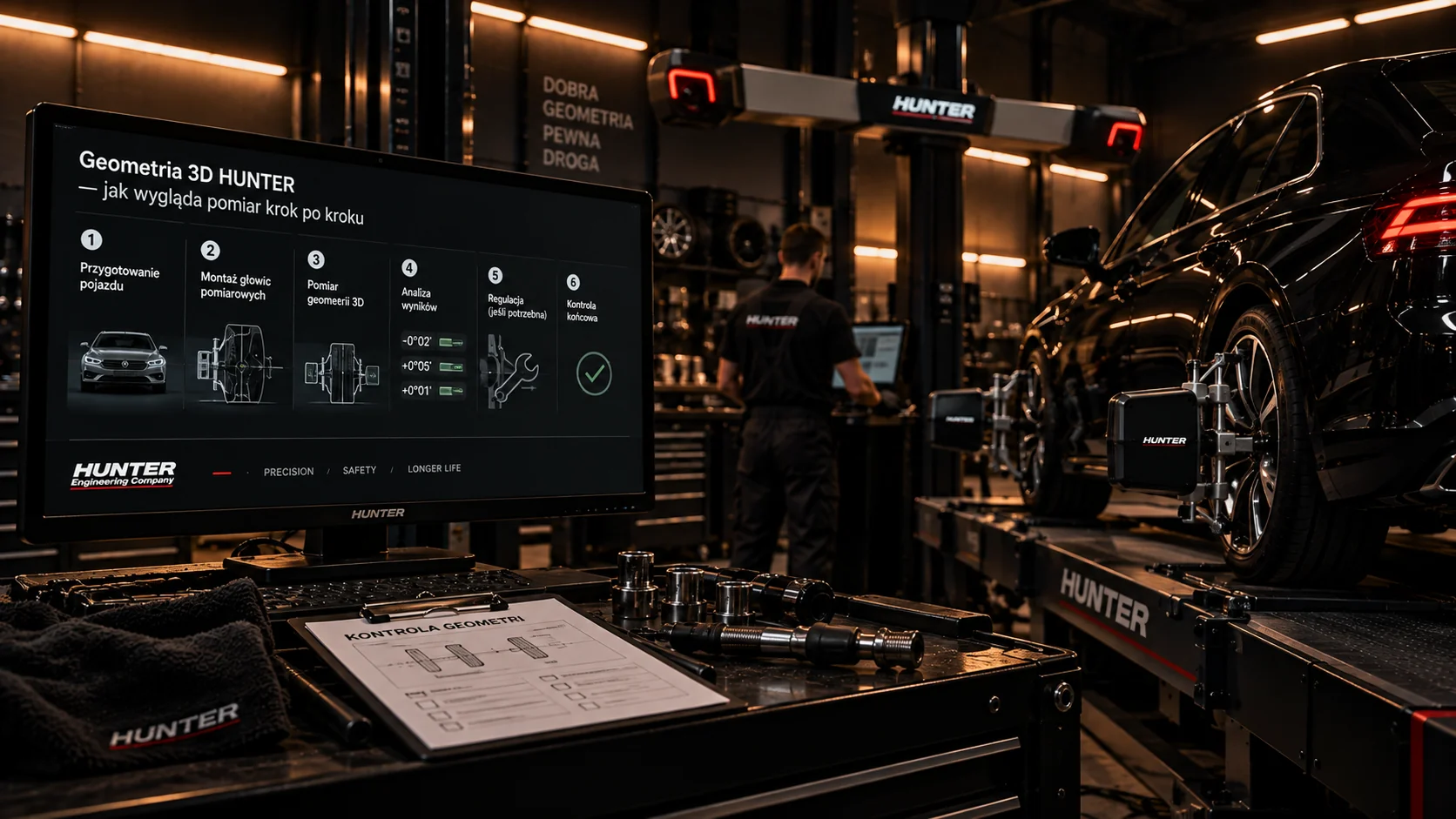
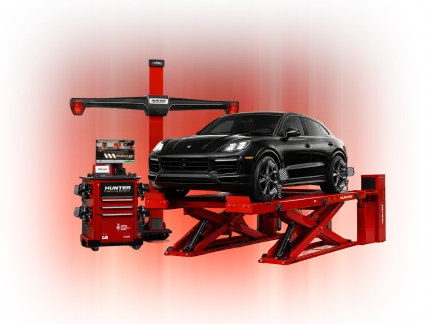
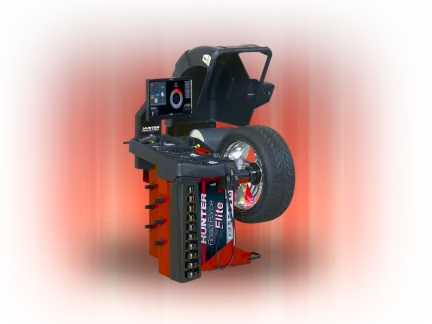
- 3D alignment on HUNTER equipment — always after replacing suspension or steering parts, because every such repair changes the angles. Details: HUNTER wheel alignment.
- Tyre assessment — if the tread is heavily saw-toothed or worn down to the indicator on one side, the tyre won’t “even out” on its own. Sometimes it needs replacing, sometimes swapping wheels between axles is enough.
This is what one of the real cases looked like at our workshop at Grabiszyńska 241 in Wrocław — we described the before-and-after measurements in the article case study: alignment after a suspension rebuild — HUNTER before and after.

Tyres wearing unevenly?
We’ll check the suspension on the lift, tell you plainly what needs replacing, and then set the alignment on HUNTER — all in one visit.
What does neglecting the suspension cost?
Replacing a tie rod end or a control arm bushing is usually cheap compared with a set of tyres. The problem is that a worn suspension can “eat” a new tyre in a single season. On top of that comes poorer stability under braking, longer stopping distances in the wet and higher fuel consumption from increased rolling resistance. The longer you put it off, the more parts work under overload — play in one joint speeds up wear in the neighbouring ones.
Can a worn suspension throw off the wheel alignment?
Yes. Play in bushings, ball joints and tie rod ends means the wheel can’t hold its set angles — toe and camber change while driving, braking and over bumps.
Can you do an alignment when there’s play in the suspension?
There’s no point. With play, the alignment won’t hold its settings, and with significant play it can’t even be set reliably. Worn parts need replacing first, then the measurement.
How can you tell from the tyres that the problem is in the suspension?
Typical signs are one worn edge of the tread, saw-tooth wear on the tread blocks, and patches and dips at irregular intervals. Each of these patterns points to a different part.
Do you need an alignment after replacing a control arm or tie rod?
Yes. Every replacement of a suspension or steering part changes the wheel angles, so an alignment after such a repair is practically mandatory.
Will an unevenly worn tyre even out after the repair?
No. Suspension repair and alignment stop further wear, but they don’t undo what has already happened. With heavy saw-tooth wear or wear down to the indicator, the tyre needs replacing.