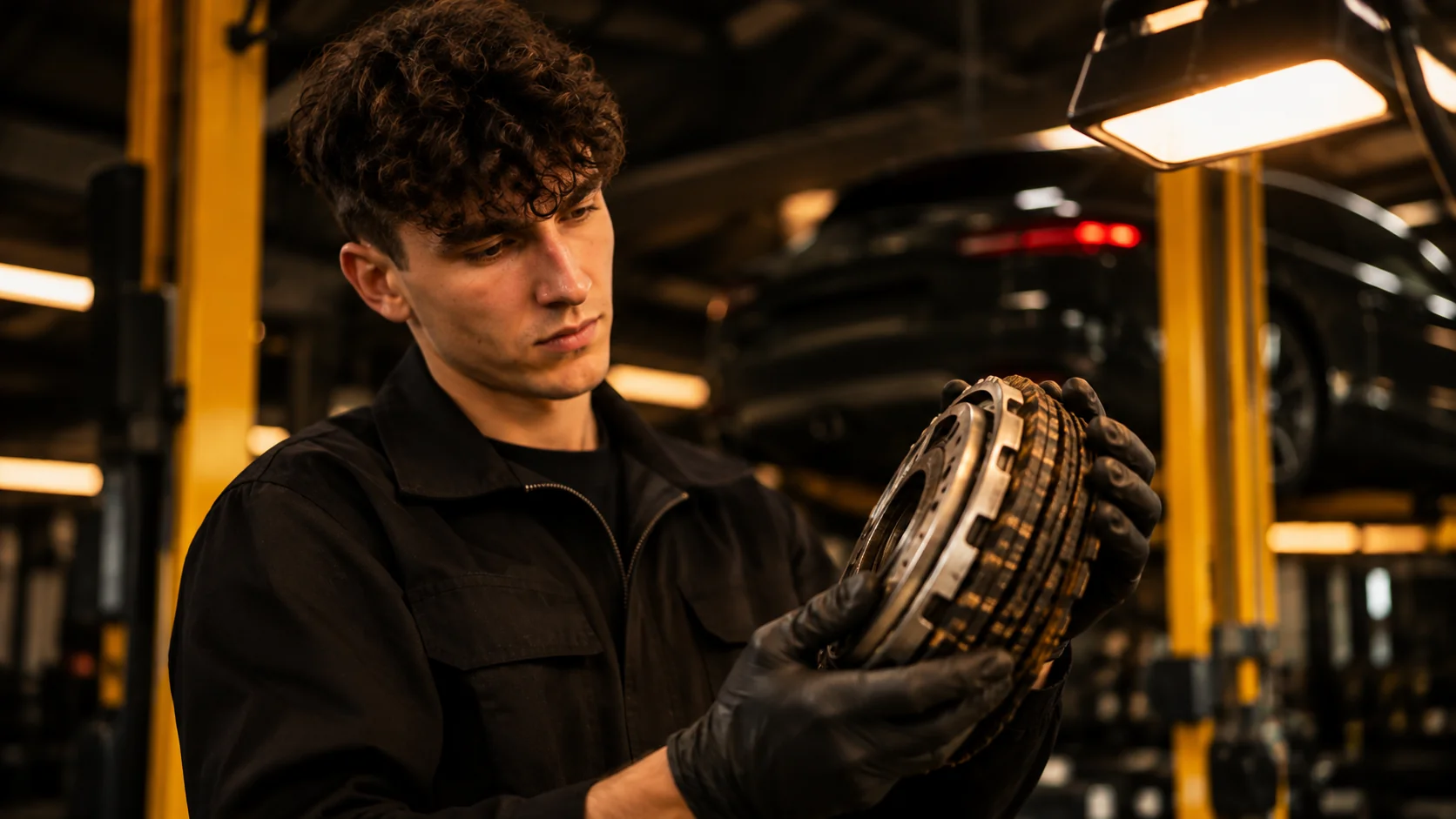





A DSG clutch has no single, predetermined replacement mileage. As a rough guide, dry clutches (for example in the DQ200) usually last about 100,000–150,000 km, while wet ones (DQ250, DQ381) often last much longer, even 200,000 km or more. That is only a reference point from practice, not a promise. A car driven in the city can need a clutch far sooner than the same car used mainly on long routes. In this article we show what clutch life really depends on and what you can do to extend it.
Why there is no single mileage figure
A clutch does not wear from kilometres as such, but from the moments when its plates slip. That happens when pulling away, manoeuvring and creeping in traffic. During calm motorway driving the clutch is simply closed and hardly wears at all. So 100,000 km driven around Wrocław at rush hour is a completely different load from 100,000 km on the Wrocław–Warsaw route.
Add to that design differences, engine power, vehicle weight and whether the previous owner looked after the gearbox. On a used car the odometer alone says little about the clutch. Diagnostics will tell you more.
Dry and wet clutches: what to expect
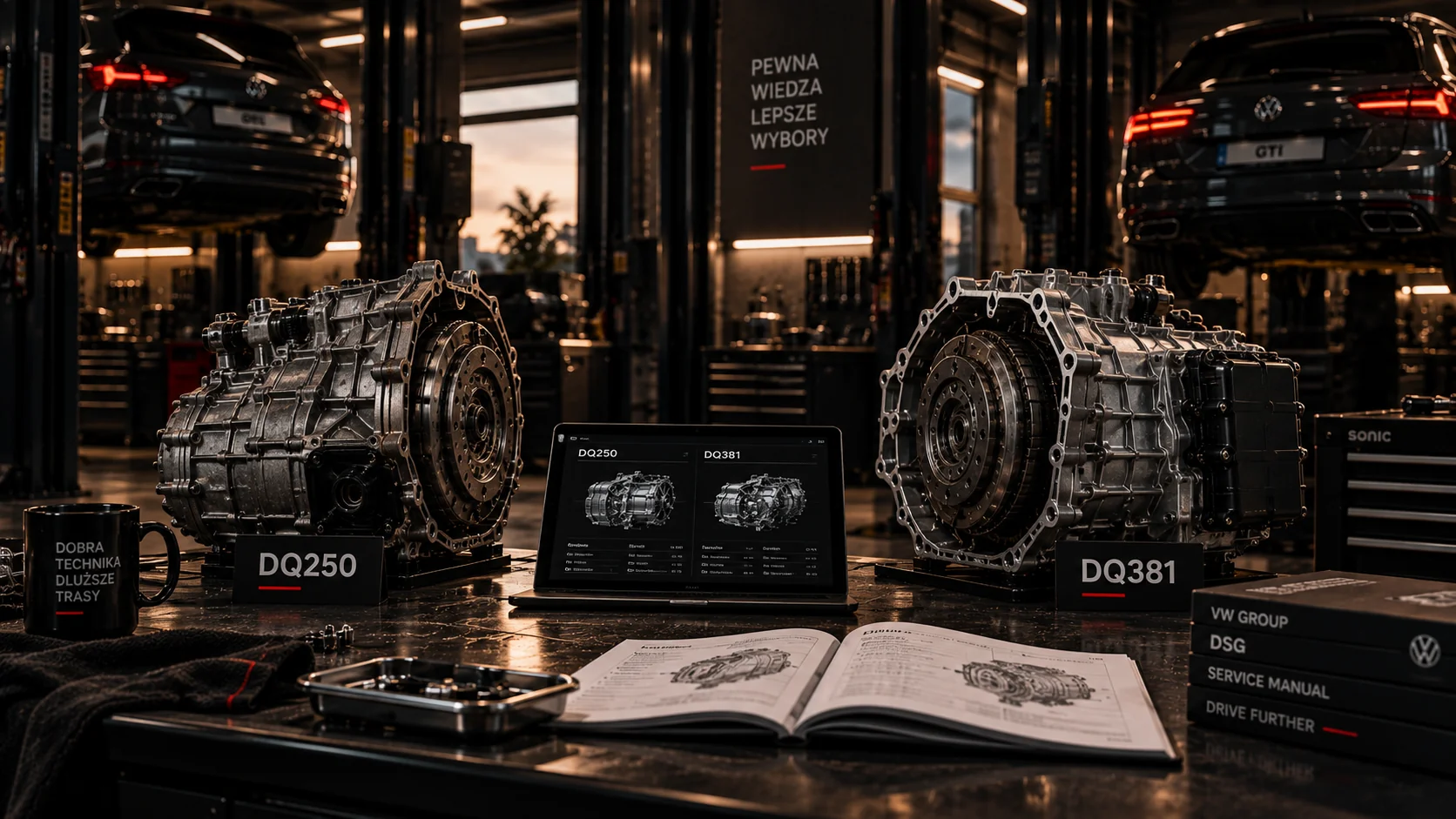
DSG is a dual-clutch gearbox, but not every DSG has the same clutch. The type determines how well heat is removed, and heat is the plates' main enemy. We described the differences between popular gearboxes in more detail in our comparison of the DQ250 and DQ381.
Dry clutch (DQ200)
The seven-speed DQ200 is fitted to less powerful engines. Its clutch does not run in oil, so it copes worse with the heat from frequent pulling away. In the city wear can be noticeably faster and the first symptoms may appear before 100,000 km, while with calm highway driving the clutch can last beyond 150,000 km.
Wet clutch (DQ250, DQ381, DQ500)
In more powerful cars the plates sit in oil that cools and lubricates them. As a result the clutch copes better with traffic and high torque, and mileages of 200,000 km and more are nothing unusual. There is one condition: the oil has to be in good shape. A wet clutch with neglected oil loses its main advantage.
These figures are a guide, not a replacement date
The manufacturer does not specify a mileage at which the clutch must be replaced. We replace it when its condition and measurements call for it, not because the odometer passed a round number.
What shortens DSG clutch life the most
- Traffic jams and short trips — constant pulling away means the most slipping and the most heat.
- Creeping on the brake — rolling slowly with the brake slightly released holds the clutch on the edge of engagement.
- Holding the car on a hill with the throttle — the clutch then acts as a brake and heats up quickly.
- Aggressive starts and launch control — high torque at pull-away is the biggest single blow to the plates.
- Chip tuning without adapting the gearbox — the clutch's torque margin is calculated for the standard engine.
- Towing and heavy loads — pulling away with a trailer means extra work and extra heat.
- Neglected oil in a wet gearbox — old oil cools the plates less well and speeds up their wear.
How to extend clutch life
Your biggest influence is on everyday habits. A few simple changes cost nothing and genuinely reduce the moments when the clutch slips.
- In traffic leave a bigger gap and pull away decisively instead of rolling forward metre by metre.
- During a longer stop hold the brake firmly or select N so the clutch is fully disengaged.
- On a hill use the brake or the Auto Hold function, not the throttle.
- Park smoothly and avoid long manoeuvres on creep alone uphill.
- Keep up with gearbox oil servicing and do not put off a visit when juddering appears.
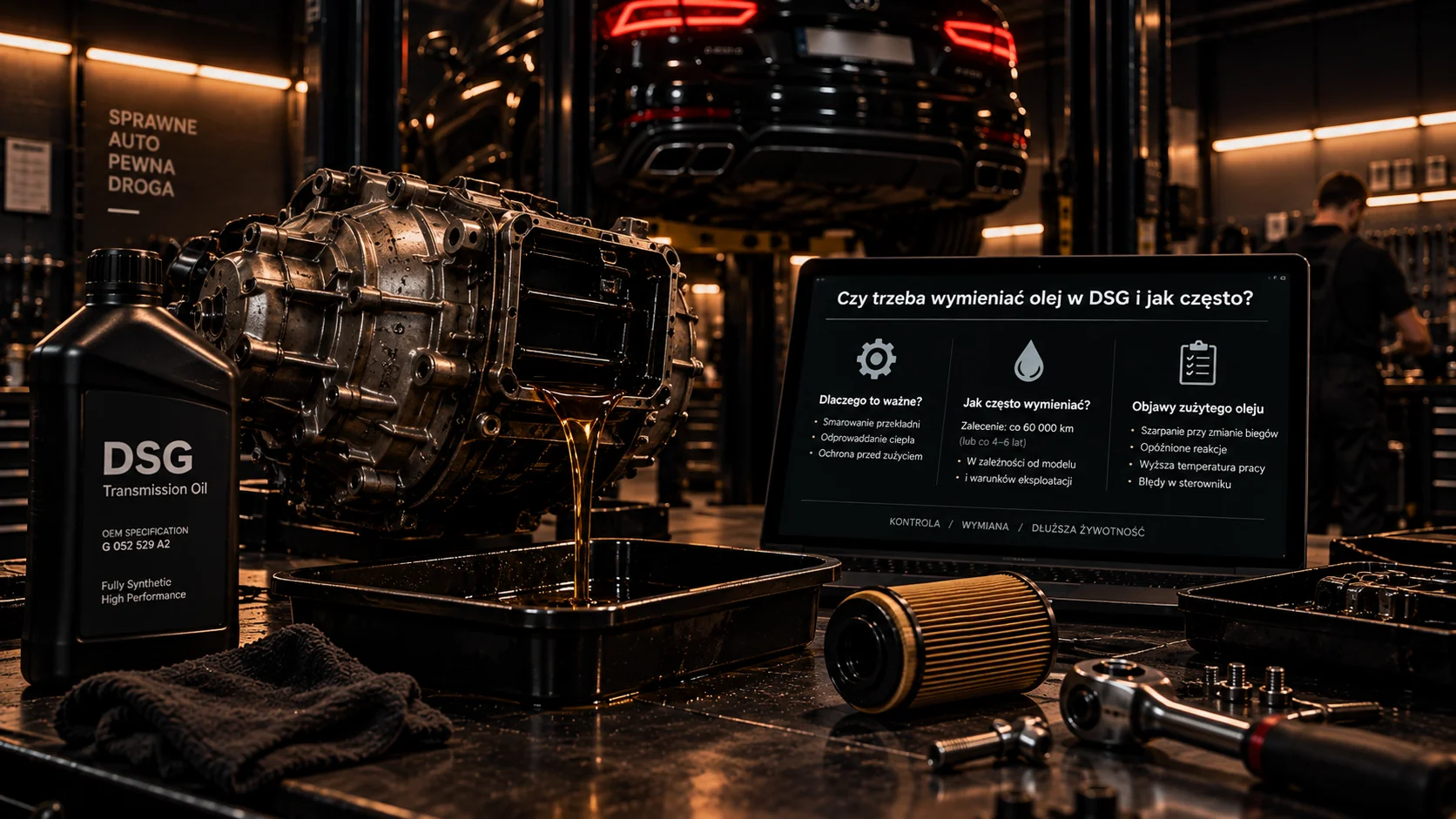
We wrote about the oil itself, the intervals and the “lifetime oil” myth in our article on whether DSG oil needs changing and how often. With a wet clutch it is the cheapest way to delay an expensive repair.
Signs that a DSG clutch is running out
- juddering when pulling away and in traffic, especially with a warm gearbox
- revs rising faster than speed, meaning clear slip under acceleration
- delayed pull-away after releasing the brake
- a smell of overheated clutch after driving in traffic or uphill
- a gearbox warning message or a switch to limp mode
The same symptoms can also come from the mechatronics, worn oil or a missing adaptation, so do not assume in advance that it is the clutch. You will find an overview of possible causes in why a DSG “kicks”, and we explain whether you can keep driving in can you drive with a juddering DSG.
How to check the clutch without dismantling the gearbox
The first step is computer diagnostics. Reading the gearbox faults and parameters shows how the clutches are working and whether the control unit is already compensating for wear. Then comes a test drive and a check that the symptoms are not caused by the oil, adaptation or mechatronics. This order helps avoid replacing a clutch when a cheaper job would have been enough.
If you are buying a used car with a DSG, have this reading done before purchase. Check the oil service history at the same time. At our workshop at Grabiszyńska 241 in Wrocław we carry out this check as part of our mechanical services.
Do not wait for limp mode
Driving on a slipping clutch overheats the gearbox and strains the mechatronics, which usually cost more to repair than the clutches themselves. Early diagnostics often limit the scope of the repair.
After how many kilometres is a DSG clutch replaced?
There is no fixed mileage. As a rough guide dry clutches last about 100,000–150,000 km and wet ones often 200,000 km or more, but condition and usage decide.
Which DSG clutch is more durable, dry or wet?
Usually wet, because the oil carries heat away from the plates. It does need regular oil servicing, though, while a dry clutch is more sensitive to driving in traffic.
Are both clutches in a DSG always replaced together?
Yes, the clutches form a single assembly and are replaced together. A computer adaptation is needed after replacement.
Can an adaptation restore a worn clutch?
No. An adaptation improves gearbox operation and can remove juddering while the plates still have life in them, but it will not rebuild worn material.

Let's check how much life your clutch has left
We will diagnose your DSG gearbox and tell you plainly whether it is the clutch, the oil or the mechatronics.