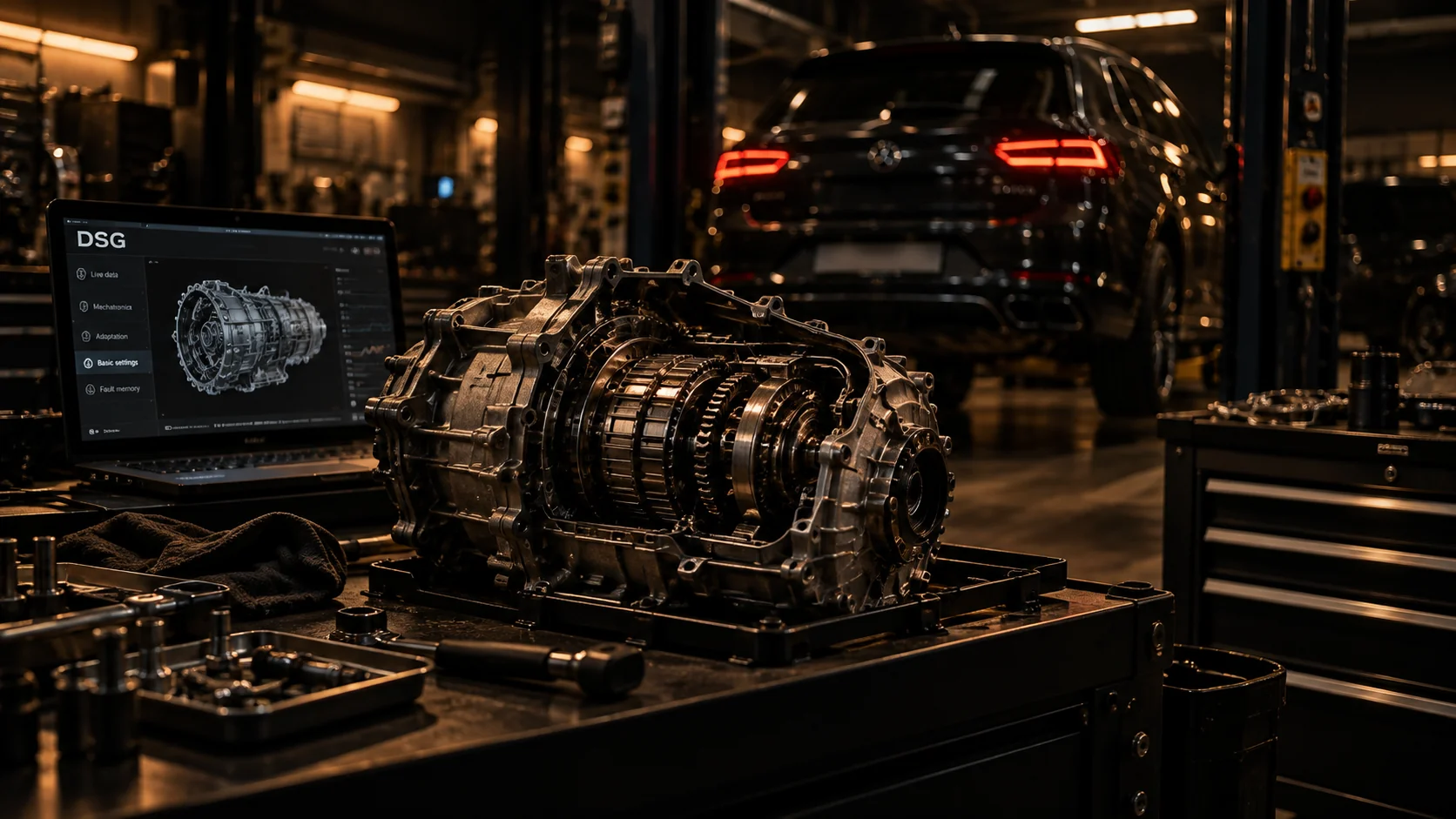





With a jerking DSG you can usually still drive to the workshop, but you shouldn't keep driving it for weeks hoping it will "go away". The jerking won't disappear on its own — it's a sign that the clutches, oil or mechatronics are working outside the norm. Every extra week of driving like this speeds up wear and can turn a cheap fix (adaptation, oil change) into an expensive clutch or mechatronics replacement. Below we explain when driving is still reasonably safe and when it's better to park the car straight away.
When driving with a jerking DSG is still OK
If the jerk only appears occasionally — when pulling away with a cold engine or crawling very slowly in traffic — and otherwise the gearbox shifts normally, there are no warning lights on the dashboard and no burning smell, you can usually drive calmly to the workshop and book a diagnosis within the next few days. This is the early stage, when the problem is cheapest to fix.
- jerking only when pulling away or manoeuvring, smooth driving after that
- no gearbox warning light or messages on the dashboard
- the gearbox doesn't go into limp mode and shifts normally
- no knocking, grinding or smell of a burnt clutch
When to stop driving immediately
Park the car and don't force it home
The gearbox warning light flashes or stays on, the car goes into limp mode (drives in only one gear), you smell burning, hear grinding or a metallic knock, or the car stops pulling away uphill. Driving on in this state can destroy the clutch or the mechatronics — it's better to call a tow truck than to add to the costs.
Limp mode is how the control unit protects the gearbox from more serious damage. After restarting the car everything usually goes back to normal for a while and it's tempting to keep driving — but the fault is stored in memory and will come back. If you're far from the workshop, it's safer to use roadside assistance than to risk driving on.
What happens when you put off the repair
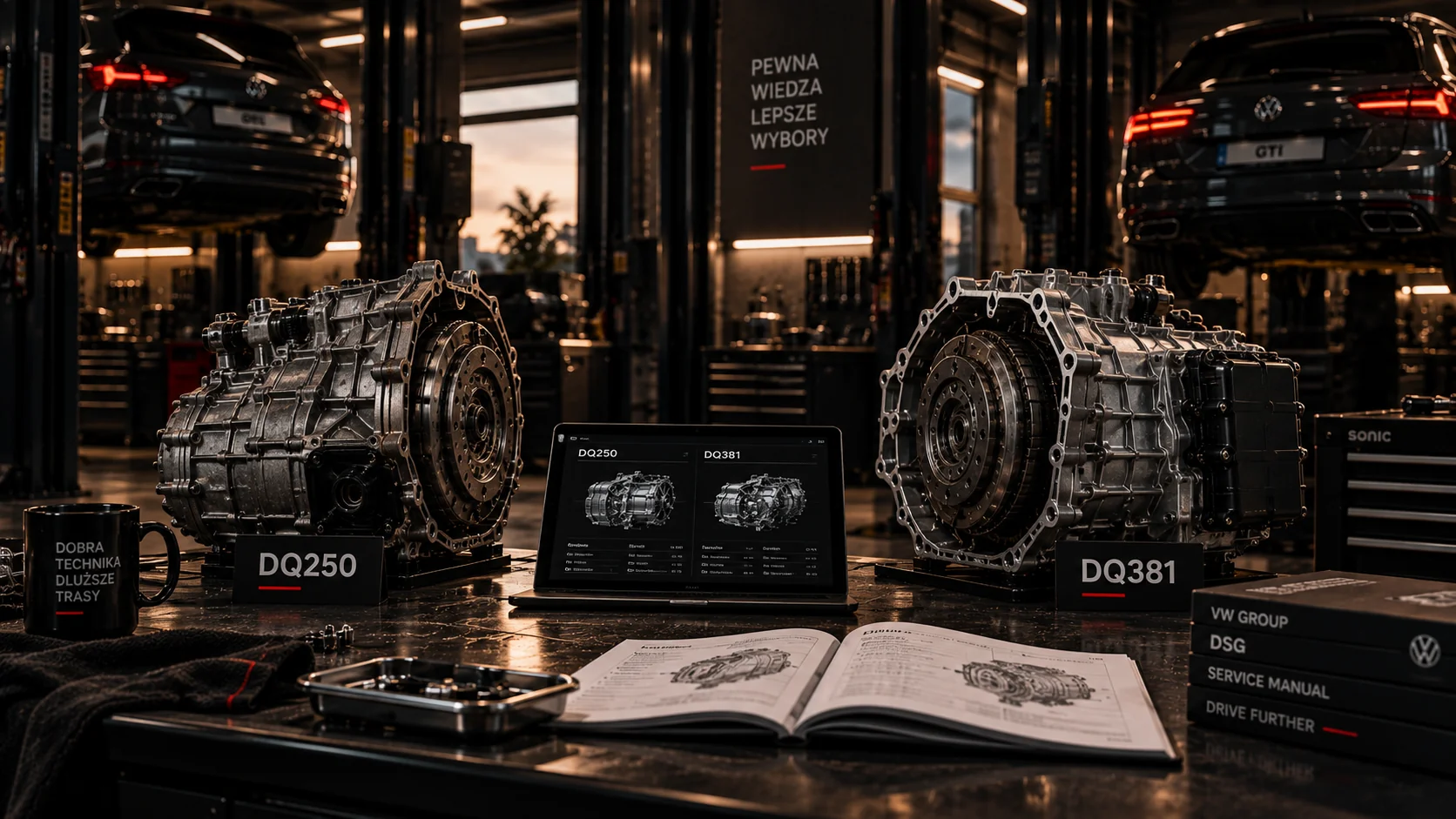
Jerking means the clutch doesn't engage smoothly but "grabs" with slip or too abruptly. Every jerk like this means extra friction and heat. In dry-clutch gearboxes (e.g. DQ200) overheating quickly speeds up lining wear. In wet gearboxes (e.g. DQ250, DQ381) overheated, degraded oil cools and lubricates worse, which also loads the mechatronics. The snowball effect is simple: at first an oil change or adaptation would have been enough, and a few months later you need a new clutch.
The most common causes of jerking — and what costs the least
- Missing adaptation — e.g. after disconnecting the battery. The cheapest fix, often done with a computer.
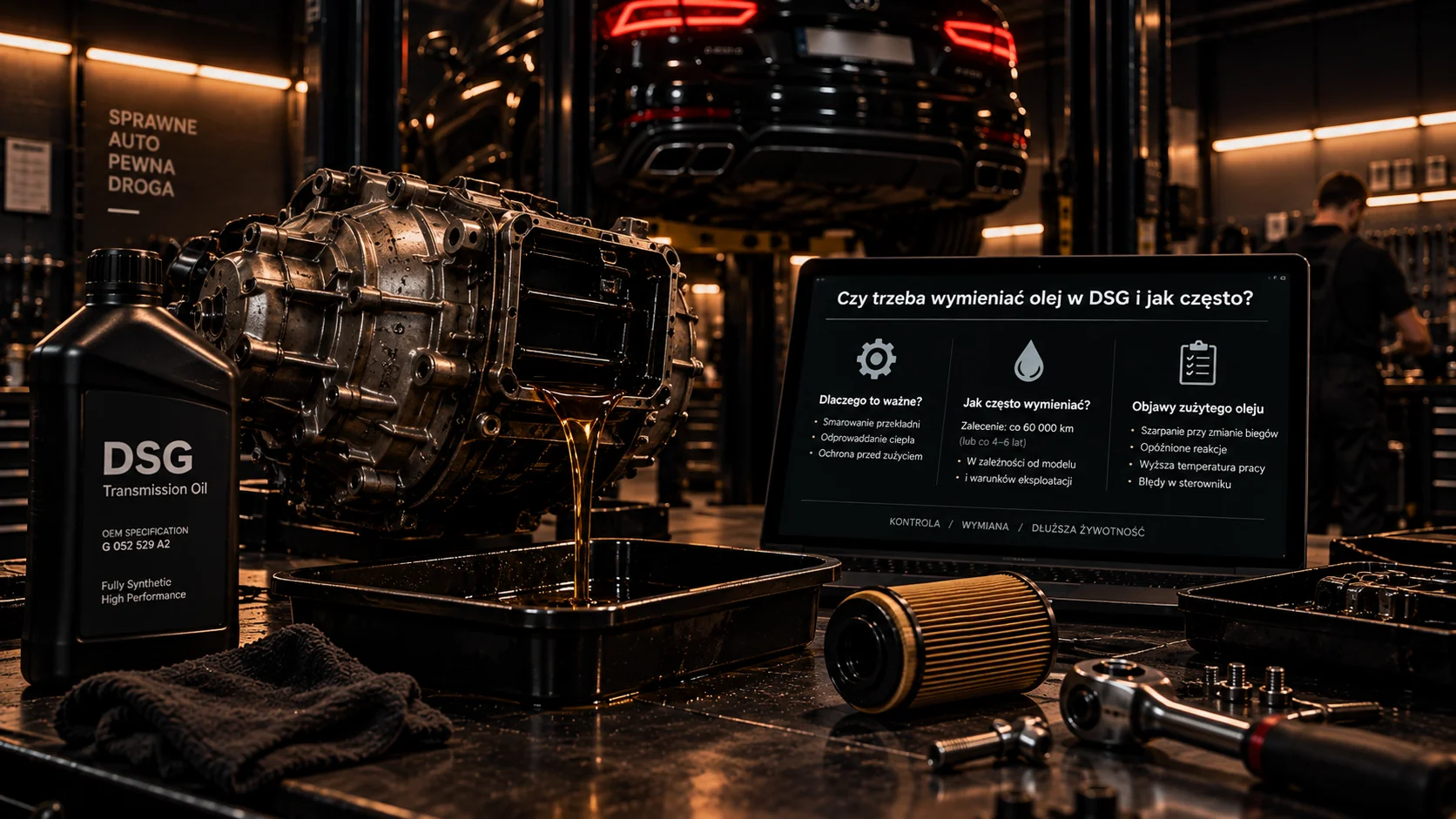
- Worn or overheated oil (wet gearboxes) — oil and filter change.
- Worn clutch — clutch replacement, more expensive but predictable.
- Mechatronics fault — repair or reconditioning of the control unit, usually the most expensive.
We describe in detail how to tell these causes apart from the car's behaviour in the article Why does a DSG "kick"?. If your gearbox is due for an oil change, you'll also find the piece on how often to change DSG oil useful.
How to drive until your workshop visit
- pull away smoothly, without stamping on the accelerator
- avoid long "creeping" in traffic right at the point of pulling away — that heats the clutch the most
- when stopped in traffic, select N or hold the car on the brake instead of on the throttle
- don't tow a trailer or drive loaded up steep inclines
- note down when it jerks (cold/warm engine, which gear, what speed) — it shortens the diagnosis
On-site diagnostics
At our workshop at Grabiszyńska 241 in Wrocław we'll read the gearbox fault codes, check the clutch parameters and tell you whether an adaptation or oil change is enough, or a bigger repair is needed.
Frequently asked questions
Can DSG jerking go away on its own?
Sometimes after an adaptation or a change in driving style the symptom eases, but its cause remains. Without a diagnosis it's hard to say whether it's a trifle or the start of clutch wear.
How many kilometres can you drive with a jerking DSG?
There's no safe number. With mild symptoms it's enough to get to the workshop within a few days. With a warning light, limp mode or a burning smell it's better not to drive at all.
Will a reset or disconnecting the battery fix the jerking?
Probably not — it can even make it worse, because it erases the clutch adaptation. The gearbox then has to be properly adapted with a computer.
Does jerking always mean a clutch replacement?
No. Often the cause is a missing adaptation or worn oil, which costs much less. That's why it's worth coming in early, before the wear actually reaches the clutch.

Is your DSG jerking? Let's check it before it gets expensive
We'll read the gearbox fault codes and tell you straight whether an adaptation or oil change is enough, or a bigger repair is needed.