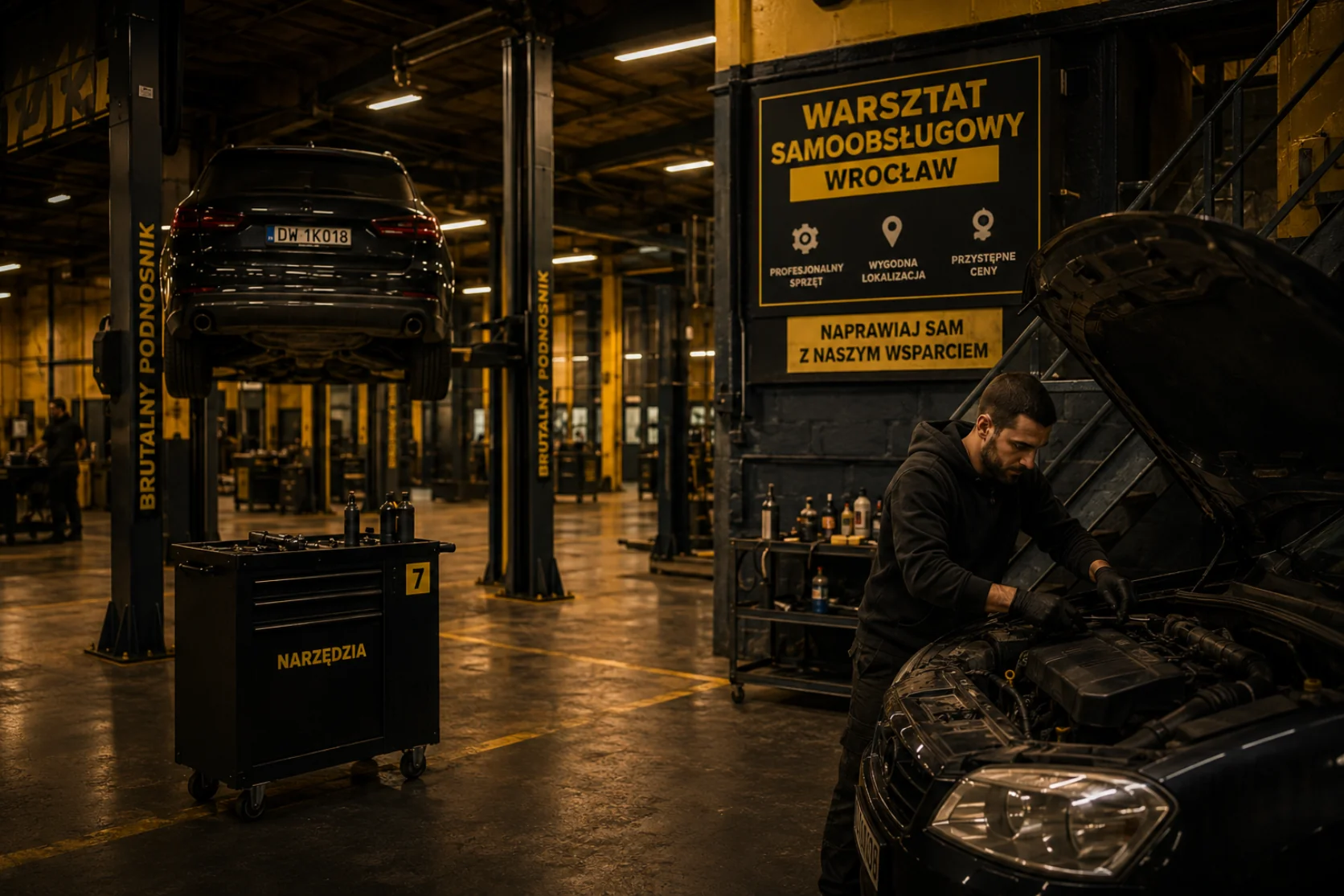






At a lift bay you can do most routine service jobs yourself — an oil and filter change, pads and discs, tyres, wipers or an underbody check — while it's worth handing a mechanic anything that needs computer diagnostics, specialist equipment or real experience, such as DPF regeneration, DSG gearbox repair, wheel alignment or air-conditioning service. The line doesn't run along "easy versus hard", but along whether a mistake can be undone and whether you have a way to check the result. Below we break it down: what you can realistically do yourself on a lift, what's better not tackled alone, and how to tell which side you're on. All using the Brutalny Podnośnik self-service zone at Grabiszyńska 241 in Wrocław as the example.
The rule in one sentence
Do yourself what you can verify with your eyes and a torque wrench. Leave to a pro what depends on a computer reading, a calibration or a measurement you can't take in a garage.
What you can calmly do yourself on a lift
These are jobs where care matters, not access to expensive diagnostic gear. A car raised on a lift gives you comfortable access from below, good light and room for tools — exactly what's missing on a driveway outside your block. For most of these tasks, basic mechanical skill and a calm moment are enough.
Oil and filter change
The most common and most rewarding DIY job. You drain the oil through the sump plug, change the oil filter, and while you're at it the air and cabin filters. On a lift the sump is right at hand, and the used oil goes to legal disposal on site, not down a drain. We've described how to do it step by step in a separate guide: an oil change in the Zone, step by step.
Brake pads and discs
Contrary to appearances, this is one of the simpler jobs — provided you do it carefully, because brakes are a safety matter. Changing pads and discs on an axle usually takes 1–2 hours and saves real money on labour. You'll find the full procedure, tool list and most common mistakes here: a DIY pad and disc change on a lift. The only catch is an electronic handbrake — there the rear caliper has to be put into service mode with a scanner, which we'll help with on site.
Tyre change and seasonal swap
Taking wheels off, swapping tyres from season to season, torquing them crosswise with a torque wrench — that's a job for anyone. On a lift you'll also get a good look at the tread, discs and hoses. You can't balance a wheel alone on a balancing machine, but that's a short service that's easy to add on.
Small parts and fluid changes
- Wipers, bulbs, cabin filter — a dozen minutes of work without raising the car.
- Spark plugs (in most petrol engines) and leads.
- Topping up or changing washer fluid, checking coolant and brake-fluid levels.
- Battery replacement together with cleaning the terminals.
- Disinfecting the vents with an aerosol product (without opening the air-conditioning system).
Underbody inspection and check
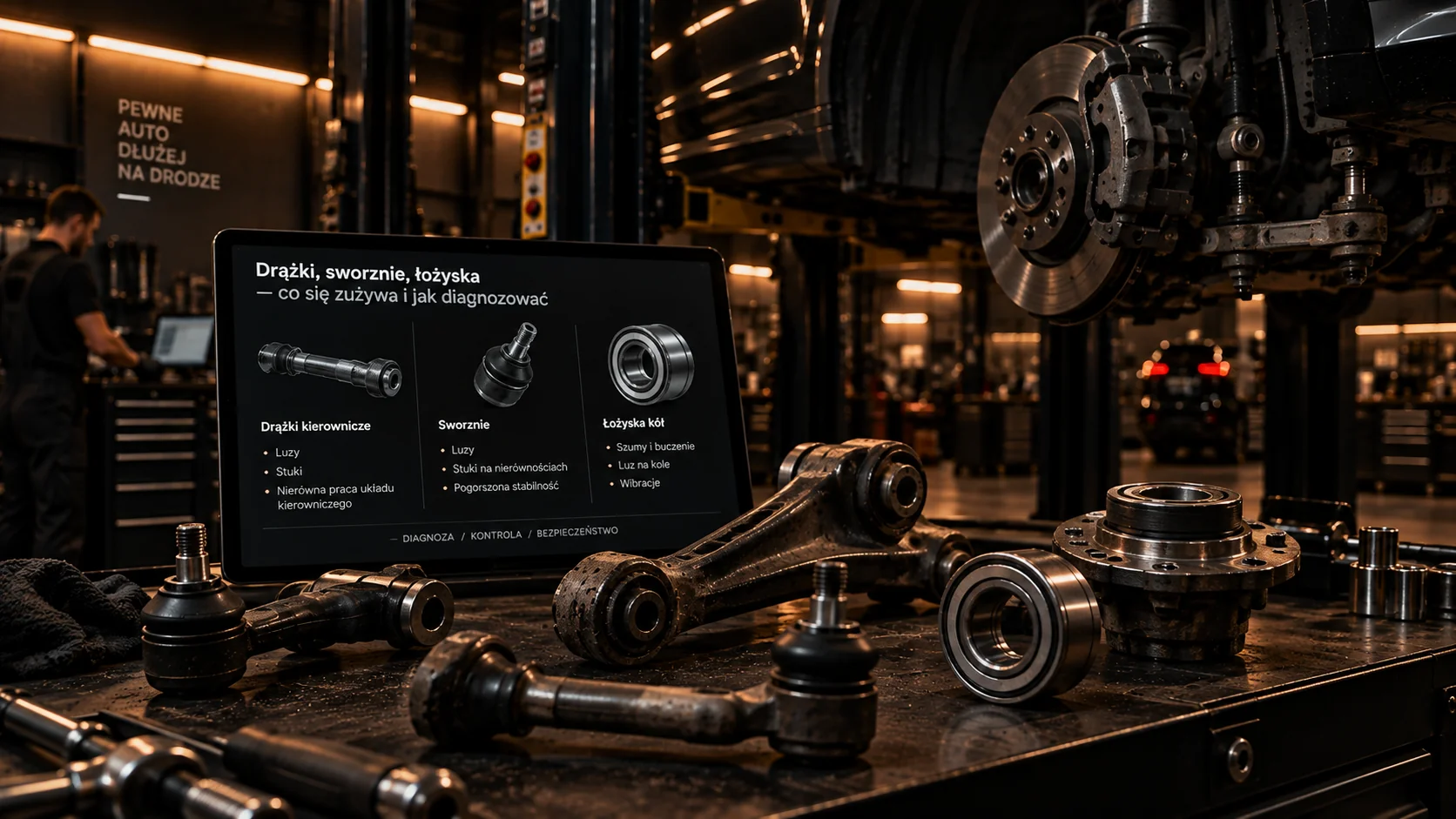
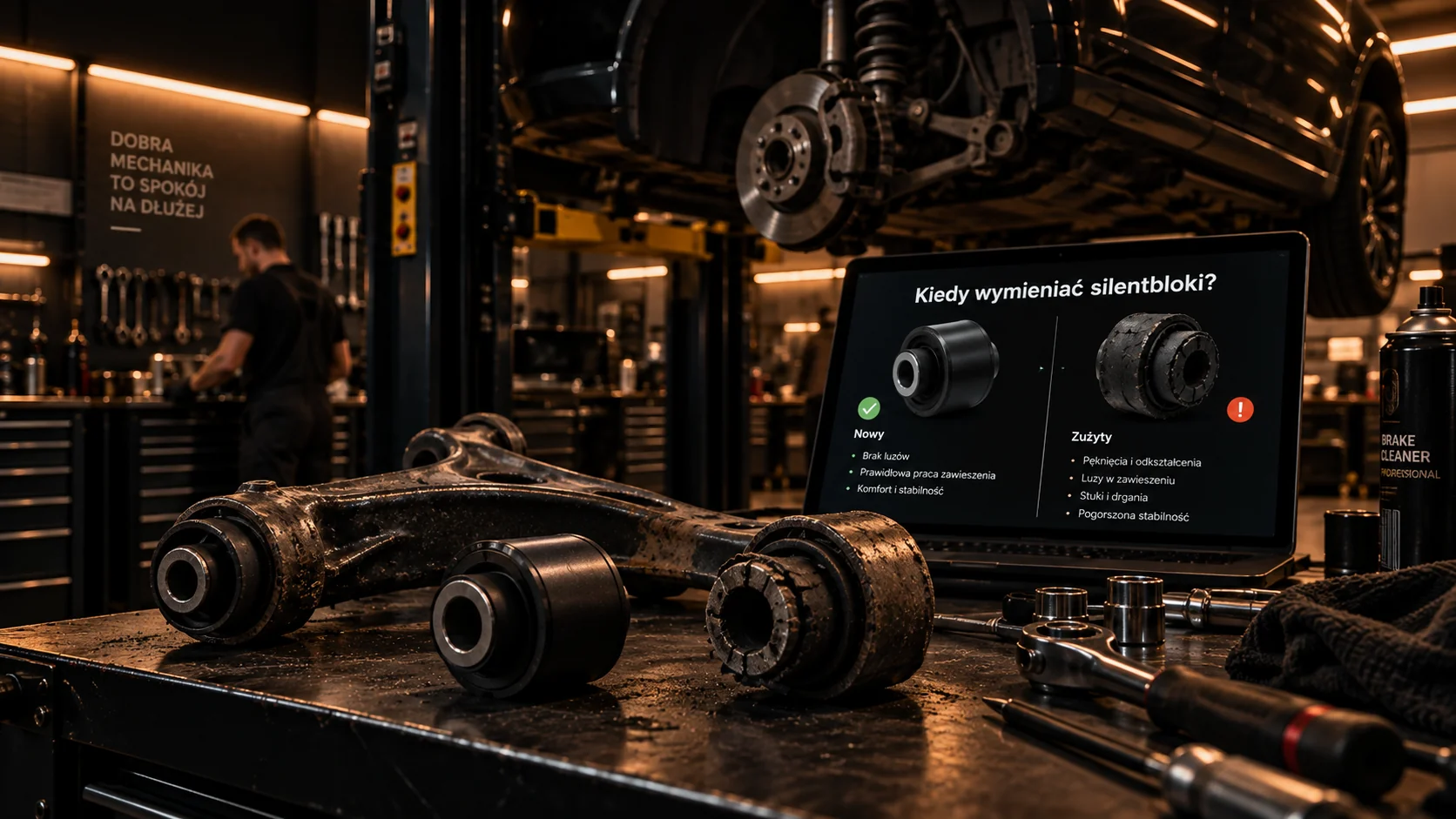
Even if you're not replacing anything, simply raising the car lets you catch a problem before it grows. You'll check the muffler and exhaust pipes, the integrity of the CV joint boots, leaks from the shock absorbers, play in the track rods or the state of the brake hoses. It's the cheapest "insurance" you can give yourself before a long trip.
Why on a lift specifically
Working under a car at full height is a different comfort and a different safety than on a jack. You have a lit bay, compressed air, tools within reach and a mechanic nearby to ask when something's off.
What's better not done yourself — leave it to a mechanic
It's not that these jobs are "too hard". It's that their success depends on equipment you don't have in a garage, on a calibration after the work, or on experience gained on hundreds of cars. Here a DIY attempt more often ends in a costlier repair than a service ordered up front.
DSG gearbox and mechatronics
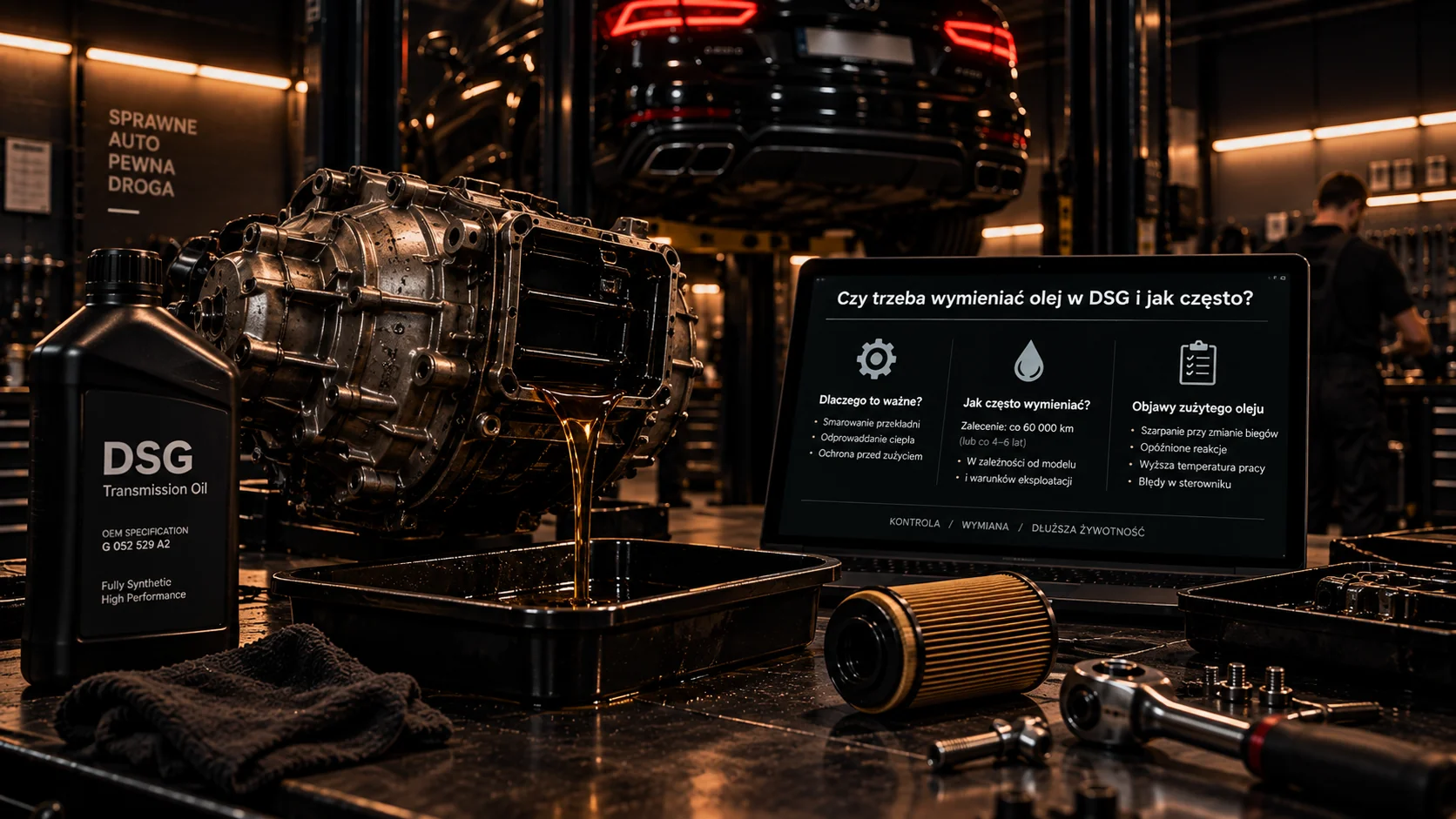
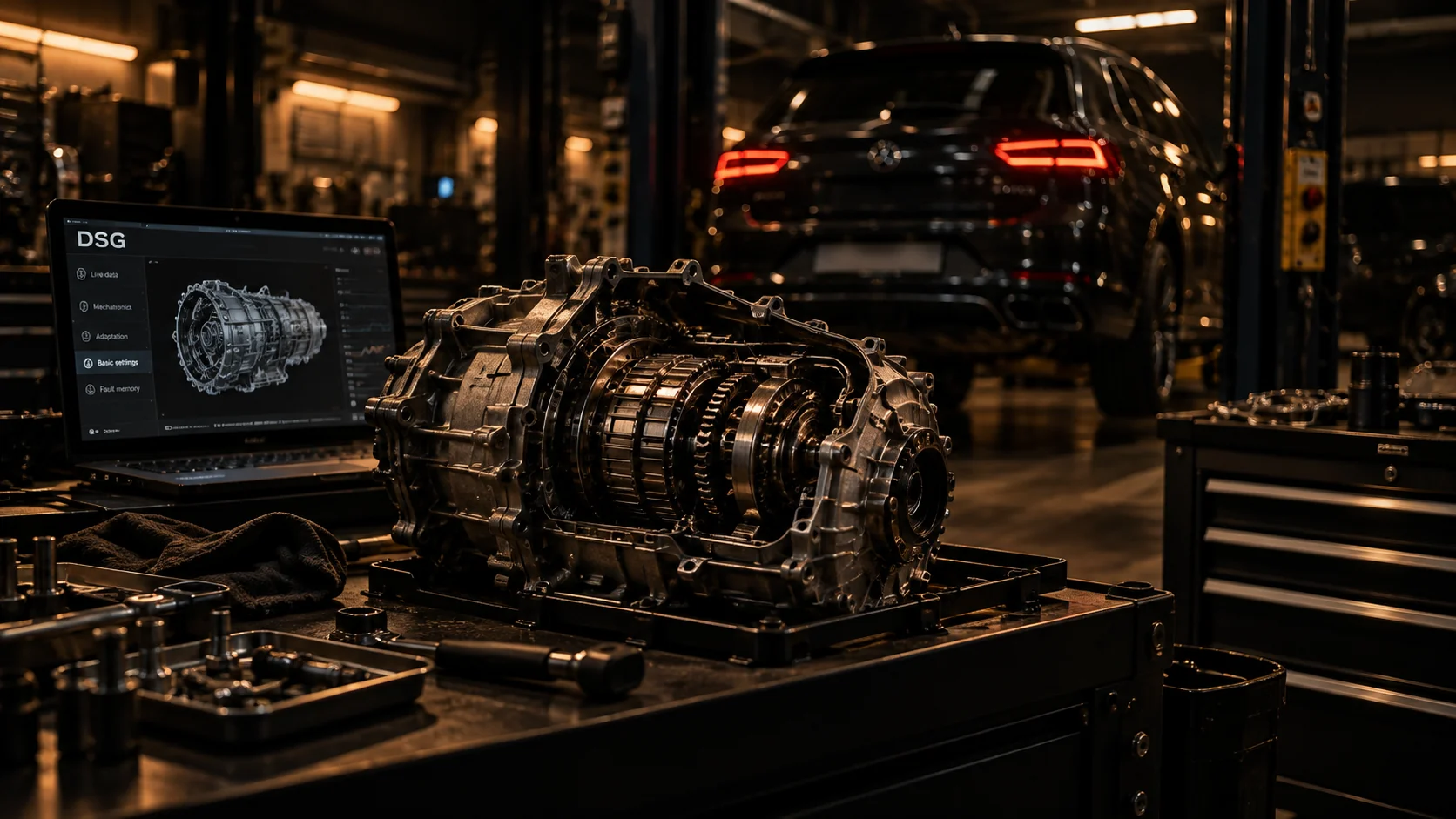
A DSG oil service needs special tooling, a precise level at a set temperature and gearbox adaptation with a scanner. Repairing the mechatronics or clutches is already a job for a workshop experienced in the specific gearbox families. Here improvising can cost more than the whole repair done right the first time.
DPF/FAP and deep engine diagnostics
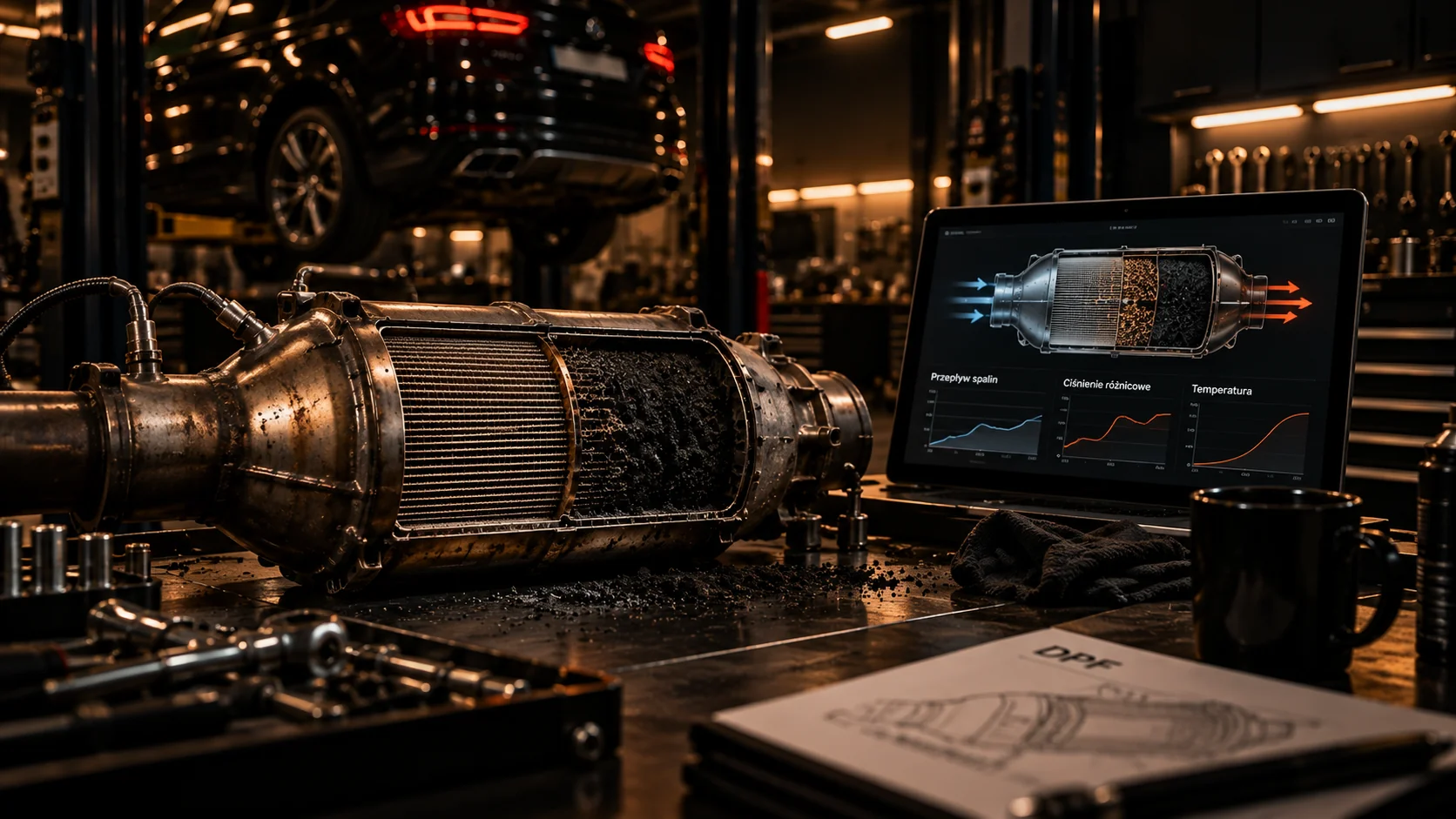
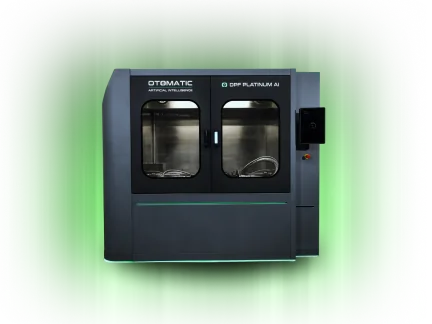
Regenerating and cleaning the particulate filter, forcing a burn-off, clearing faults and reading live parameters — all of that happens through a computer, not a wrench. Before you spend money, it's worth knowing what pays off more: DPF cleaning or replacement. Likewise any "warning light" you can't read — without plugging into diagnostics, guessing ends in replacing good parts.
Wheel alignment
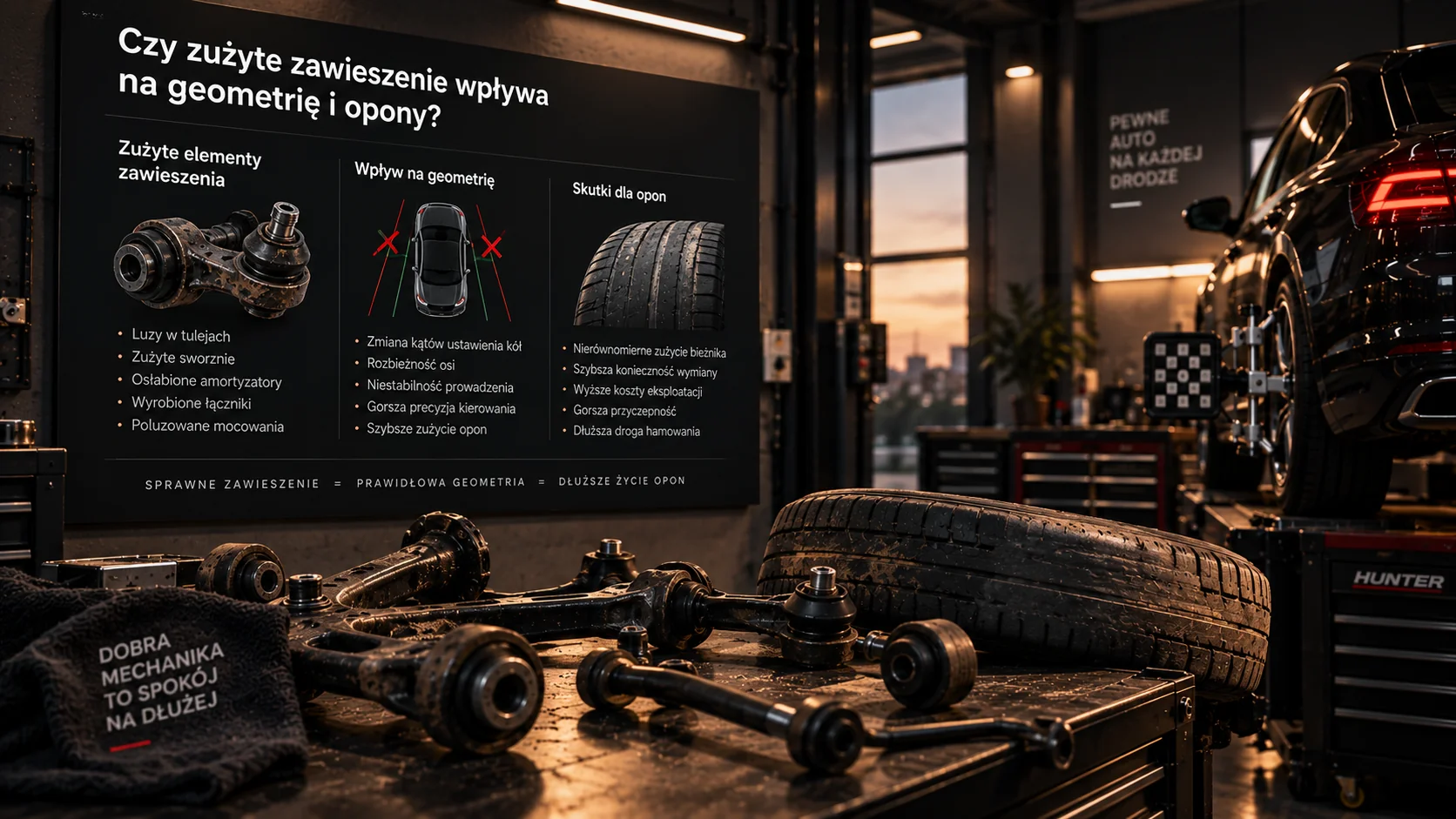
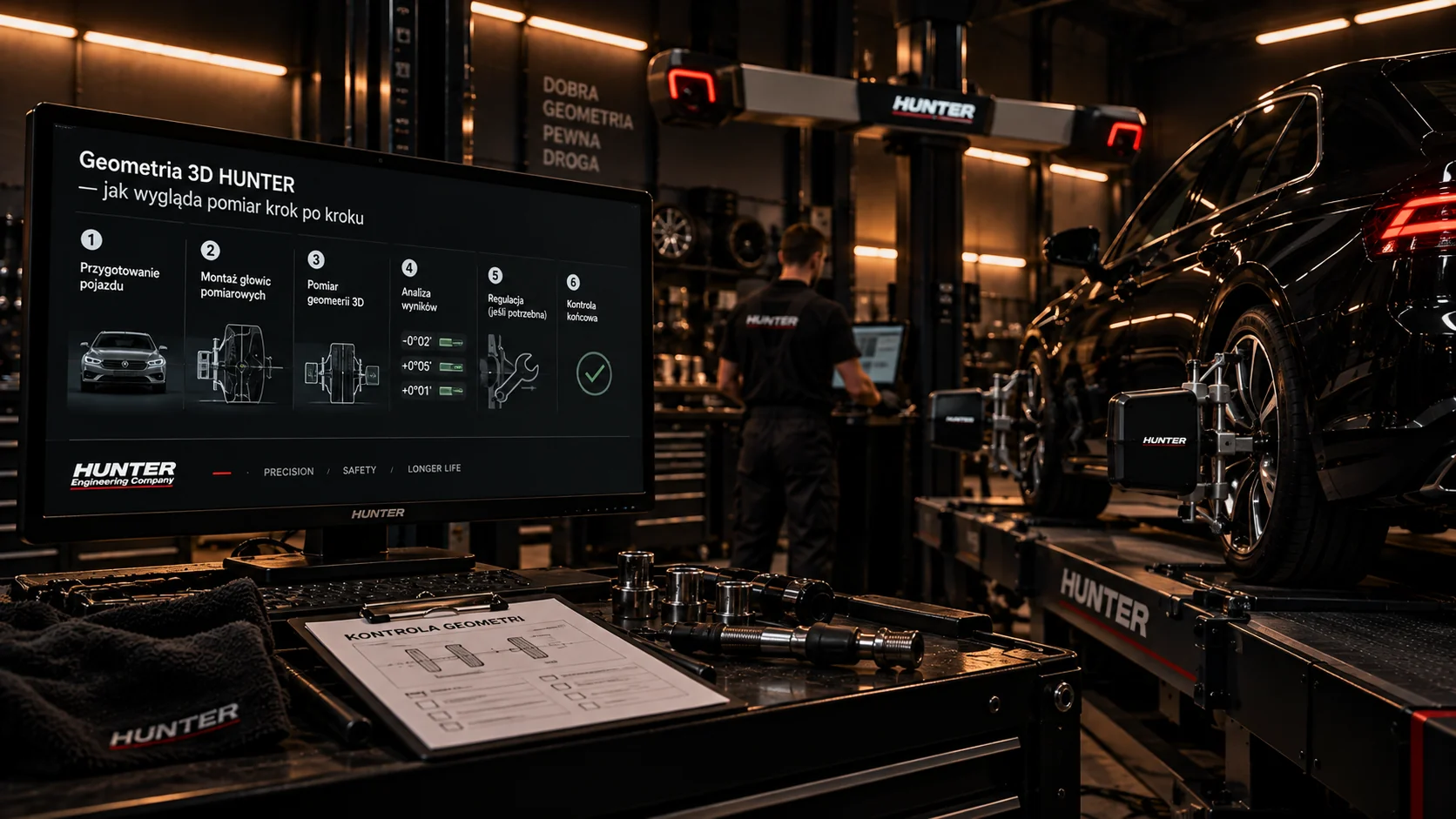
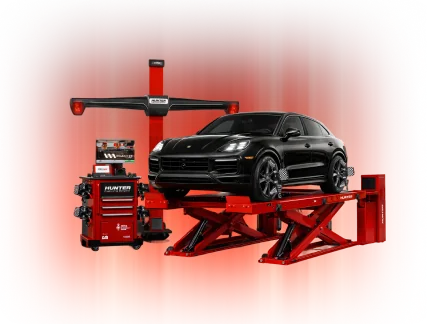
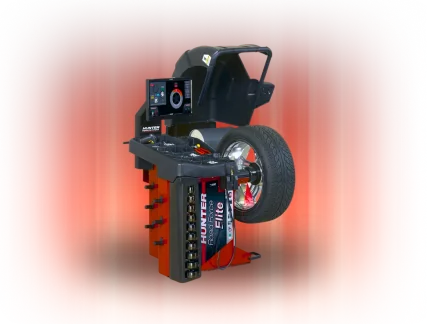
You won't set toe, camber and caster "by eye". You need a 3D measuring rig (ours is HUNTER), a level bay and the factory parameters for the model read off. After any work on the suspension or steering, alignment is a mandatory step the mechanic handles.
Air-conditioning service
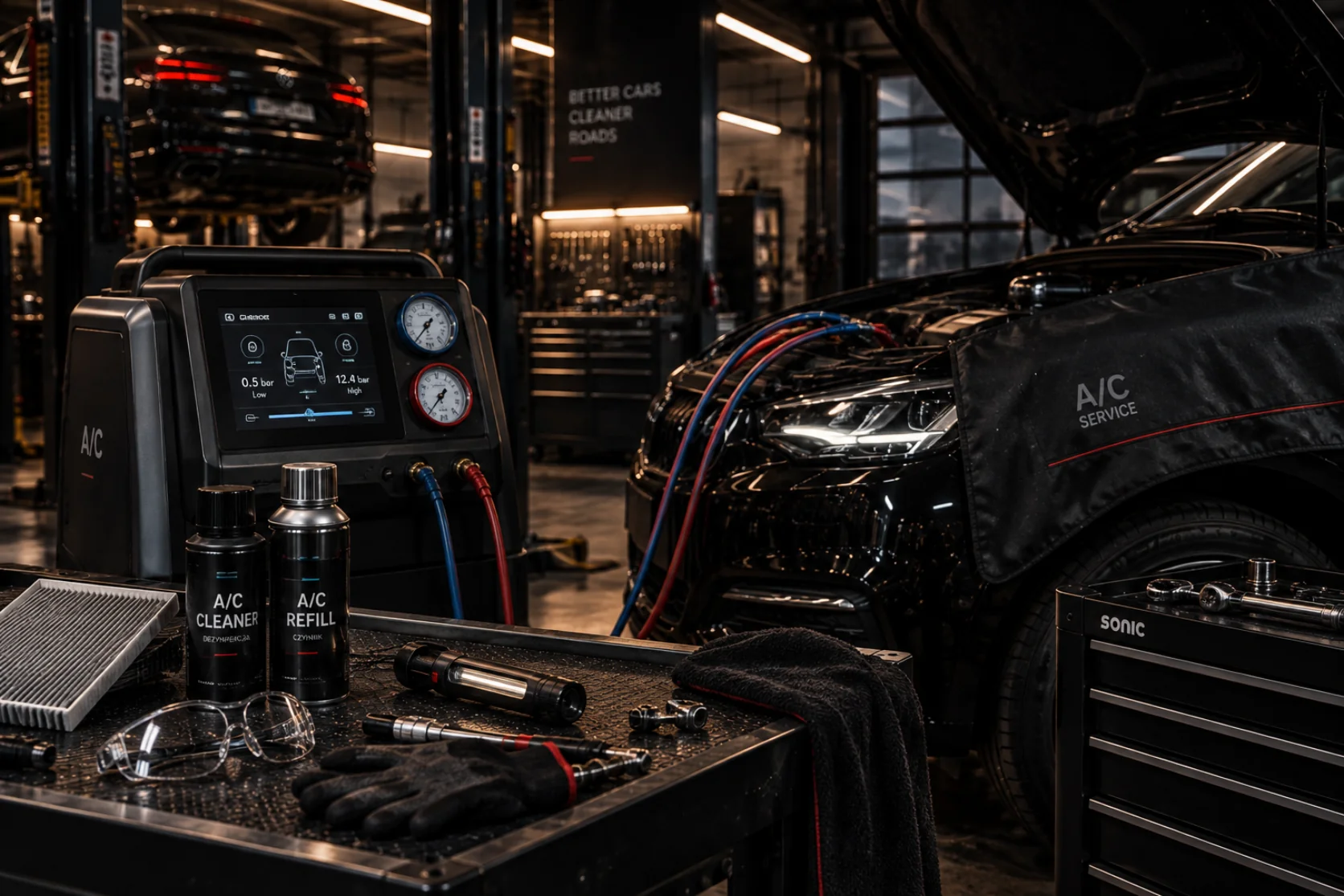
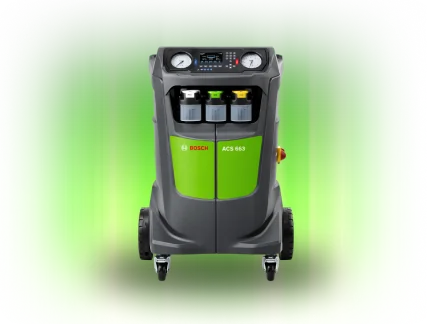
Recharging the air conditioning requires refrigerant recovery, a vacuum, a leak-tightness check and a service station — opening the system on your own is both illegal and harmful. On your own you'll manage at most disinfecting the vents with a product; the rest is a job for a Bosch station.
Timing, turbo and bigger teardowns
Changing the timing needs shaft locks, precise setting of phases and torques — a mistake by one tooth can destroy the engine. The same goes for turbocharger repairs or deeper teardowns of the powertrain. These are jobs where the cost of a mistake is incomparably higher than the saving on labour.
A sign it's no longer a do-it-yourself job
If a job needs a scanner to clear a fault, a calibration after fitting, or a measurement you can't verify — that's a sign it's better left to a pro. Strength and wrenches alone aren't enough.
How to judge whether you can manage it — a short checklist
- Do I know the procedure for my model and have the torque figures? If yes — a plus.
- Can a mistake be undone without damaging the car? A pad change yes, setting the timing no.
- Do I have a way to check the result? You'll judge brakes on a test drive, alignment without a rig no.
- Is a scanner or service station needed? If yes — that's rather a job for a mechanic.
- Do I have time to spare for a first attempt? Rushing is the most common cause of DIY mistakes.
If you answer "yes" to the first three questions and "no" to the fourth — go ahead and get to work. When two or more points raise doubt, it'll cost less to hand the car to a pro than to fix the fallout of improvising.
The best setup: do the simple things yourself — leave what's worth it to a pro
That's exactly why an hourly workshop suits drivers who want to combine both worlds best. The routine — oil, brakes, tyres, filters — you do yourself at a lift bay, paying only for the rental and your own parts. And when you hit a seized bolt, an odd symptom or a job that needs diagnostics, right next to you is the mechanic's shop, which will take it over on the spot. You don't have to choose between "everything yourself" and "everything ordered". How much this approach really saves, we show in figures in the article how much you'll save doing the service yourself.
Which repair is the best one to start your DIY servicing with?
With an oil and filter change or a pad change — these are low-risk jobs where it's easy to check the result, and the satisfaction and saving are big. The first time it's worth doing it under a mechanic's eye, who'll advise and check the assembly.
Can I count on help at the self-service bay if I get stuck?
Yes. A mechanic is nearby and you can ask at every stage, and if the job turns out harder than you expected, they'll take it over as part of the mechanic's shop. You won't be left alone with a stripped-down car.
Do I need my own tools and parts?
The basic tools and the lift are at the bay, compressed air too. You usually bring your own parts, matched to the model — that way you're sure what goes into your car, and you pay with no workshop markup.
How do I know whether a given repair is within my reach?
Go by the checklist: I know the procedure, the mistake can be undone, I have a way to check the result and I don't need a scanner or a service station. If it all checks out — you'll manage yourself. If not, better to leave it to a pro.
Is it worth doing it yourself on a newer car under warranty?
Routine tasks like an oil or filter change you'll do yourself, but on a car under warranty watch out for the requirement to document the service and use the correct fluids. If in doubt, ask — we'll advise what's safe to do yourself and what's better to have on paper.

Do the simple service yourself, leave the rest to us
Rent a lift bay by the hour — with tools and a mechanic nearby when needed.