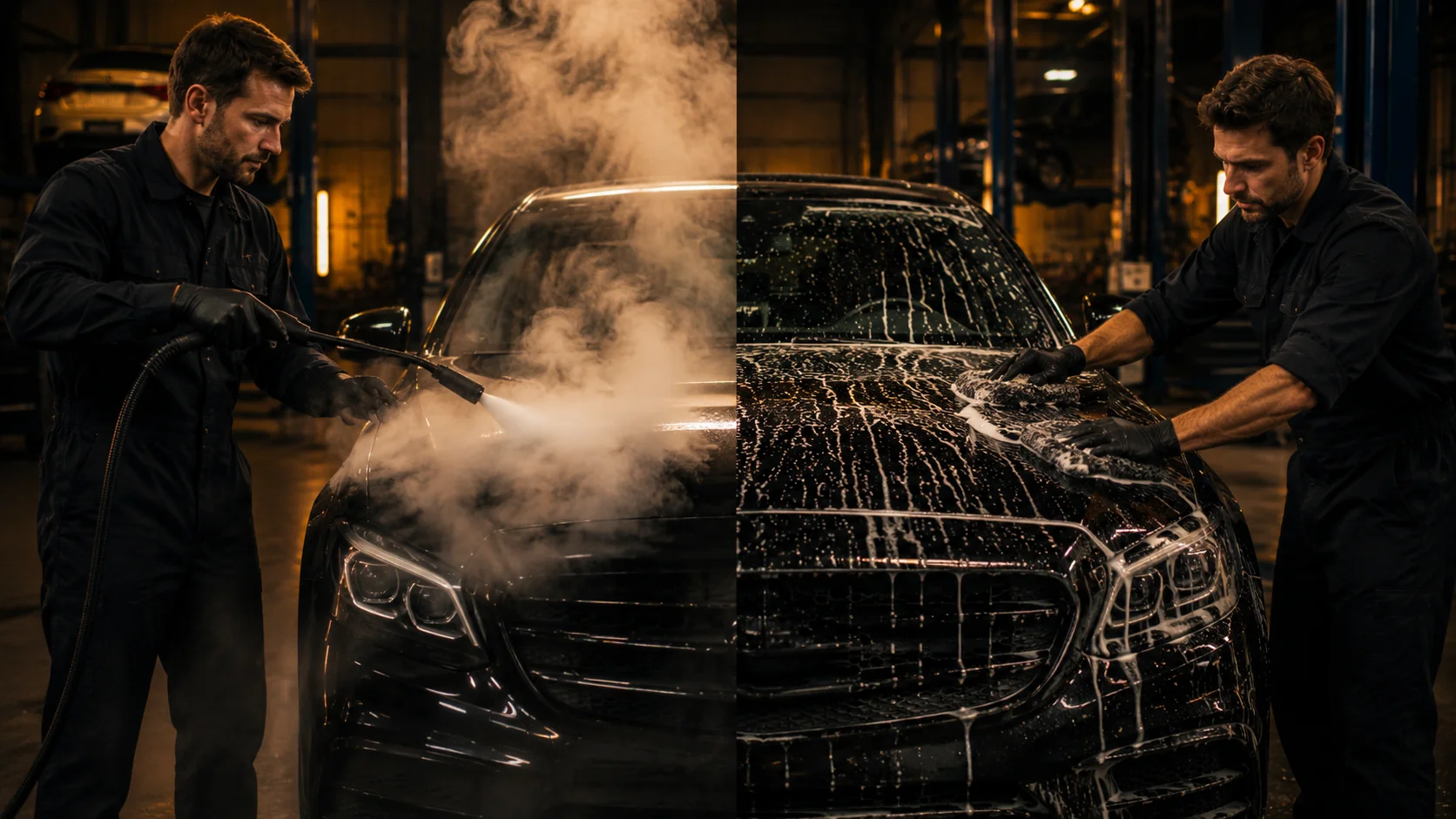



In short: a steam wash cleans with hot pressurised vapour and uses literally a few litres of water, while a traditional wash rinses dirt away with a detergent water jet. Steam handles the interior, detailing and disinfection better, whereas a traditional wash removes heavy dirt and mud from the bodywork faster. In practice the best results come from combining both methods — below we explain which to choose for each job.
How does a steam wash actually differ from a traditional one?
Both methods have the same goal — a clean car — but reach it in completely different ways. The difference comes down to what acts on the dirt: water pressure or steam temperature.
Traditional wash
It's the classic: active foam, a pressure washer and rinsing with plenty of water. It's great for heavy soiling — mud, road salt in winter, sand after a long drive. It's fast and cheap on large surfaces, but uses anywhere from a few dozen to over a hundred litres of water and reaches narrow gaps and the interior less well.
Steam wash
Here the work is done by water vapour at around 120–150°C, delivered under pressure through a nozzle. The high temperature dissolves grease and deposits while also disinfecting the surface. Steam reaches where a water jet can't: air vents, upholstery seams, seat stitching, dashboard trim. Water use is just a few litres, making it a far more eco-friendly method.
The key differences at a glance:
- Water use — steam a few litres, traditional dozens of litres or more.
- Temperature — steam at 120–150°C dissolves grease and disinfects; water works mainly by pressure.
- Detailing and interior — steam reaches gaps, upholstery and vents; a traditional wash doesn't.
- Heavy dirt and mud — here the traditional wash with a pressure washer is faster.
- Paint — steam works without contact, so the risk of scratches is lower.
Which to choose for each job?
Regular bodywork washing
To wash off typical exterior dirt — dust, insects, light mud — a traditional wash is perfectly enough. It's fast and effective. When a car is really sandy or covered in salt after winter, we also start with a water jet to knock off the thickest layer.
Interior, upholstery and disinfection
Here steam has no equal. It dissolves dried-in stains, freshens upholstery, removes unpleasant odours and — thanks to the high temperature — kills mites and bacteria without aggressive chemicals. It's the best choice for families with children, allergy sufferers and drivers who eat a lot or carry pets.
Engine and hard-to-reach nooks
The engine bay and parts you don't want to douse with water are safer to clean with steam. The precise jet removes grease and deposits spot by spot, without flooding sensors and electrical connectors.
The best result comes from combining both methods
The bodywork washed traditionally and the interior and details finished with steam — that's the standard we use for a full car clean.
Is steam safe for paint and seals?
Yes, as long as it's done by someone who knows what they're doing. Steam works without contact, so it doesn't leave scratches the way a badly handled cloth or an automatic-wash brush can. You do need common sense, though: don't hold the nozzle too long in one spot on films, wraps or older, cracked seals. By adjusting the distance and time, a good operator cleans effectively and completely safely.
Watch out for films and old seals
On PPF wraps, colour-change films and heavily worn seals we use steam carefully and from a greater distance — which is why it's worth leaving it to the workshop rather than experimenting yourself.
What do we offer at Brutalny Podnośnik?
At our car wash in Wrocław on Grabiszyńska 241 you can book both a traditional wash and steam cleaning — and most often we combine them so your car shines inside and out. If you'd rather take care of the car yourself, check out our self-service zone, where you can wash and tidy your car comfortably and cheaply at your own bay.
Does a steam wash clean the whole car on the outside?
Yes, but with heavy dirt or mud it's worth knocking off the layer of grime with a water jet first. Steam works best for finishing off details, wheels and the interior — which is why we usually combine it with a traditional wash.
Will steam damage the car's electronics?
No, if an experienced operator does the cleaning. Steam uses very little water and is applied precisely, so it's safer for connectors and sensors than flooding the engine bay with pressurised water.
How long does steam cleaning the interior take?
Freshening up the interior usually takes 1 to 2 hours, while a full upholstery clean with disinfection can take longer, depending on how dirty it is. We'll give you the exact time and cost after seeing the car.
Does steam remove odours, e.g. after a pet or cigarettes?
Yes — the high temperature breaks down the source of the odour in the upholstery and vents, rather than just masking it with an air freshener. It's one of the biggest advantages of steam cleaning.
What should I choose if I'm short on time?
For a quick bodywork wash — a traditional wash. If the interior and disinfection matter to you, book a visit for steam cleaning. It's best to arrange a time in advance and we'll have the bay ready for a specific hour.

Wash it traditionally, finish with steam?
Wash it traditionally, finish with steam?