









Bushings get replaced once the rubber is visibly cracked, torn, or deformed enough that the joint develops noticeable play — not at a fixed mileage. Unlike oil or brake pads, bushing lifespan depends mainly on the quality of the roads you drive on and how aggressively you take bumps, not just the number on the odometer. Below we show how to spot a worn bushing, how to check for it, and when it's worth combining the replacement with other suspension work.
What Bushings Are and What They Do
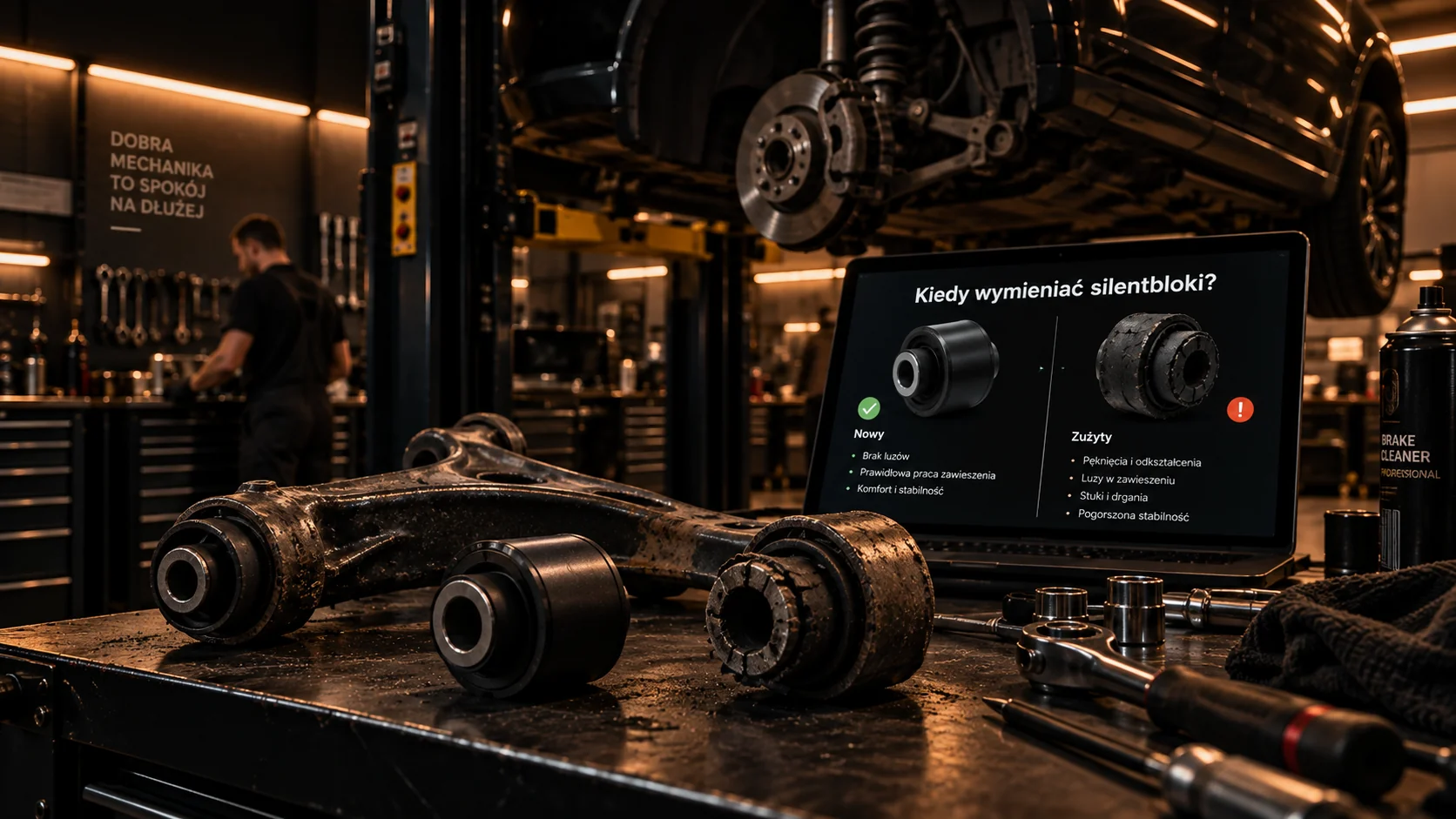
A bushing (silentblock) is a rubber-and-metal (occasionally polyurethane) sleeve that connects suspension components — usually control arms — to the body or subframe. Its job is to dampen vibration and absorb micro-movements, keeping the suspension working precisely while road shocks don't transfer straight to the body. When the rubber loses elasticity or cracks, the joint stops being controllably rigid — instead, uncontrolled play appears.
Signs of Worn Bushings — What to Look For
- Cracks and deformation in the rubber — visible on inspection; sometimes the rubber is clearly torn or has separated from the metal sleeve.
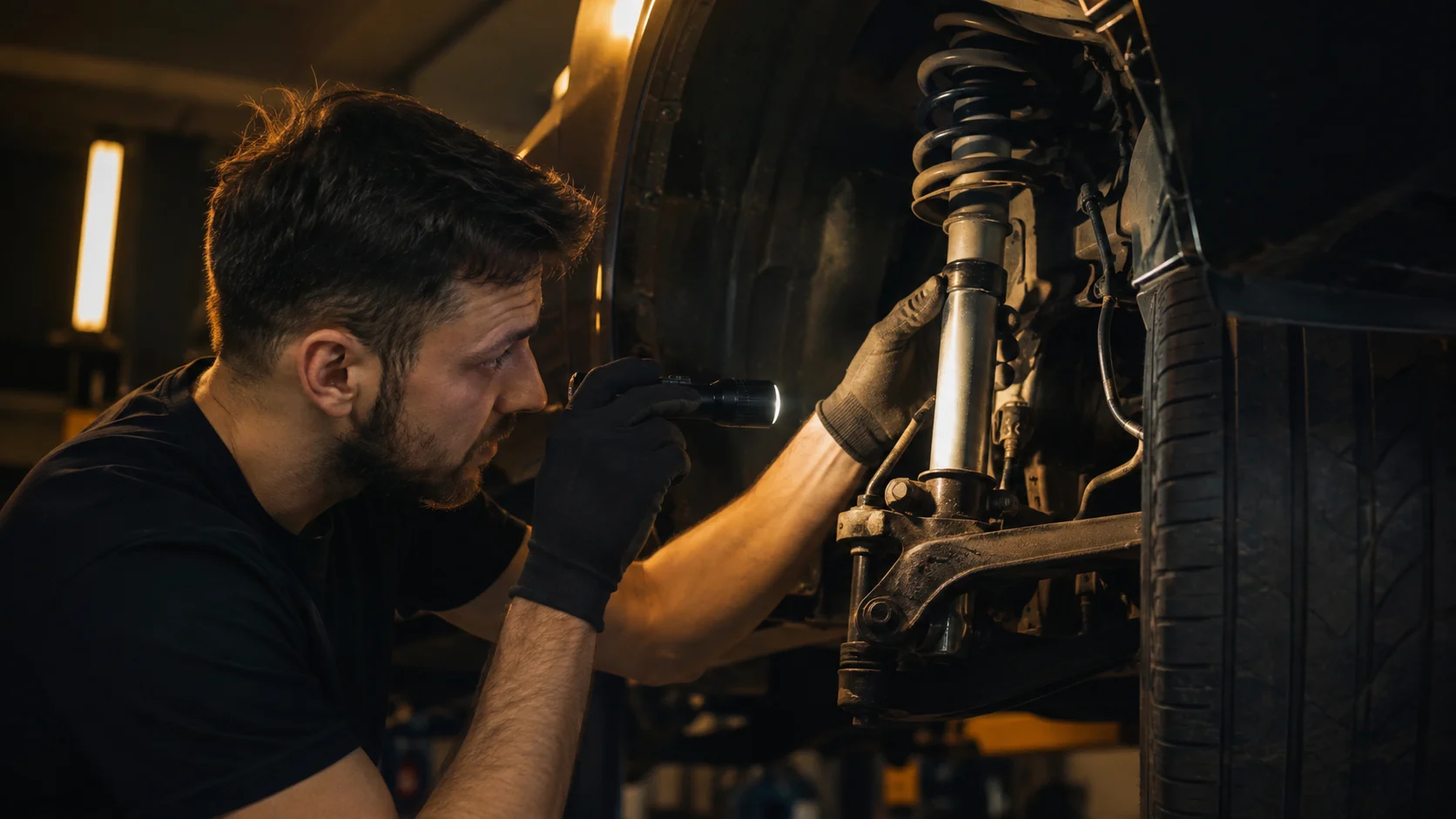
- Play you can feel by hand — with the car lifted, grabbing the control arm reveals a small but unnatural amount of movement at the bushing.
- Knocking and vibration over bumps — one of the most common symptoms in everyday driving; we covered this in more depth in why the suspension knocks over bumps.
- Worse stability and steering precision — the car responds less precisely to steering input, especially when changing direction.
Bushings Rarely Fail Suddenly
Bushing wear is usually a gradual process — symptoms build up over weeks or months rather than appearing overnight. That makes it easy to get used to them and not notice how much handling has deteriorated, until someone points it out or you get behind the wheel right after a service.
Is There a Specific Mileage for Replacement?
There's no single universal number of kilometers. Bushings age through a combination of mileage, road quality, and driving style — a car driven mostly on rough city streets will wear them faster than one covering a similar distance on smooth roads. Rubber also ages with time regardless of mileage, so even a rarely driven car can have cracked bushings despite low mileage.
- Frequently hitting speed bumps and potholes accelerates wear far more than the sheer number of kilometers driven.
- The car's age matters regardless of mileage — rubber loses elasticity over time, even if the car sits more than it's driven.
- The most reliable method is a visual check during a service — on a lift you can see the bushings' actual condition instead of guessing based on mileage.
Preventive or Reactive Replacement
If the car is in the workshop for another reason — say, shock or control arm replacement — and the bushings in that same spot are already badly worn, it usually pays to replace them at the same time. The labor for removing that same suspension component is shared between both jobs, so combining them works out cheaper than two separate visits. If the bushings are in good shape, though, there's no point replacing them preemptively — this is a component you check visually, not one you replace on a guess.
Check It During Your Seasonal Tire Swap
The car is already up on the lift during the seasonal tire swap anyway, so that's a good moment to ask for a quick look at the bushings — no need to book a separate visit just for that.
After how many kilometers should bushings be replaced?
There's no single universal mileage — it depends on road quality, driving style, and the rubber's age. The most reliable approach is a visual check during a service on a lift, rather than going by mileage alone.
How can I check myself whether the bushings are worn?
It's hard to assess accurately from ground level — it's best seen with the car lifted, where you can inspect the rubber for cracks and check by hand whether the joint has any unnatural play.
Are worn bushings dangerous?
On their own they rarely cause a sudden failure, but they degrade steering precision and accelerate wear on other suspension components and tires. The longer it's put off, the more parts can end up affected as well.
Is it worth replacing bushings together with other suspension work?
Yes, if they're already worn — the labor for removing that same component is shared, so combining the repairs usually works out cheaper than two separate visits.
How are bushings different from shock absorbers?
Bushings are the sleeves connecting suspension components to the body, damping vibration at the joints. Shock absorbers are a separate component that damps the suspension's own movement. If you're wondering how to check your shocks, we covered that in <a href="/blog/jak-samemu-sprawdzic-amortyzatory">how to check shock absorbers yourself</a>.

Check Your Bushings During Your Next Service
We'll inspect the suspension on the lift and tell you straight whether replacement is needed now or can still wait.