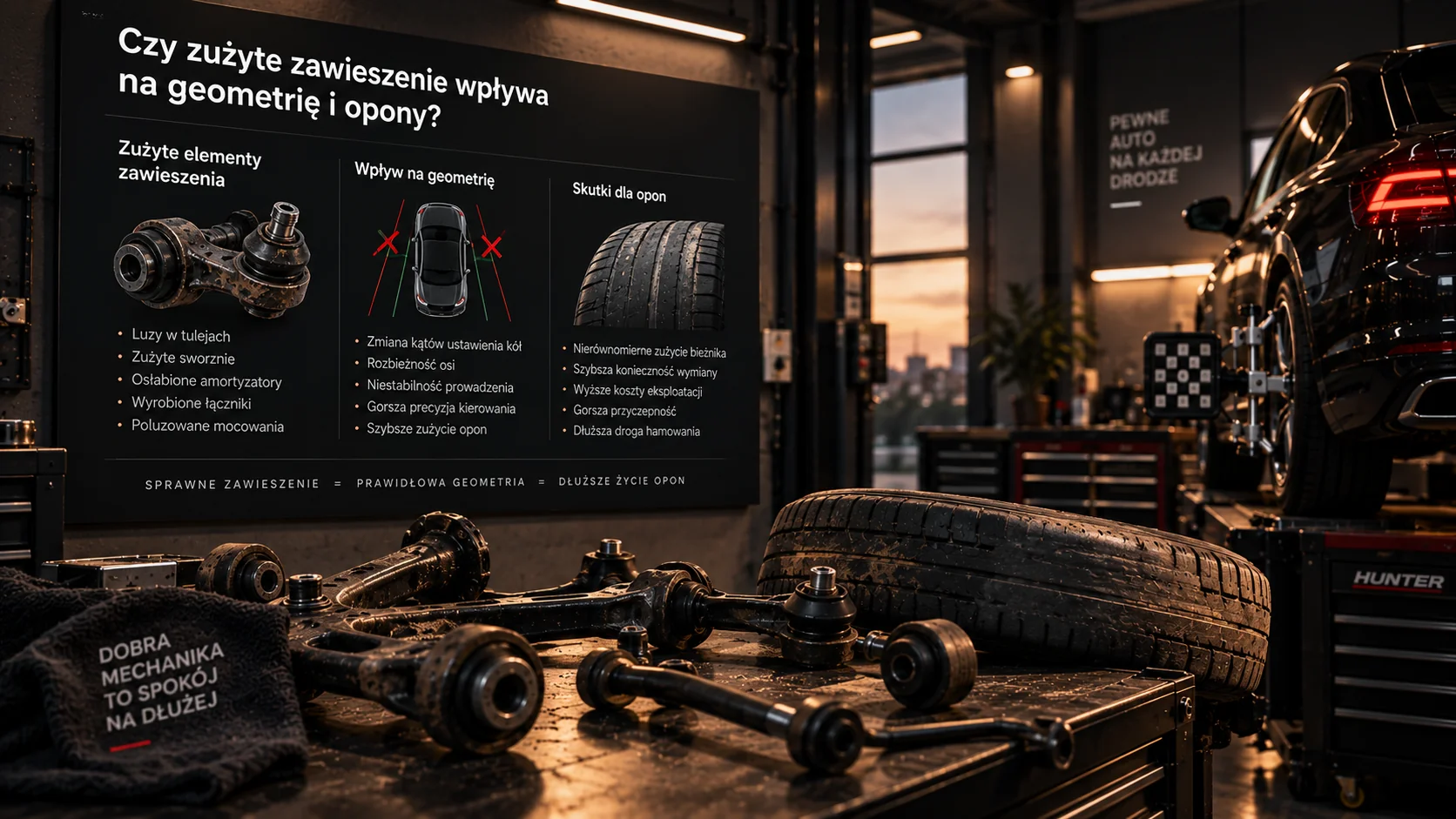





Suspension knocking and rattling over bumps is most often caused by worn stabiliser links (the so-called "links"), cracked control arm bushings and silent blocks, play in the tie rod ends or steering rods, worn control arm ball joints, or worn top strut mounts and bearings. All of these parts have a limited service life, and once play develops, the wheel "jumps" as it hits a pothole or bump — and you hear a metallic knock or rattle. You can narrow down some causes yourself with a simple inspection, but only checking the car on a lift gives certainty. Below, one by one: which part makes which sound, when it's dangerous and how to find the culprit.
What most often knocks over potholes and bumps
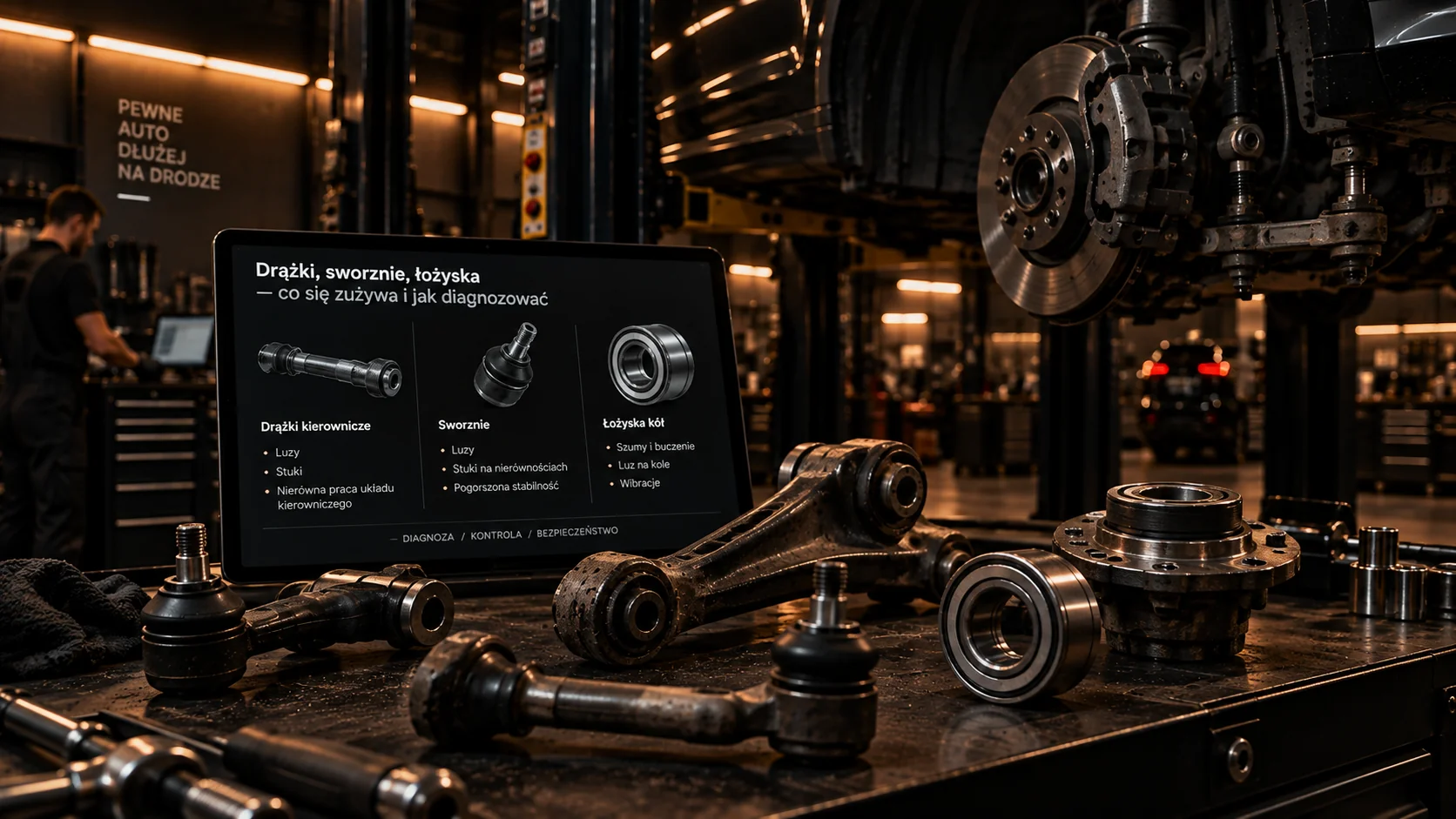
- Stabiliser links ("links") — the most common culprit. They give a light, two-sided rattle over small bumps and cobbles, often audible even at low speed.
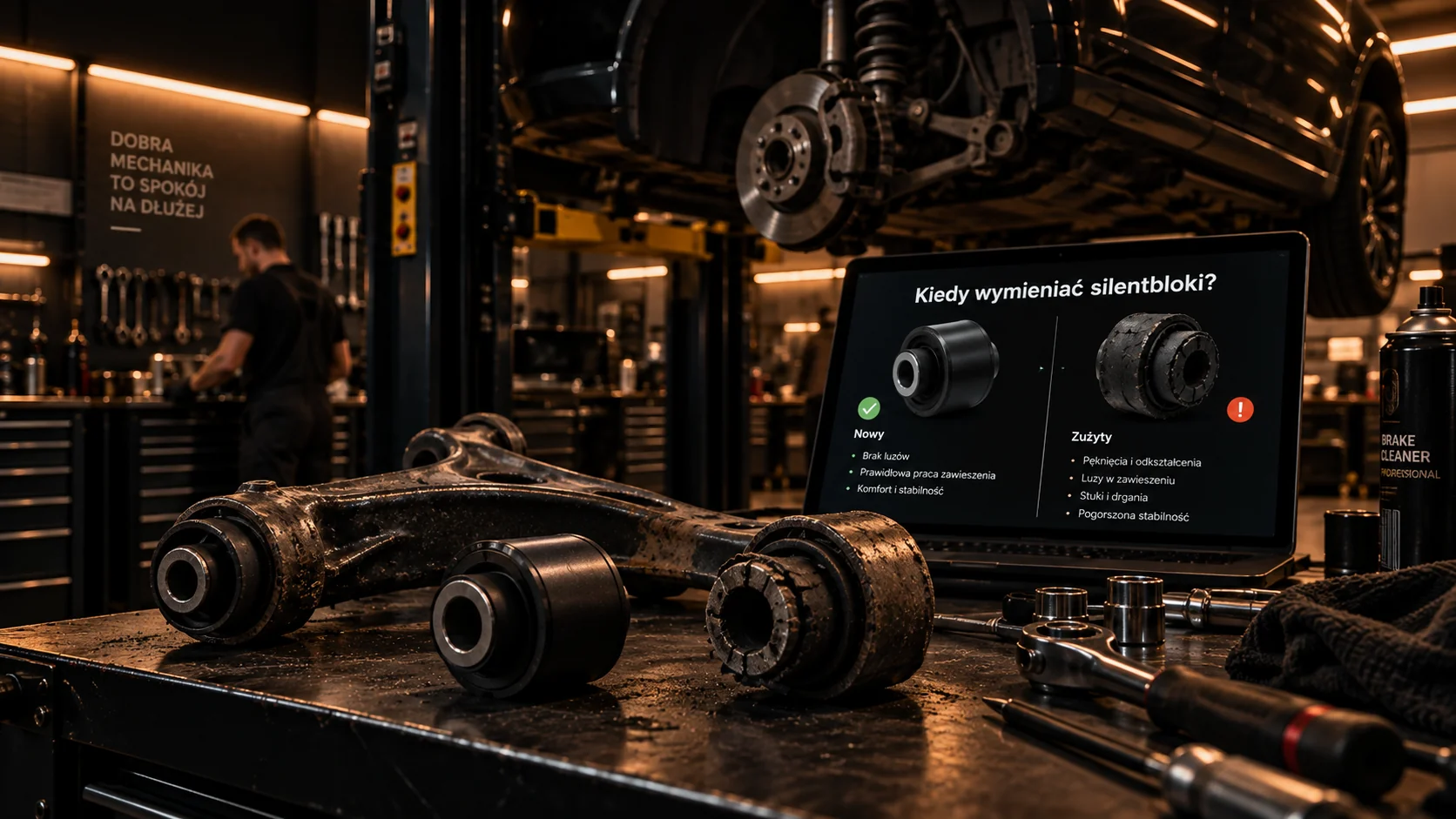
- Control arm bushings and silent blocks — cracked rubber causes a dull knock over larger potholes and when setting off or braking; it can also feel like a "loose" front end.
- Tie rod ends and steering rods — play produces a knock linked to turning the wheel; the car may also "wander" in ruts.
- Control arm ball joints — a worn joint clacks over bumps and when turning at low speed.
- Top strut mount and bearing — a knock or crunch when hitting a bump and when turning the wheels in place.
- Worn shock absorber — instead of a single knock it gives bouncing and "floating" of the body after a bump, sometimes with a thudding sound.
- Small stuff — a loose undertray, exhaust clamp, an over-loose caliper or a bit of sound insulation can also rattle, mimicking the suspension.
A knock or a rattle? That's an important clue
A single, distinct "knock" over larger potholes more often points to the control arms, ball joints or top strut mounts. A fine, rapid "rattle" over small bumps is usually the stabiliser links. This distinction helps narrow the search, but won't replace a check on the lift.
How to narrow down the cause yourself
Before you come in, you can check a few things without lifting the car:
- Rock the car — push down hard on the fender and let go. If the body bounces several times, suspect the shock absorbers.
- Drive slowly over cobbles or a speed bump and listen carefully for which side and which corner the sound comes from.
- Note whether the knock appears when turning the wheel (steering system) or only over bumps (control arms, stabiliser).
- Inspect the rubber boots (the so-called "bellows") on the rods and ball joints — a cracked boot is a sign the part has developed play.
- Check that nothing rattles in the boot or under the car (undertrays, exhaust) — that's easy to mistake for the suspension.
If, besides the knocking, you feel the car holds the road worse, "floats" or the tyres wear faster, the cause may be more heavily worn suspension — you can recognise it by the symptoms in our guide: symptoms of worn suspension — when to see a mechanic. And if after the repair the car pulls to one side or wears the tread unevenly, the next step is wheel alignment — when to do it and how much it costs.
Don't delay if the knock is growing
A growing knock means the play is getting worse. A snapped stabiliser link or a worn ball joint isn't just noise — it really affects handling and safety. The sooner you replace the worn part, the lower the risk it drags others down with it.
Can you drive with a knocking suspension?
In short: it depends on what's knocking. A single rattle from stabiliser links usually won't ground the car right away, but it worsens comfort and grows over time. Play in the ball joints, tie rod ends or a large control arm, however, already affects handling and alignment — and in an extreme case risks loss of control. So it's not worth guessing: it's cheaper and safer to establish the cause when a part just starts knocking than to wait until it damages the tyres or neighbouring parts.
How we pinpoint the cause at the workshop
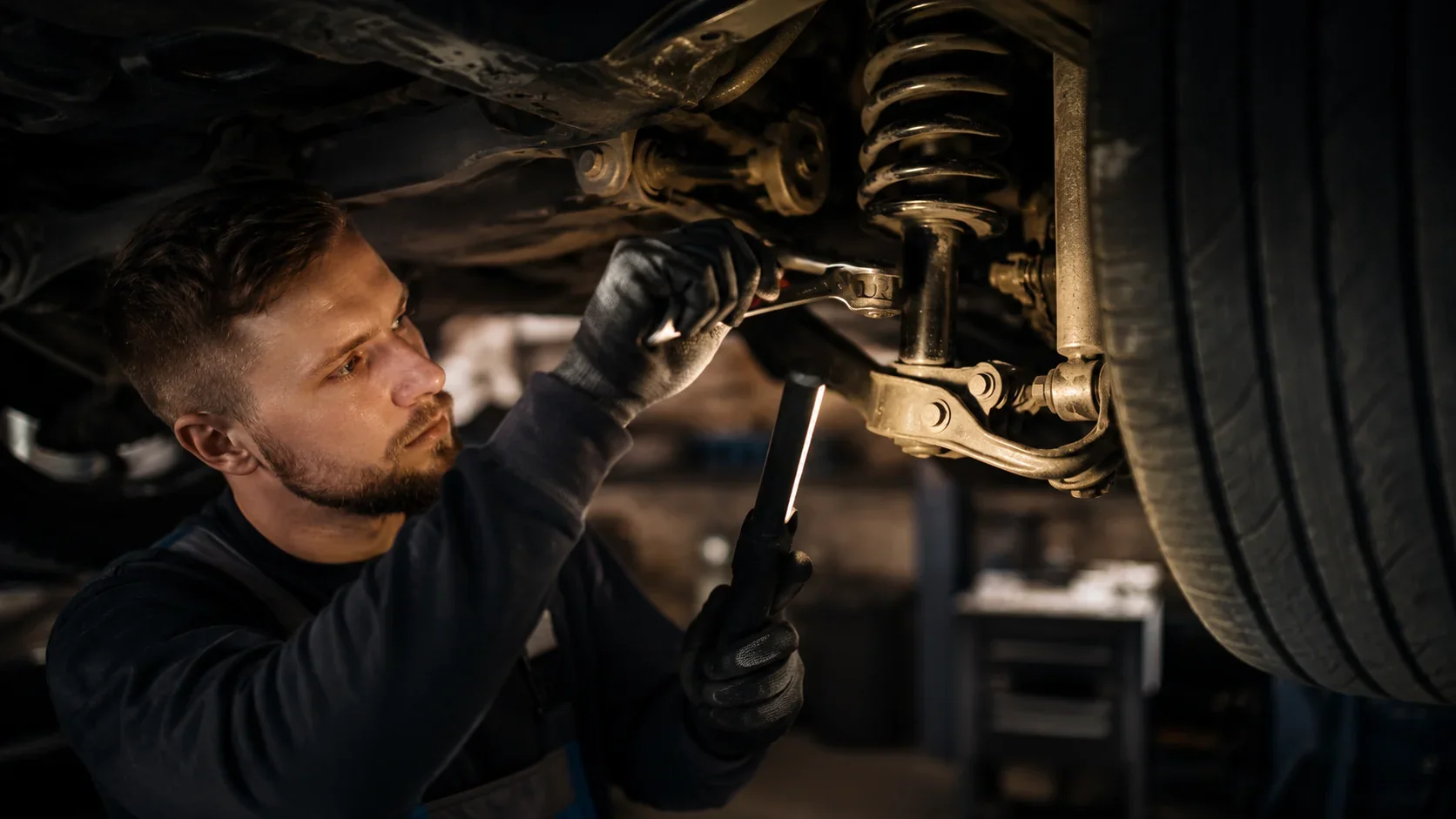
A knock is easy to hear but hard to trace to a specific part by ear — several faults produce a similar sound. That's why at our mechanical service at Grabiszyńska 241 in Wrocław we raise the car on the lift and check each part separately: we manually test play in the control arms, ball joints and tie rod ends, rock the wheel in several planes and assess the condition of the shock absorbers and mounts. This way we replace exactly what has play, not the whole front end "blindly". After replacing steering or control arm parts, we usually also check the alignment so the car drives straight and wears the tread evenly.
It only knocks over small bumps, but it's quiet over big potholes. What is it?
That's a typical symptom of worn stabiliser links. Over small, fast bumps the stabiliser works hardest, so play in the "links" is heard most clearly. It's one of the cheaper and most common repairs — but it's worth confirming on the lift.
The knock appears when turning the wheel, not just over bumps. What should I check?
A sound tied to the steering points more to the steering system: tie rod ends and rods, the steering column joint or the top strut mount. A check of the play with the car raised is needed so these parts aren't confused.
Will a knocking suspension ruin my tyres?
It can. Play in the suspension and steering throws off the alignment, and incorrect alignment wears tyres unevenly and faster. So after repairing the knocking parts, it's worth checking the toe.
How long does it take to find the cause of the knock?
Checking the suspension on the lift alone usually takes a few dozen minutes. If the fault is unusual or only appears under specific conditions, a test drive may be needed — we'll let you know after the initial inspection.

Something knocking in the suspension? Let's check before it develops
We'll raise the car and point to the specific part with play — we replace only what's needed.