







Most repairs are predictable. But sometimes a car comes to us whose fault escapes simple patterns — the symptoms are unusual, and previous workshops gave up. We like those cases the most. We explain how we approach complex repairs and why honesty matters more than promises here.
Diagnosis over guesswork
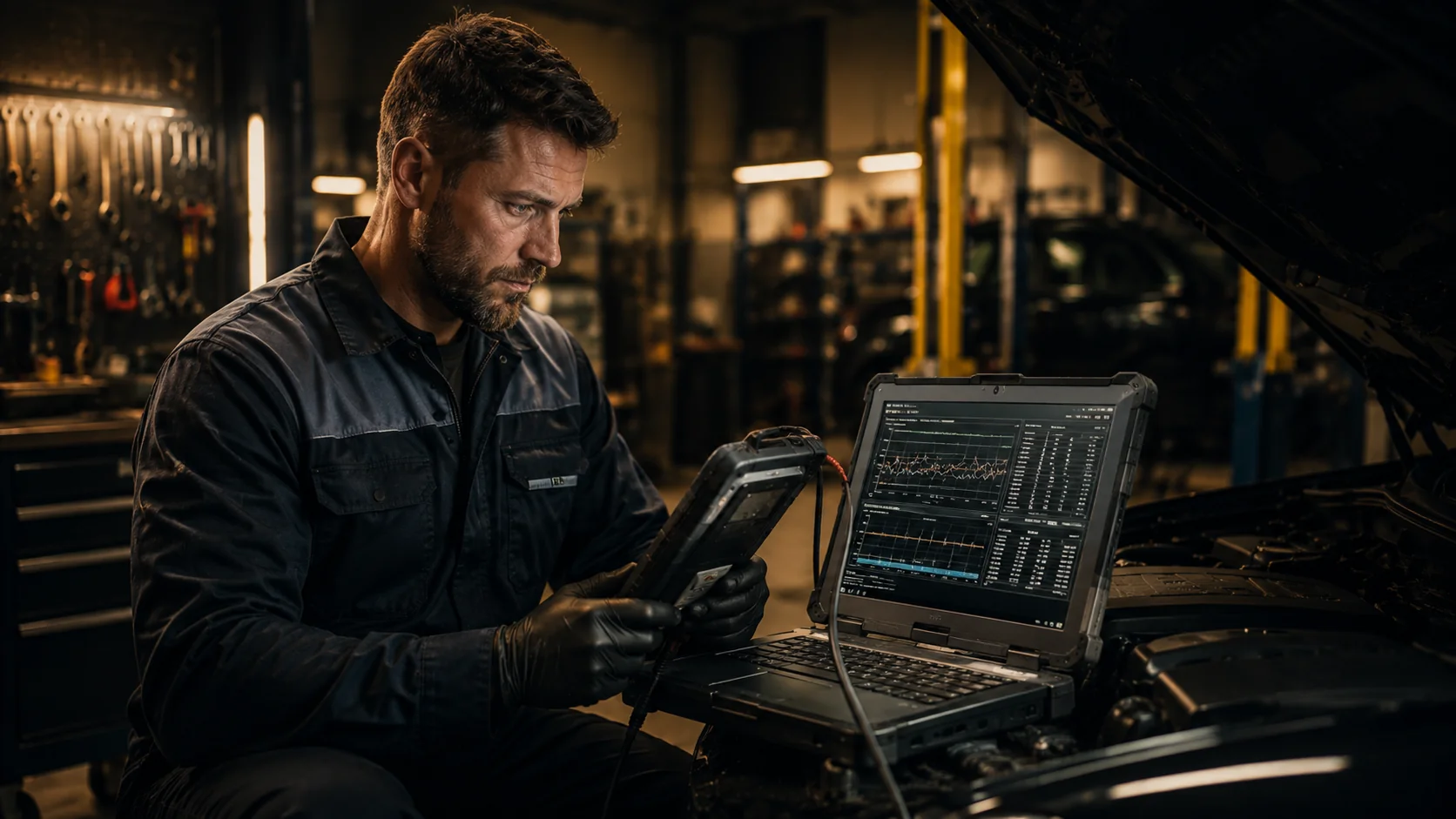
A complex repair starts with thorough diagnostics, not with swapping parts “by guess.” We combine computer readouts with physically checking components to find the source, not just the symptom.
The “keep replacing until it’s fixed” method is the most expensive
Replacing parts blindly is a cost the customer bears. That’s why we first look for the real cause.
An honest conversation about costs
With difficult faults, we’re upfront from the start:
- what we already know and what we don’t yet
- how long the diagnostics alone will take and cost
- what the possible repair scenarios are and their price ranges
- when a repair stops being worthwhile
We’d rather say “we don’t know yet”
An honest “we’ll check and come back with specifics” is worth more than a promise made just to keep the customer.
When a repair makes no sense
Sometimes, after diagnostics, the most honest answer is: this repair isn’t worth it. We say so directly, even if it means the customer won’t spend money with us. Trust matters more than one job.
A customer who trusts comes back
An honest assessment builds a relationship for years — and it’s that, not a single invoice, that decides whether a workshop makes sense.
Summary
Complex repairs test a workshop’s integrity. The best approach is thorough diagnostics, clear communication, and the courage to tell the customer the truth — even the uncomfortable kind. That’s how we work every day.

Got a fault no one can solve?
We’ll do thorough diagnostics and tell you directly what’s going on with your car.