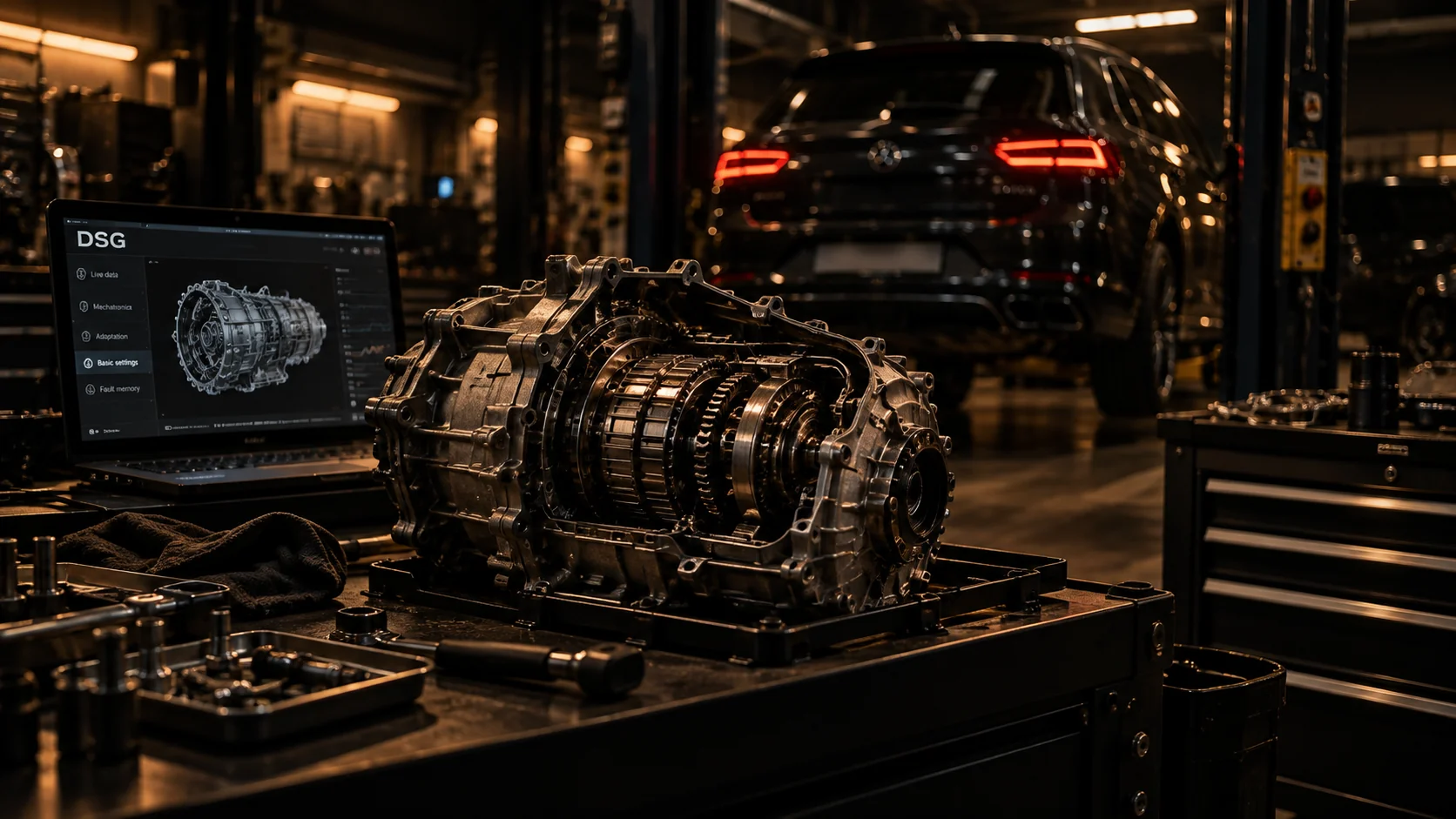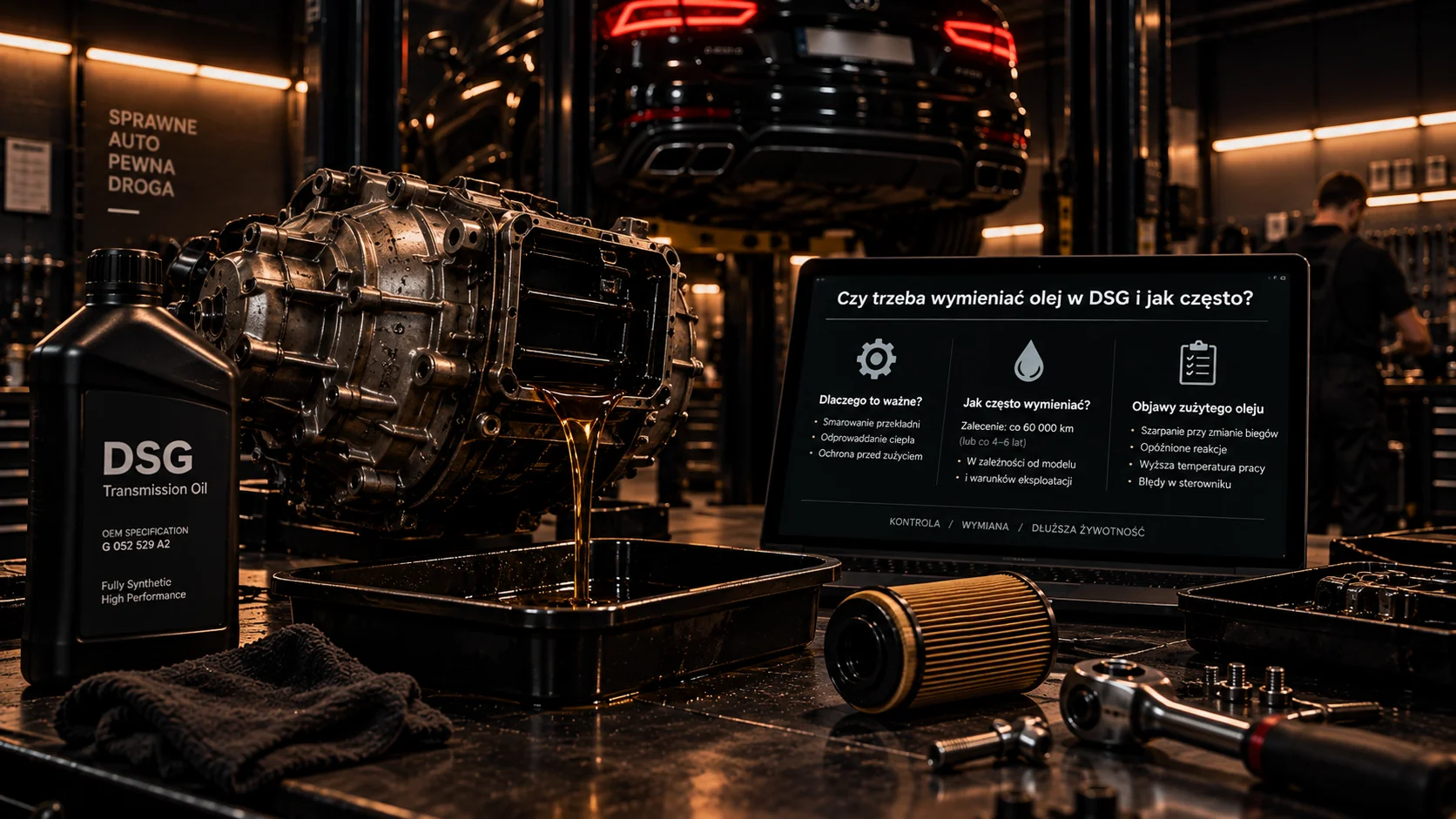









Yes, DSG oil needs regular changes — the "fill for life" claim that appeared in some manufacturers' recommendations rarely holds up to real-world use, especially in city conditions. The exact interval depends on the specific gearbox model and the manufacturer's recommendations, but the general rule is simple: the more you drive in traffic and on short trips, the more the oil needs changing sooner than the "book" interval. In this article we explain why DSG oil matters so much, how often to take care of it, and why this isn't a swap to do yourself in the garage.
Why Regular DSG Oil Changes Matter
In wet-clutch gearboxes, the oil plays a double role — it lubricates the mechanism and also cools the clutches themselves, which run bathed in oil. Over time the oil loses its lubricating and cooling properties, so the clutches run under worse thermal conditions and wear faster. We covered this in more depth in why DSG "kicks" — causes of jerking, where degraded oil is one of the more common causes of clutch problems.
How Often to Change DSG Oil
There's no single universal interval that fits every model — it depends on the specific gearbox, the manufacturer's recommendations, and your driving style. Instead of going by a generic number of kilometers found online, the most reliable approach is to check the recommended interval for your specific car model and factor in your actual driving conditions when deciding on a real-world timeline.
- Mostly driving in traffic and on short trips — it's worth shortening the interval compared to the manufacturer's recommendation, since the oil works under harsher thermal conditions.
- Regular highway driving at a steady speed — comes closer to the conditions the manufacturer used to test the recommended interval.
- Frequently towing a trailer or heavy vehicle loads — puts extra strain on the gearbox and justifies checking the oil condition more often.
Does "Fill for Life" Oil Really Exist
For years, some manufacturers promoted the idea of oil designed to last the gearbox's entire service life, with no need for changes. In theory that sounds convenient, but in practice — especially under typical city driving in Poland — the oil degrades faster than those lab assumptions predicted. The result is that cars "never serviced" on DSG oil end up at the workshop with clutch or mechatronic problems more often than those maintained regularly.
"Fill for Life" Is Marketing, Not a Guarantee
Taking the "fill for life" claim literally can get expensive — skipping the change doesn't reduce clutch wear, it accelerates it. Regular oil changes are one of the cheaper ways to delay more serious gearbox repairs.
What Happens If the Oil Is Never Changed
Old oil loses its ability to carry heat away from the clutches, which promotes overheating, especially in traffic. Over the longer term this speeds up clutch wear, and in extreme cases it can also stress the mechatronic unit — the most expensive gearbox component to repair. Jerking when pulling away is often the first sign that something in the gearbox has already been affected; if you notice symptoms like that, it's worth starting with a diagnostic rather than jumping straight to replacing parts.
Can You Change DSG Oil Yourself
Unlike an engine oil change, which you can do yourself, for example at the Self-Service Zone, a DSG oil change requires setting the fluid level precisely at a specific temperature, and on many models, a diagnostic computer to confirm the procedure. A level that's too low or too high can cause problems on its own, even with fresh oil. That's why this particular job is best left to a workshop with the right equipment, rather than done by feel.
Does DSG oil really need to be changed?
Yes. Despite "fill for life" claims from some manufacturers, regular changes genuinely extend clutch life in practice and reduce the risk of costly repairs.
After how many kilometers is DSG oil changed?
There's no single universal interval — it depends on the gearbox model and the manufacturer's recommendations. If you mostly drive in traffic, it's worth shortening the interval compared to the book recommendation.
Can I change DSG oil myself, like engine oil?
This isn't recommended — the change requires setting the level precisely at a specific temperature, and often a diagnostic computer too. An incorrect oil level can cause problems on its own.
How do I know DSG oil is already badly worn out?
It's hard to judge directly without a workshop check, but one indirect sign can be jerking when pulling away or in traffic — we covered the possible causes in our article on DSG jerking.
Will skipping the oil change damage the gearbox immediately?
Not necessarily right away, but it speeds up clutch wear and raises the risk of overheating under harder driving conditions, like traffic. This risk builds up over time rather than appearing suddenly.

Let's Check the Oil in Your DSG
We'll check the gearbox's condition and work out the right change interval for your model and driving style.