






The DPF traps soot from the exhaust in a porous ceramic core and cleans itself using high exhaust temperature — the problem only starts once the engine never reaches the conditions needed for that self-cleaning. Short city trips are the most common cause of DPF clogging, because the exhaust simply never gets hot enough to trigger regeneration. In this guide we explain in detail what the filter is made of, how it physically traps particulates, what the three types of regeneration involve, and why driving style affects a DPF more than the car's age or mileage.
DPF Structure — What It's Made Of
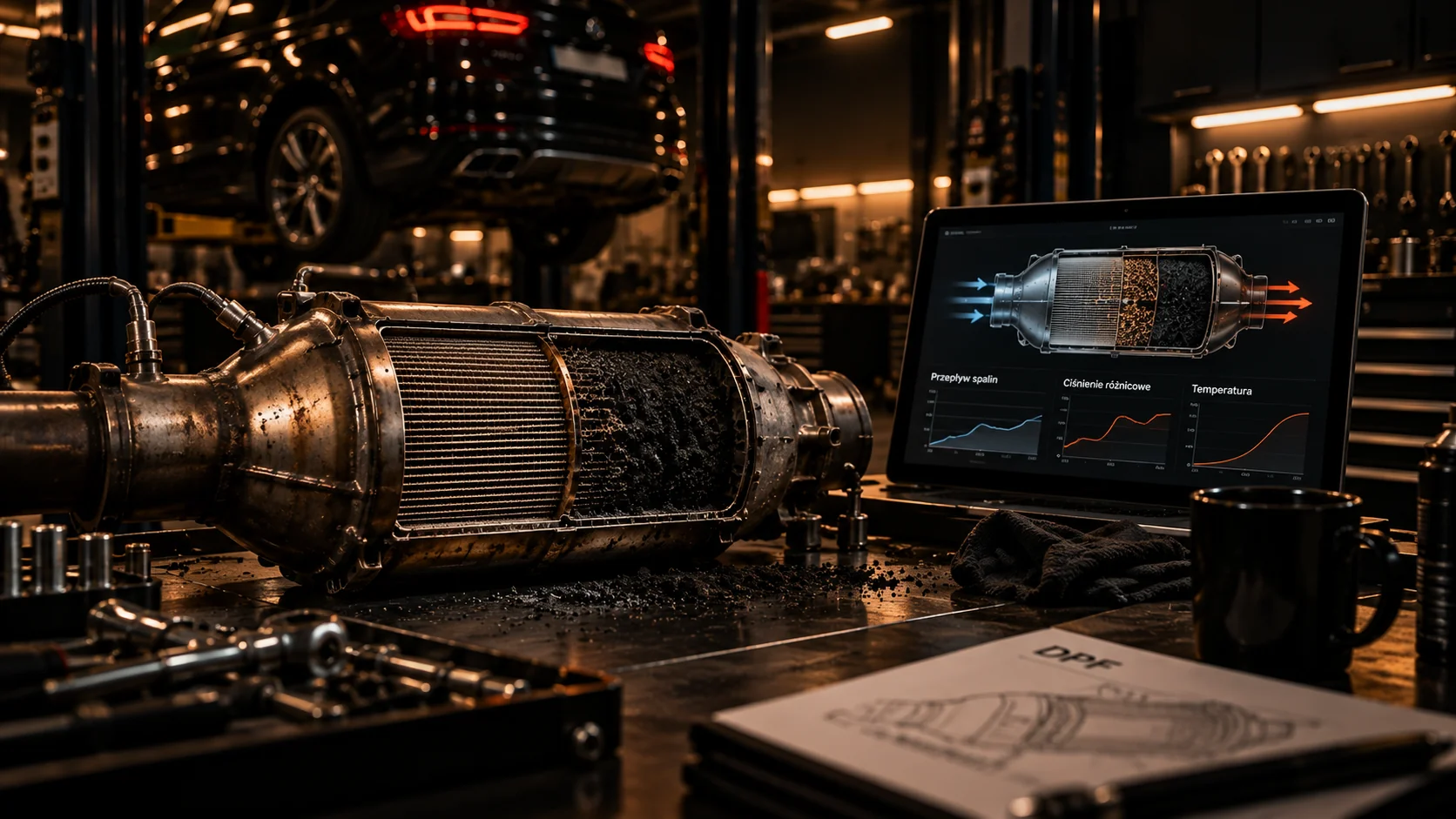
A DPF (Diesel Particulate Filter, sometimes also labeled FAP) isn't a simple mesh or sponge. It's a ceramic core with a honeycomb structure, where the channels are alternately plugged at one end or the other — this forces exhaust gases to flow through the porous walls between channels instead of passing straight through.
- Ceramic monolith — usually silicon carbide or cordierite, a material that withstands temperatures over 1000°C during regeneration.
- Alternating channel plugs — this design is exactly what forces exhaust gases through the porous walls where soot gets deposited.
- Catalytic coating — lowers the temperature needed to burn off soot, making regeneration possible at lower exhaust temperatures than without the coating.
- Differential pressure and temperature sensors — measure exhaust flow resistance before and after the filter, plus temperature; the engine control unit uses this to estimate how full the DPF is.
How the DPF Traps Soot — The Basic Principle
Burning diesel always produces soot — microscopic carbon particles that would go straight into the atmosphere without a filter. As exhaust gases flow through the porous walls of the DPF channels, soot particles are too large to pass through the pores, so they stay on the walls while the filtered exhaust continues into the exhaust system. Over time, the soot layer on the walls grows — the filter fills up, and the resistance to exhaust flow through it increases, which the differential pressure sensor registers as rising fill level.
DPF vs. Catalytic Converter — Not the Same Thing
The catalytic converter chemically transforms harmful gases (carbon monoxide, hydrocarbons, nitrogen oxides) into less harmful compounds. The DPF physically traps solid soot particles. These are two different exhaust system components that often work together but handle different jobs.
Regeneration — How the Filter Cleans Itself
Accumulated soot doesn't stay in the filter forever. At a high enough exhaust temperature, soot simply burns off — turning into a small amount of ash, and the filter regains its flow capacity. This process is called regeneration and comes in three variants, depending on how it happens.
- Passive regeneration — happens on its own when the exhaust temperature naturally exceeds the soot-burning threshold (usually above 550°C) during longer, faster driving, like on a highway. The driver usually doesn't even notice it.
- Active regeneration — when the engine control unit detects the DPF filling up with no passive regeneration conditions occurring, it raises the exhaust temperature itself (e.g. through extra fuel injections) and forces the soot to burn off. This usually takes ten to a few dozen minutes of driving.
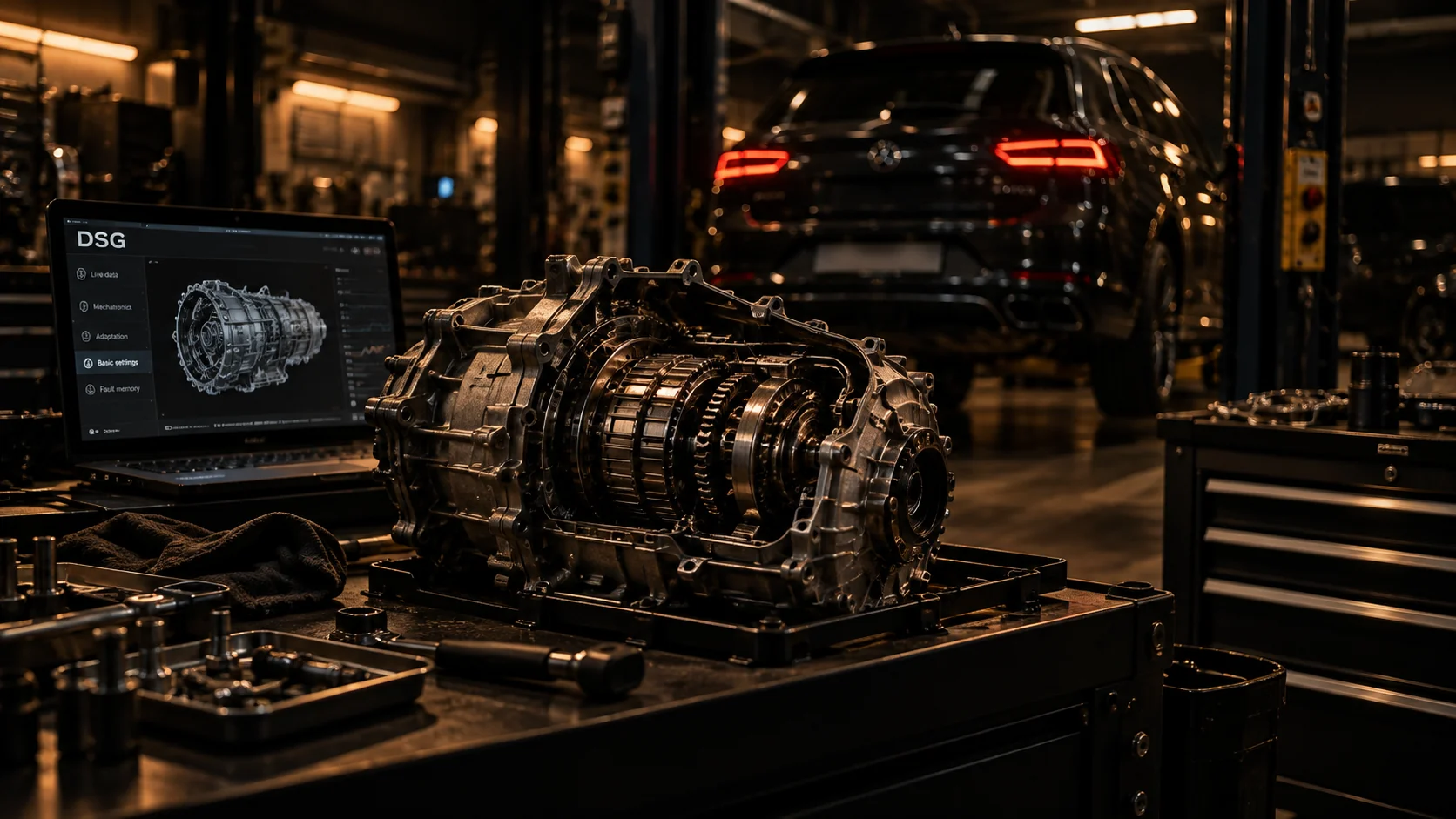
- Forced (workshop) regeneration — when the fill level is already very high and active regeneration fails for some reason, a regeneration performed at the workshop with diagnostic equipment becomes necessary, often paired with a controlled test drive.
Active Regeneration Needs the Right Conditions
If active regeneration gets interrupted halfway through — say, the driver switches off the engine after a few minutes of city driving — the soot doesn't fully burn off, and sometimes extra fuel used to raise the exhaust temperature ends up in the engine oil. Regularly interrupting regeneration is one of the more common causes of premature DPF clogging.
One more distinction is worth making: regeneration burns off soot, but it doesn't remove everything that enters the filter. Burning engine oil and fuel additives leaves behind small amounts of ash that regeneration can't burn away — it's this ash, not soot, that ultimately limits the filter's lifespan. So even with a perfect driving style, a DPF isn't a permanent part — it's a wear item with a long but finite service life.
Why the DPF Clogs — The Core of the Problem
If the filter has a built-in self-cleaning mechanism, why does it clog at all? The answer is simpler than it sounds: it clogs when the conditions needed for regeneration simply never occur. Short city trips — the commute to work, errands, the school run — are drives during which the engine and exhaust system never get hot enough for passive regeneration, and the trip ends before active regeneration can fully complete.
As a result, soot builds up from drive to drive until the filter's fill level reaches the point where the car itself lights up warning indicators and cuts power. For more on the specific signs you can notice from the driver's seat before it gets to that stage, we covered it in signs of a clogged DPF — 8 warning signs.
How the Engine Control Unit Knows When to Regenerate
The decision to start active regeneration isn't made by guesswork — the engine control unit constantly compares several parameters at once and uses them to estimate how full the filter is.
- Pressure differential before and after the filter — the more soot in the channels, the greater the resistance to exhaust flow, and the higher the measured pressure difference.
- Exhaust temperature — helps determine whether conditions for passive regeneration actually occurred during the drive.
- Mileage since the last full regeneration — the control unit tracks how many kilometers were driven and their character (city vs. highway) since the last complete soot burn-off.
- Real-time driving style — engine RPM, load, and speed determine whether it's even possible to safely raise the exhaust temperature for regeneration at that moment.
What Happens When the DPF Is Already Badly Clogged
A badly clogged filter isn't just about reduced power and higher fuel consumption — it also risks making active regeneration impossible altogether, because the pressure differential across the filter becomes too high to safely raise the exhaust temperature. At that point the only option left is forced regeneration at the workshop, and with very advanced clogging, mechanical cleaning or filter replacement. If you're wondering which option makes sense for your situation, we compared them in cleaning the DPF vs. replacing it — which pays off more.
A Regular Longer Drive Is the Cheapest Prevention
If most of your driving is short city trips, it's worth going for a longer drive from time to time — 20–30 minutes at higher RPM on the highway lets the filter complete a full passive regeneration and genuinely extends its lifespan.
How is a DPF different from a catalytic converter?
The catalytic converter chemically transforms harmful exhaust gases into less harmful compounds, while the DPF physically traps solid soot particles in a porous core. They're two different exhaust system components.
How long does DPF regeneration take?
Passive regeneration happens in the background during normal highway driving. Active regeneration usually takes ten to a few dozen minutes of continuous driving at higher RPM.
Will city driving definitely clog the DPF?
Not always, but short city trips significantly raise the risk, since they don't provide high enough exhaust temperature for passive regeneration or enough time for active regeneration to finish.
What should I do if active regeneration keeps getting interrupted?
It's worth taking a longer drive at higher RPM from time to time to give the filter a chance at a full regeneration. If the problem keeps coming back anyway, it's worth having the DPF checked at the workshop before the fill level rises to the point of needing a workshop regeneration.
Can I burn off the DPF myself, without a workshop?
The car handles passive and active regeneration on its own while driving — nothing needs to be done manually. Forced regeneration requires diagnostic equipment and knowing when it's safe, which is why it's done at the workshop.

Suspect a DPF Problem?
We'll check the filter's fill level and find the right solution — from regeneration to a decision on cleaning or replacement.