


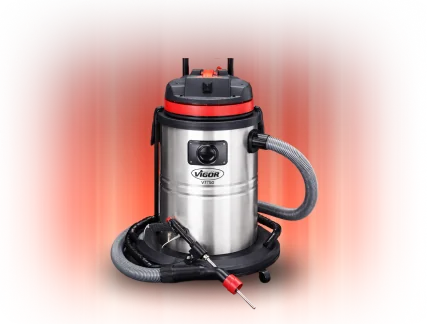



Walnut blasting is the English name for cleaning intake valves and ports with crushed walnut shell granulate — with us the service runs under the name “czyszczenie dolotu granulatem orzecha”. It's an effective way to remove the hard carbon deposits that build up on intake valves in direct-injection petrol engines (TSI, TFSI, EcoBoost and similar) — deposits no chemical additive poured into the tank can wash away. In this article we explain how the procedure works, what symptoms point to a coked-up intake, and when walnut blasting actually makes sense.
Walnut blasting — how it actually works
The name comes from “walnut” and “blasting” — a media-blasting process, in this case using granulate rather than sand. The method works much like sandblasting metal, except instead of sand it uses soft, natural walnut shell granulate, fed under pressure through a special nozzle inserted into the intake port.
- Removing the intake manifold — opens access to the valves and ports without touching the cylinder head itself.
- Shielding the cylinders — the intake openings are sealed off so granulate can't reach the combustion chamber.
- Blasting with pressurised granulate — natural walnut granulate mechanically scours off the carbon without damaging metal surfaces or seals.
- Extracting the residue and reassembly — leftover granulate and carbon debris is vacuumed out and the manifold goes back on.
Why walnut granulate specifically, and not something harder
Walnut shell granulate is hard enough to scrape off charred carbon deposits, yet soft enough not to scratch the valve surfaces or port walls. Quartz sand or another hard abrasive would do the same job on the carbon — but would damage the metal in the process, which is why they aren't used.
Why the intake clogs up in the first place
The problem affects almost exclusively petrol engines with direct fuel injection (GDI/FSI/TSI/TFSI/EcoBoost). In older engines with indirect injection, fuel was sprayed just ahead of the intake valve and effectively “rinsed” it on the way through, washing off any carbon as it formed. With direct injection, petrol goes straight into the combustion chamber — the intake valves never touch fuel, so that natural self-cleaning simply doesn't happen.
Instead, oil vapour from the crankcase ventilation system (PCV) and exhaust particles from EGR recirculation settle on the hot valves. Over time they harden into a tough, charred layer that narrows the port and disrupts airflow into the cylinder.
Symptoms of a coked-up intake
Carbon builds up gradually, so the symptoms creep in slowly too — drivers often get used to the sluggish feel and only notice the problem when they can compare it directly to how the car used to drive.
- A power loss and a noticeably weaker throttle response, especially at low revs.
- Rough idling, slight vibration.
- Higher fuel consumption for the same driving style.
- Harder cold starts.
- A check-engine light with fault codes for the air-fuel mixture or uneven cylinder running.
It's not the same as a clogged DPF
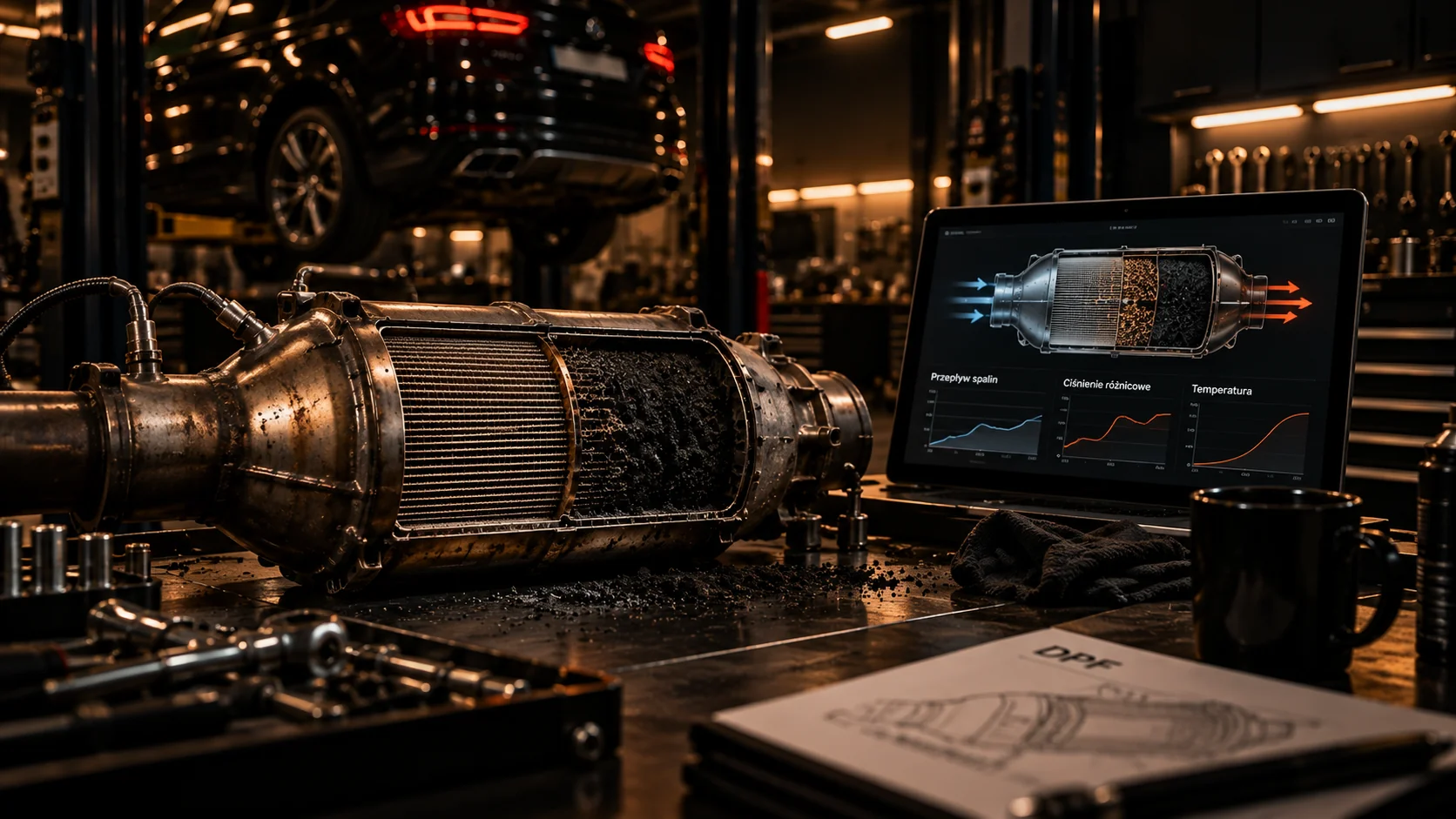
Diesel drivers tend to associate power loss and limp mode mainly with the particulate filter — but in direct-injection petrol engines, a coked-up intake produces very similar symptoms. If you drive a diesel, our article on <a href="/blog/objawy-zapchanego-dpf">symptoms of a clogged DPF</a> is more relevant — it's a different mechanism and a different repair.
When walnut blasting helps — and when it's not worth it
This is a method targeted at a specific problem, so it's worth knowing where it works and where it will just cost money without any effect.
- It makes sense when the car has a direct-injection petrol engine past 60,000–100,000 km, is driven mostly in the city on short trips, and shows the power-loss and rough-running symptoms described above.
- It won't help if the symptoms have a different cause — a faulty ignition coil, a bad spark plug, a vacuum leak or an injector problem. Computer diagnostics before the procedure tell these apart, so you don't pay for a clean that changes nothing.
- It doesn't apply to engines with indirect injection (older designs) or to diesel engines — we don't tackle intake-valve issues there with this method, because they don't clog up this way.
You'll find the full service description, scope of work and pricing on the intake cleaning with walnut granulate page. If you want to see a real example, we wrote up a specific case in Case study: Audi A4 2.0 TFSI — intake cleaning with granulate.
The effect after the procedure
After a properly done walnut granulate clean, airflow into the cylinders returns to normal — the car regains power, idling smooths out, and fuel consumption usually drops. The effect is noticeable from the very first drive.
How long the effect lasts, and whether it prevents the intake clogging up again
Walnut blasting removes the carbon that's already there, but it doesn't change the engine's design — oil vapour from crankcase ventilation will keep settling on the valves, so carbon will build up again over time. In typical use, the effect usually lasts several tens of thousands of kilometres before the power loss becomes noticeable again.
Two habits genuinely slow the process down: regular oil changes with good-quality oil (less oil vapour in the PCV system), and avoiding constant short, urban trips where the engine rarely reaches full operating temperature. Neither eliminates the problem entirely — it's inherent to how direct-injection engines are built — but both can stretch out the interval between cleanings.

Check whether your intake needs it
Book diagnostics and a walnut granulate clean in Wrocław, Grabiszyńska 241. If the power loss turns out to have a different cause, we'll tell you straight before the procedure, not after.
Walnut blasting — what does it mean in plain terms?
It's the English name for a method that cleans intake valves and ports with pressurised walnut shell granulate. With us the service is called “intake cleaning with walnut granulate” and works on exactly the same principle.
Is walnut blasting safe for the engine?
Yes — walnut shell granulate is natural and soft enough not to damage the valve surfaces or the intake port walls, while still effectively removing hard carbon deposits. The cylinders are shielded during the procedure so granulate can't reach the combustion chamber.
Which cars need this most often?
Mainly petrol engines with direct fuel injection — TSI, TFSI, FSI, GDI, EcoBoost and similar. In these engines the intake valves are never washed by fuel, so carbon builds up faster than in older indirect-injection engines.
How can you tell the intake is coked up?
Typical symptoms are a power loss, rough idling, higher fuel consumption, harder cold starts and a check-engine light with air-fuel mixture codes. The symptoms build up gradually, so they're easy to get used to.
How much does intake cleaning with walnut granulate cost in Wrocław?
We quote the exact price after diagnostics and once the scope of work is set — it depends on the engine model and how accessible the intake manifold is. Details and booking are on the intake cleaning with walnut granulate service page.