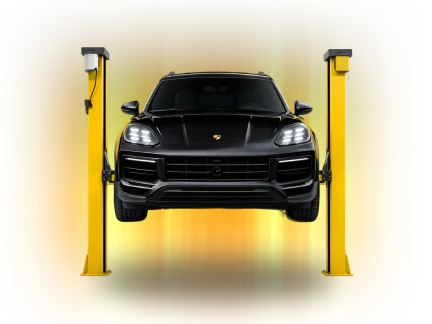





Vans with a kerb weight of up to 5 tonnes — the Sprinter, Ducato, Transit, Crafter, Master or Iveco Daily — are serviced in Wrocław on a full-size bay with a 5-tonne lift (80 PLN/h) at ul. Grabiszyńska 241. You can rent the bay by the hour and do the repair yourself, or leave the van with our mechanic. We are not a workshop for trucks over 5 tonnes or for tractor units — and in this article we explain exactly where that line runs, what usually fails in vans and how to organise the repair so the van is back on its route the same day.
Van or truck — where our offer ends
Searches like “truck workshop Wrocław” come from two completely different groups of drivers. Some drive a van or a large panel van and casually call it a truck because of the entry in the registration document. Others really do have a vehicle over 5 tonnes — and those we have to send elsewhere, honestly. The difference is simple and comes down to the capacity of the lift and to our terms.
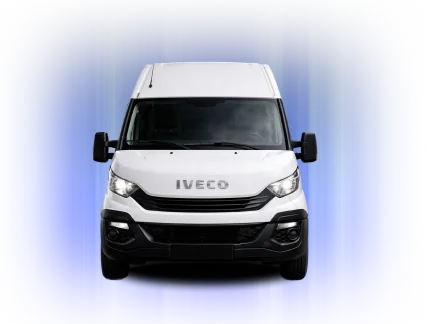
- We service: vehicles with a kerb weight of up to 5 tonnes — in practice the entire van class up to 3.5 t GVW, plus heavier vans and campers that fit within that limit. Mercedes Sprinter, VW Crafter and Transporter, Fiat Ducato, Ford Transit, Renault Master, Peugeot Boxer, Citroën Jumper, Opel Movano, Iveco Daily, Nissan NV — the 5-tonne lift handles them without trouble.
- We do not service: tractor units, trucks and buses over 5 tonnes, semi-trailers and heavy trailers. That is a different category of equipment — it needs pits of a different length, column lifts and separate qualifications. Better to hear it now than after driving up to the gate.
Where the 5-tonne limit comes from
Our Self-Service Zone terms speak plainly about vehicles with a kerb weight of up to 5 tonnes — that is the capacity of the largest lift in the workshop. If you are not sure whether your vehicle fits, check the kerb weight entry in the registration document (not the gross weight), or call before booking — we will check it together in 30 seconds.
Why a van waits for repair longer than a car
Van drivers know this first hand: three workshops called, and every one says “we don’t take vans” or “the next slot is in two weeks”. The reason rarely lies in the difficulty of the repair — it lies in the geometry of the workshop. A standard 3.5-tonne lift bay will not raise a loaded Sprinter, and a high roof will not clear a low door. A workshop that mostly takes passenger cars effectively blocks two bays for one van, so it prefers not to.
For a business this is not about convenience but about money. A van that stands still earns nothing — and a day of downtime usually costs more than the whole repair. If the vehicle works in courier delivery, construction or installations, one day without it means lost jobs, rescheduled customers and often the cost of a rental replacement too. That is why with vans it is not only the hourly labour rate that counts, but above all how quickly you get a bay.
The most expensive part of a van repair is the downtime
Work out your daily rate and compare it with the cost of the repair. In most transport and service businesses one day of van downtime is worth more than a typical brake or suspension job. That is exactly why it pays to book ahead and to pick the option that closes the subject in a single visit.
Two routes: do it yourself or leave it to a mechanic
A van can come in here in two modes, and you choose which one suits you better. Both use the same 5-tonne bay — the difference is who holds the spanner.
A 5-tonne bay by the hour in the Self-Service Zone
You book a bay with a lift for a chosen hour, drive in, raise the vehicle and work on it yourself. You pay only for the rental time — 80 PLN/h for the 5-tonne bay, which covers vans — with no labour charge, because you do the labour. The price includes the lift, a full set of spanners and impact wrenches, spot lighting and basic diagnostic equipment.
This option is usually chosen by business owners who work on their own vehicles and by experienced driver-mechanics. It makes sense for predictable jobs: oil and filter changes, pads and discs, shock absorbers, springs, minor exhaust work, an underbody check before the season. We described the rental model itself in the article A workshop by the hour in Wrocław.
The repair left to a mechanic
If you do not want to — or have no time to — work on the vehicle yourself, you leave it with us and our service department does the job. Mechanical repairs cover passenger cars and vans of all makes, both domestic and imported. Choose this route wherever diagnostics, specialist equipment or responsibility for the result is needed: electronic faults, the injection system, the turbocharger, more serious engine work.
A common mixed scenario
The mechanic handles the diagnostics and the hard part of the job, and you add the simple work — changing the oil and filters yourself during the same visit, for example. With vans, where service intervals come round quickly, this genuinely lowers the yearly running cost.
What usually fails in vans
A van wears differently from a passenger car. It runs loaded, covers more short urban legs, brakes more often and stands still less. Below are four areas that come up most often in vans — worth keeping an eye on before they turn into a breakdown on the road.
Brakes and suspension under load
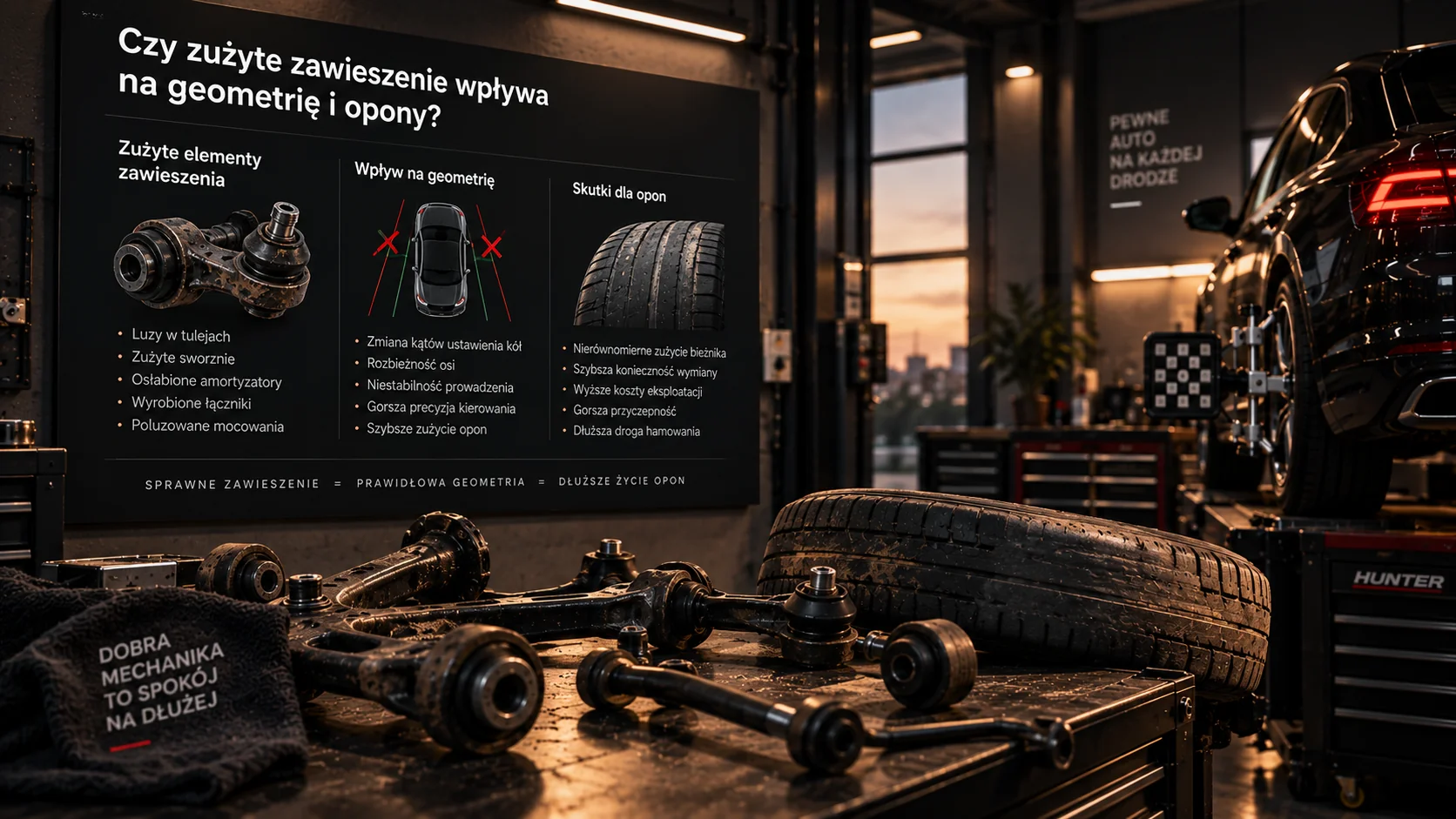
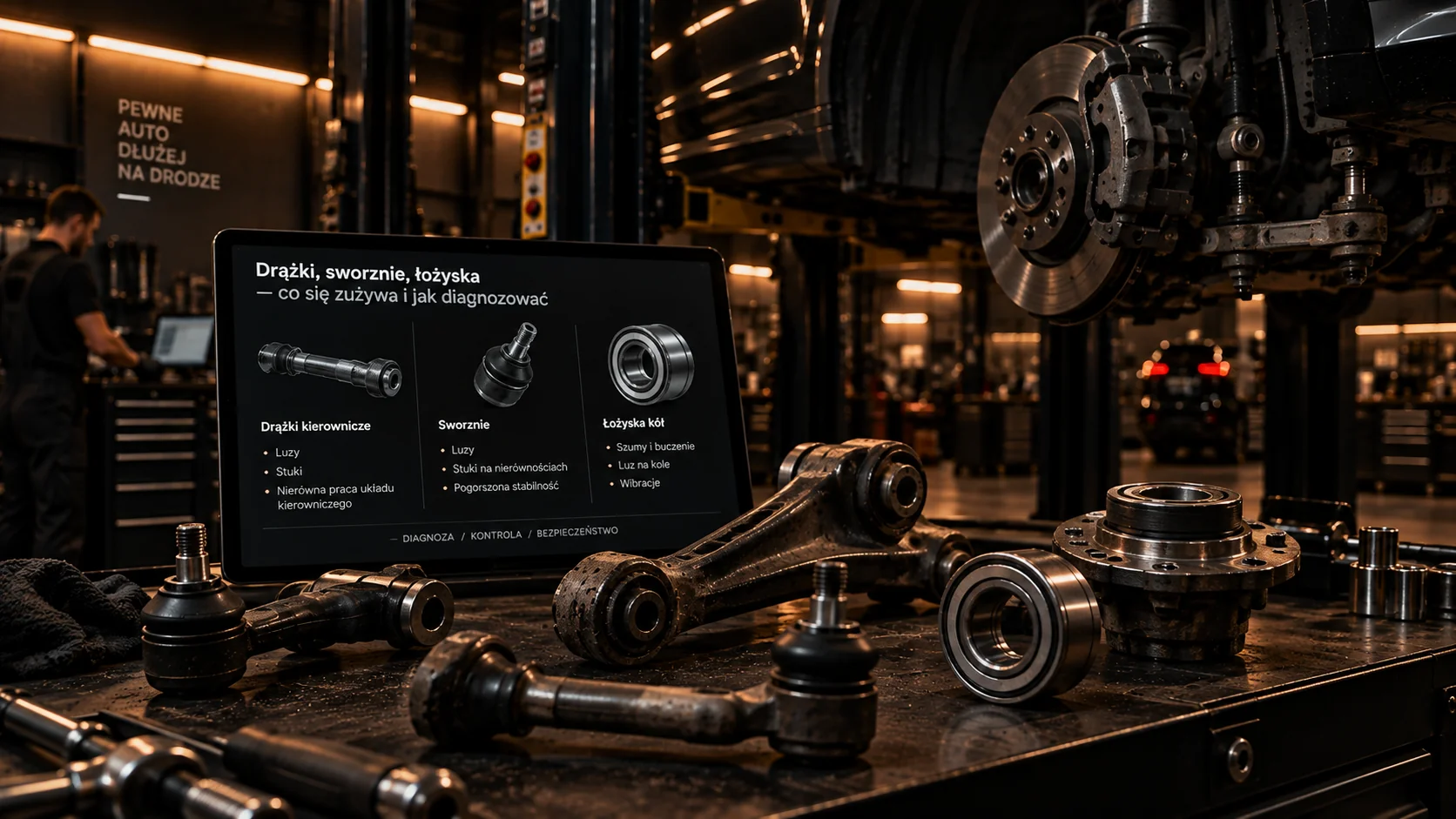
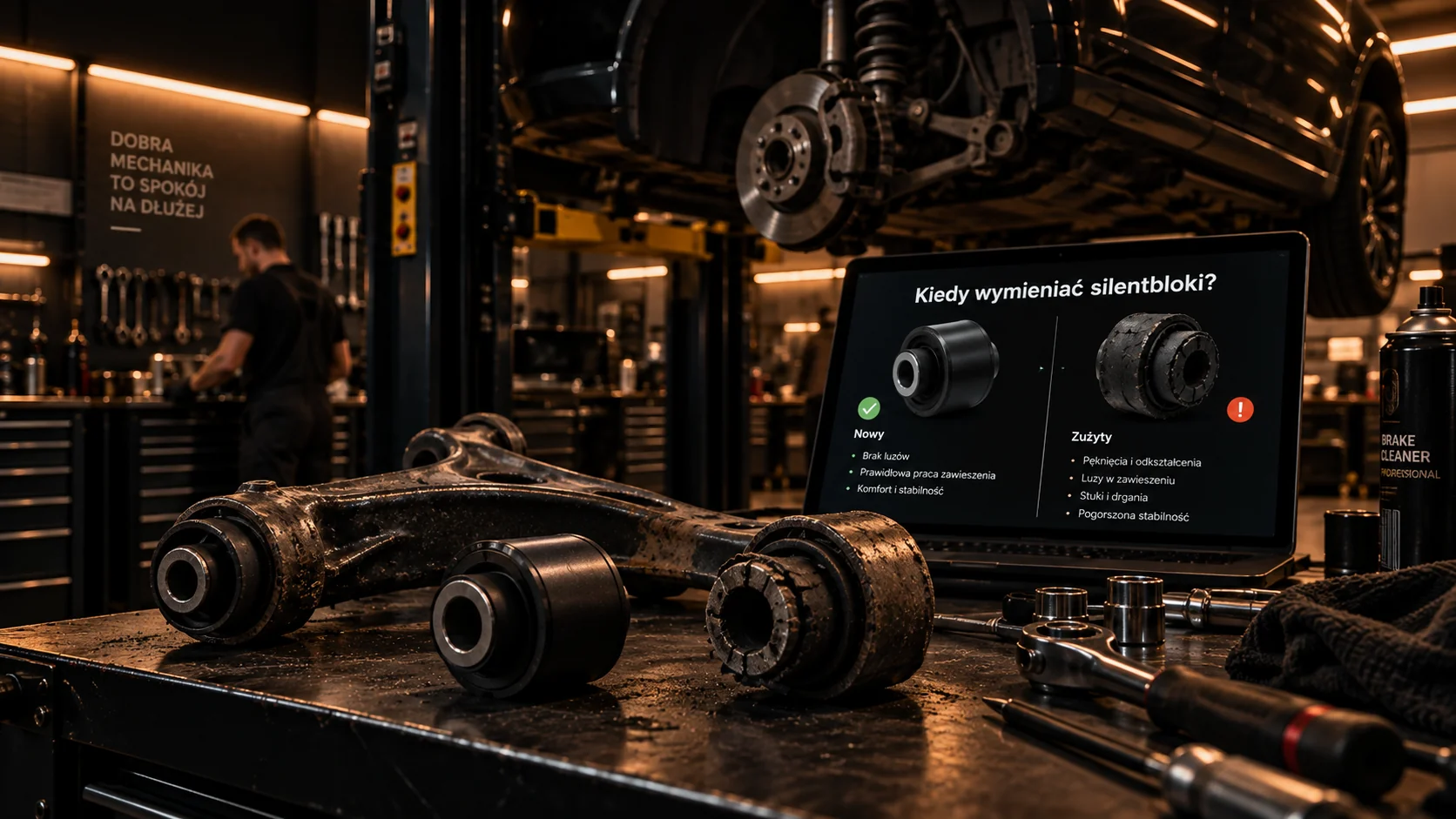
This is the fastest-wearing set of parts in any van. A loaded vehicle has a completely different stopping distance and loads the rear axle differently — pads, discs, shock absorbers and rear springs go noticeably faster than in a passenger car with a similar mileage. The symptoms are classic: a longer stopping distance, squealing as you slow down, wallowing over bumps, knocking as you cross a kerb. If you hear knocking, our guide Why the suspension knocks over bumps will help.
DPF and FAP — city driving is the worst case
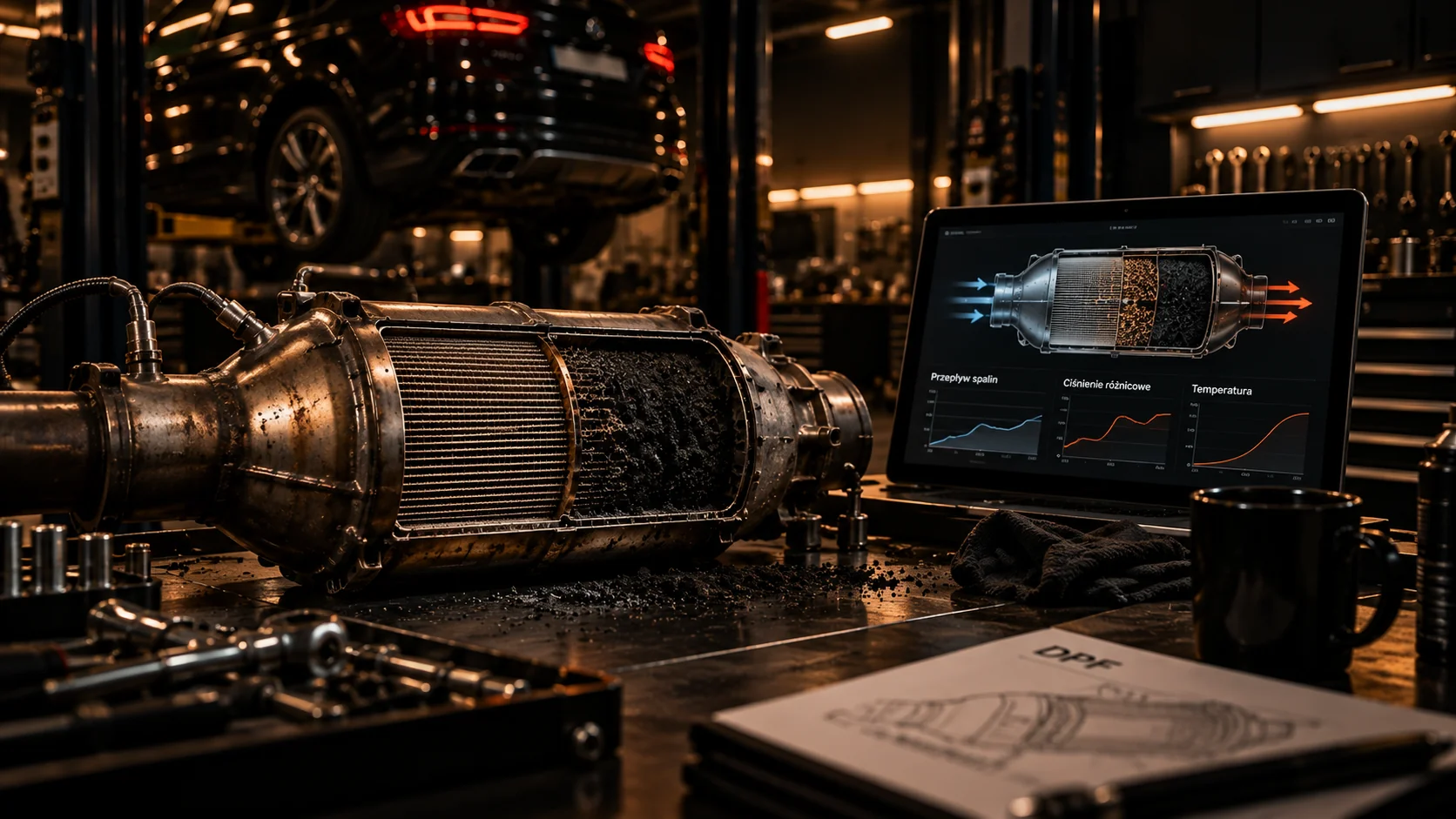
Diesel vans running around town are the textbook case of a clogged particulate filter. Short legs, constant stops for unloading and low exhaust temperatures mean regeneration never completes properly and the soot stays in the filter. The result is a power drop, limp mode and a DPF light in the middle of the working day. We service passenger and delivery diesels of all makes under our DPF/FAP service, and we listed the symptoms in Symptoms of a clogged DPF.
Wheel alignment under changing loads
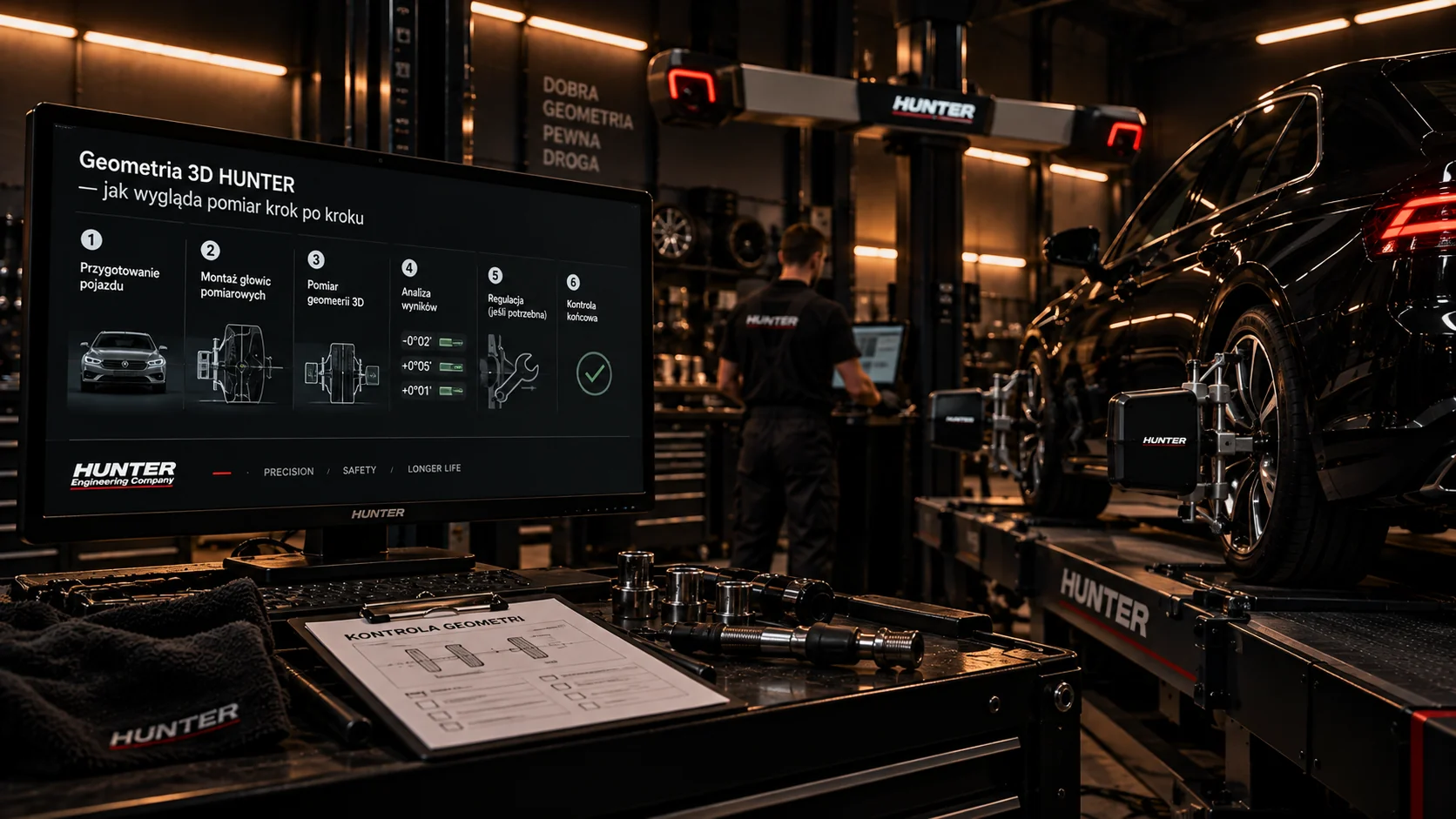
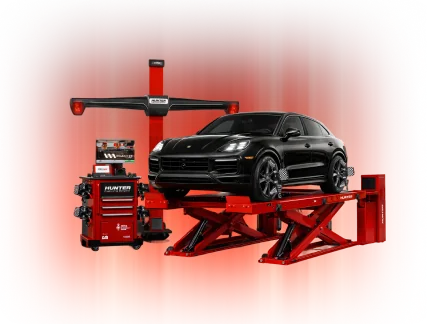
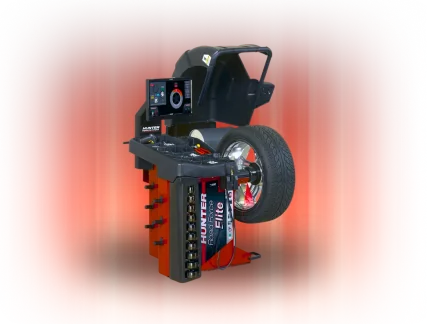
A vehicle that runs empty one day and with a tonne of cargo the next picks up uneven tyre wear faster than a passenger car — especially after suspension parts are replaced or after hitting a pothole hard. Measurement on the 3D HUNTER machine covers passenger cars and vans, and the before-and-after printout shows in black and white what was corrected. On a van, where a set of tyres costs real money, alignment pays for itself.
C-rated tyres, air conditioning and fluids
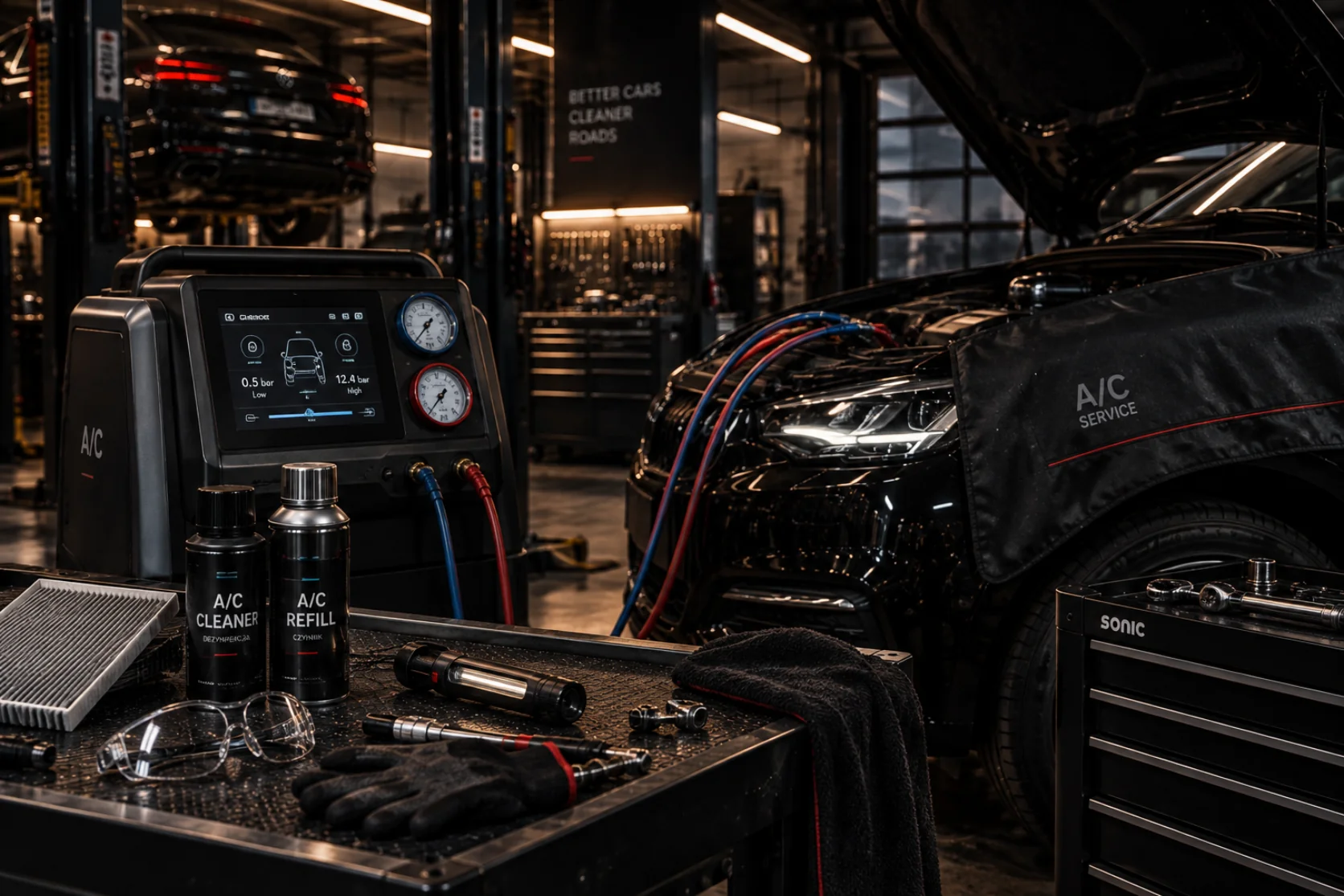
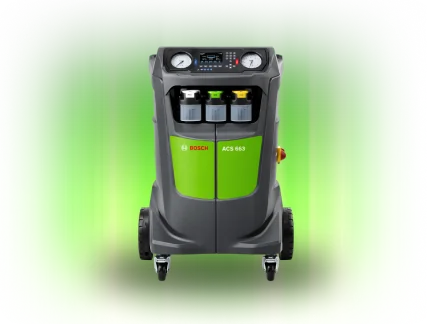
Vans run on reinforced tyres (the C marking), with a higher load index and different pressures for an empty and a loaded vehicle — guessing at it ends in rapid shoulder wear. On top of that comes the air conditioning, which works harder in a van because of the volume of the cargo area and the doors being opened constantly. We do tyre work on HUNTER equipment and air conditioning on a Bosch station.
What it costs — the hourly bay in numbers
With vans the most common question is the difference between doing the work yourself and paying for a mechanic’s labour. The basis of the Zone price list looks like this:
- A 5-tonne lift bay — 80 PLN/h. This is the option for vans.
- A 3.5-tonne lift bay — 60 PLN/h. Enough for most passenger cars and smaller vans.
- A motorcycle bay — 25 PLN/h.
- The “10 visits, pay for 7” pass — 30% off every visit, which brings the 5-tonne bay down to an effective 56 PLN an hour.
If the vehicle works for a business, the pass usually pays for itself on a single vehicle, because a van comes in for service several times a year — oil, brakes, seasonal tyres, an underbody check. We explained how the accounting works in The “10 visits, pay for 7” pass, and the full list of service prices is in our Wrocław service price list.
What not to take on yourself
The Zone is a bay for your own work, not a mechanics course. Do not start brake jobs that end in bleeding the system, or serious engine and gearbox work, if you have not done them before — especially on a company vehicle you are loading with goods tomorrow morning. In that situation it is cheaper to hand the repair to a mechanic than to block a bay all day and end up on a tow truck anyway.
How to plan the visit so the van is back on its route the same day
With vans the whole trick is not losing hours to organisation. A few things sorted out before you drive in can cut the downtime by half a day.
- Book your slot online and choose the 5-tonne bay — that way the lift is ready at the agreed hour instead of being occupied by a vehicle that is currently in pieces.
- Check the kerb weight in the registration document if you have an unusual vehicle — a camper, a van with a workshop body, a refrigerated van. The limit applies to kerb weight, not gross weight.
- Order parts in advance and bring them with you if you are working yourself. The most common reason a visit drags on is not the repair, but a trip out for a missing gasket.
- Describe the symptoms precisely — when they appear, under what load, since when. For a van, “it knocks at the back when empty” and “it knocks when loaded” are two different diagnoses.
- Empty the cargo area before driving onto the lift. We raise vehicles at their structural points, and unsecured cargo inside is a risk to you and to the equipment.

Book a 5-tonne bay for your van
Grabiszyńska 241 in Wrocław. Pick an hour in the calendar — the lift will be ready when you arrive. Not sure whether your vehicle fits the limit? Give us a call and we will check before you book.
A small fleet — how to keep it under control
With three, five or ten vans, the biggest cost stops being any single repair and becomes the lack of a rhythm. Vehicles break down exactly when they are all needed, because nobody keeps track of servicing. A few rules that work in small fleets:
- Spread services out over time — do not send every vehicle for a service in the same month. Set a fixed gap between them so you always have something to drive.
- Service by mileage, not by the calendar — a van can cover a passenger car’s annual mileage in four months. With that kind of use, the calendar lies.
- Keep the history in one place — what was done to each vehicle, when and for how much. When you sell, a documented service history genuinely raises the price.
- Do seasonal jobs early — winter tyres in October, not with the first snow, when every slot in the city is already taken.
- Decide what you do yourselves and what you outsource — oils, filters and pads in your own hands in the bay, diagnostics and bigger repairs at the workshop. It is the simplest cost lever in a small fleet.
If you are considering renting premises of your own for fleet servicing, it is worth costing both options first — the comparison is in Renting a workshop in Wrocław — an hourly bay or your own premises. Below ten vehicles, the hourly bay almost always wins.
Do you take trucks in Wrocław?
We service vehicles with a kerb weight of up to 5 tonnes — vans, large panel vans and campers that fit within that limit. We do not take trucks over 5 tonnes, tractor units or buses, because our lift does not have that capacity. If you are unsure, check the kerb weight in the registration document or call before booking.
How much does a lift bay for a van cost?
The 5-tonne bay, which covers vans, costs 80 PLN an hour. You pay only for the rental time — there is no labour charge, because you do the work yourself. For regular visits the “10 visits, pay for 7” pass is worth it, cutting the rate by 30%.
Can I repair a company van myself in the Self-Service Zone?
Yes. You rent the bay by the hour and carry out the repair with your own hands — a popular option among owners of small transport and service businesses. You have the lift, a full set of spanners and impact wrenches, spot lighting and basic diagnostic equipment at your disposal. Still, do not start work you have never done before on a vehicle you need the next morning.
Do you align the wheels on vans?
Yes, we measure and adjust on 3D HUNTER equipment, which covers passenger cars and vans of all makes. You get a printout of the results before and after adjustment. On vehicles running under changing loads, alignment pays for itself through slower tyre wear.
How quickly can I get a slot for a van?
You can check and book slots online in the calendar — you pick a specific hour and the bay is ready when you arrive. For planned repairs it is worth booking ahead, especially at the peak of the tyre season, when the workshop fills up fastest.