








Winter tires are worth fitting once the average daily temperature drops steadily below 7°C — in Poland that's usually late October to early November — and there's no legal requirement to run winter tires in Poland, only a recommendation and a general requirement for roadworthy tires. That distinction matters in practice: not having winter tires isn't an offence in itself, but causing a collision on a slippery road while on summer tires can be treated as contributing to the incident. In this guide we cover the exact timing for the switch, what the regulations actually say, and how to store the removed set properly so it hasn't degraded by the time the next season comes around.
When You Really Need to Switch to Winter Tires
Temperature decides, not the calendar. The rubber compound in summer tires starts hardening below +7°C and loses grip even on a dry, clean road — no snow or ice needed. Winter tires use a compound that stays flexible at low temperatures, plus a tread pattern designed for slush and wet surfaces.
- The 7°C rule — once the average daytime temperature drops steadily below this threshold, summer tires start losing grip regardless of road surface condition.
- In Wrocław, that's usually the second half of October or early November, though some years bring an earlier cold snap — it's worth watching the forecast rather than waiting for the first snow.
- Don't leave it to the last minute — at the peak of the season (mid-October to November) workshop slots fill up fast, and driving on summer tires on those days can simply be dangerous.
Check Tread Depth, Not Just the Season
The legal minimum is 1.6 mm of tread depth, but for winter tires the practical safety threshold is 4 mm — below that, grip on snow and slush drops noticeably, even though the tire is still technically road-legal.
What Polish Law Actually Says About Winter Tires
This is the topic with the most myths around it. Unlike some European countries (Germany, Czechia, Slovakia, or Austria, for example, which have a so-called situational or seasonal winter tire requirement), Polish law does not require winter tires — not for a set period, and not under specific weather conditions.
- No seasonal mandate — no regulation sets specific dates when winter tires are required, unlike in Germany, for instance.
- What does apply is the general roadworthiness requirement — tires must have at least 1.6 mm of tread and be suited to the conditions you actually drive in.
- Civil liability applies regardless of the regulation — if you cause a collision on a slippery road while running worn or unsuitable summer tires, the insurer or a court may treat that as contributing to the damage, even without any specific statute being broken.
- In mountain areas and on routes requiring chains, separate signage applies (sign B-35 marked "chains") — that's a different matter from simply having winter tires.
No Ticket ≠ No Risk
The fact that you won't get a ticket for running summer tires in December doesn't mean you should. A longer braking distance on snow and wet surfaces isn't a matter of regulation — it's physics, and if there's a collision, you're the one who'll have to explain why the car wasn't prepared for the conditions.
Do All-Season Tires Replace Winter Tires
This question comes up every year, especially from drivers who'd rather not book two changeovers a year. The answer depends on how much you actually drive in tough winter conditions — all-season tires are a compromise, not a full substitute for winter tires.
- The 3PMSF marking (snowflake on a mountain) — only tires carrying this symbol count as winter-rated for snow grip; the word "all season" printed on a tire doesn't decide that on its own.
- A compromise both ways — an all-season tire performs worse than a winter tire in freezing temperatures and snow, and worse than a summer tire in hot weather and hard braking on dry roads.
- It makes sense for low annual mileage and a mild urban climate, where the car rarely leaves well-cleared streets — but in a typical Wrocław winter with snowfall and temperatures around freezing, it's still a worse option than a dedicated winter set.
- It doesn't remove the need for a seasonal check — even on all-seasons, it's worth checking tread depth and pressure before winter, the same as with a standard changeover.
How Our Seasonal Changeover Works
Swapping a full set of four wheels usually takes about an hour:
- Removing the summer tires — on equipment that protects the rims from damage, with no risk to the TPMS sensors.
- Fitting the winter tires — respecting the correct tread rotation direction and the proper bolt torque.
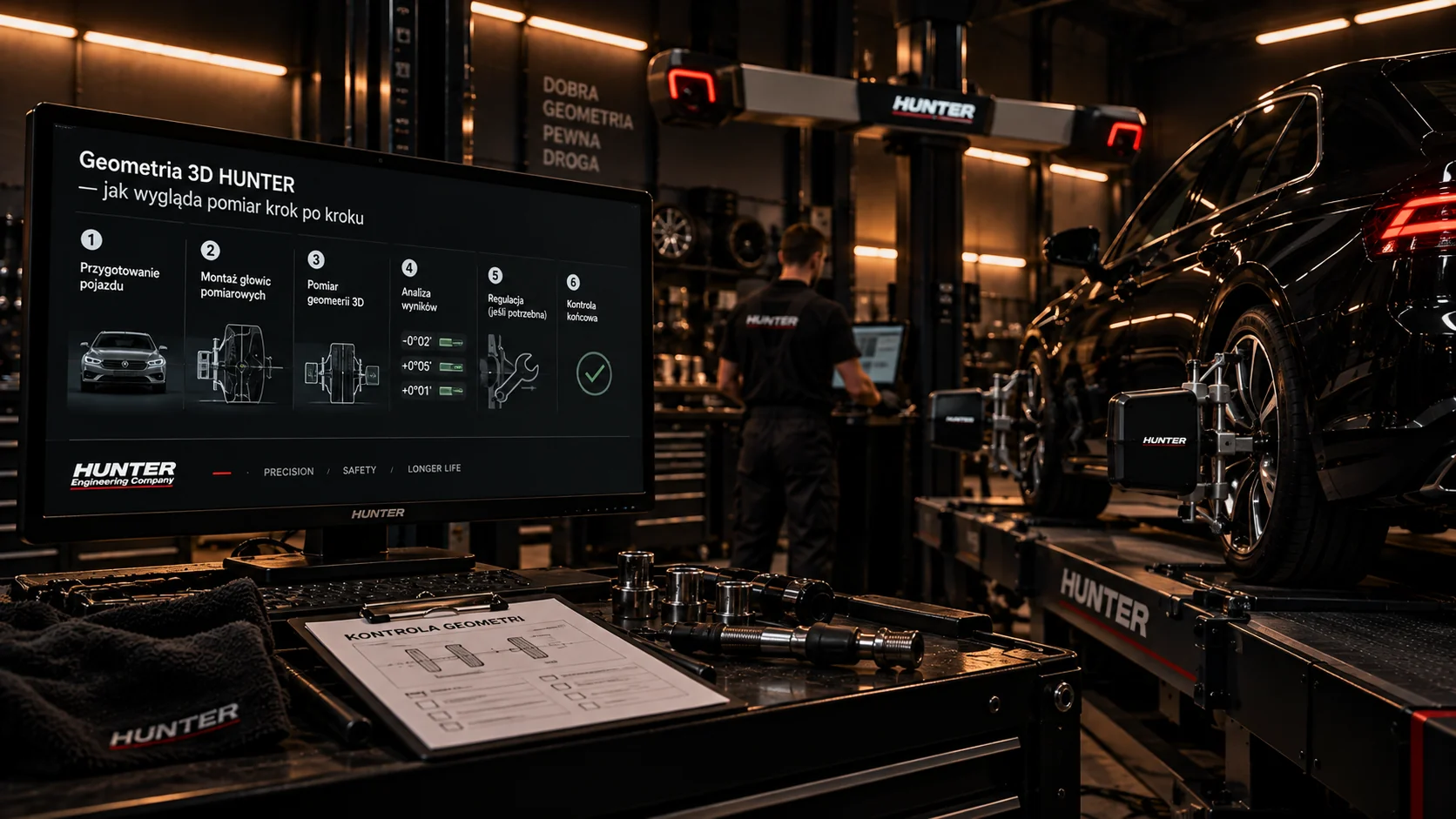
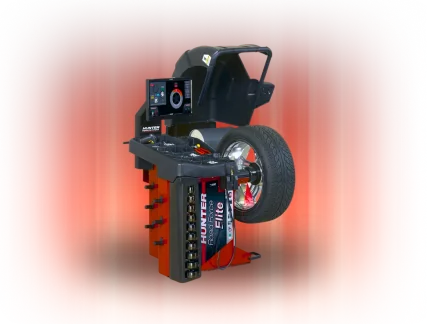
- Balancing on the HUNTER Road Force — wheels are balanced under simulated road load, which eliminates steering wheel vibration at speed.
- TPMS reset and check — pressure sensors are verified and reset after the wheel change.
- Road test — a short check drive to catch any wheel wobble before you even leave the workshop.
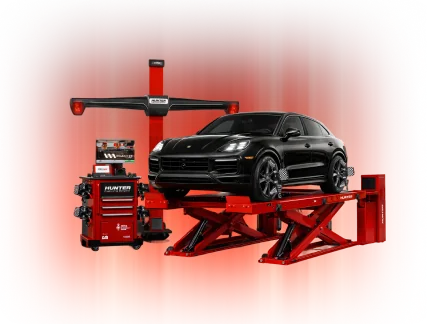
We covered the exact pricing for the changeover and balancing in a separate article, tire service Wrocław — pricing, and if you're wondering how summer, winter, and all-season tires differ and exactly when to switch back in spring, check the guide tire changeover — when and how to choose.
How to Store Your Removed Tire Set Properly
Poorly stored tires lose their properties before the next season even starts — the rubber cracks, the carcass deforms, and sometimes uneven wear shows up after just a few kilometers of the next drive. A few rules really do make a difference.
- Clean and dry — wash and thoroughly dry the tires before storing them; moisture trapped in the carcass encourages rim corrosion and mold.
- Storage position — tires mounted on rims are best stacked flat or hung on hooks; tires without rims should stand upright and be rotated regularly so they don't warp.
- Away from heat and light — sunlight, UV radiation, and proximity to radiators speed up rubber aging; a basement or garage works better than a balcony.
- No contact with oil or fuel — vapors from petroleum products degrade the rubber compound, so keep tires away from canisters or oil stains.
- Steady pressure when stored on rims — slightly elevated pressure (about 0.5 bar above normal) helps the tire keep its shape through the whole season.
The Simplest Option: Hand Your Set Over to Storage
If you don't have a dry, ventilated space away from sunlight, handing your tires to a professional storage facility is often cheaper than it sounds — and it removes the risk of picking up a set with a cracked sidewall or corroded rims after the season. We store tires under proper conditions and simply refit them at the agreed time, with no extra transport on your part.
How Long Tires Really Last With Proper Storage
With proper storage and regular seasonal rotation, tires can last 5–8 years before the age of the rubber (not just tread wear) starts to matter for safety. With poor storage — on a balcony, in a damp unventilated basement, or next to a heat source — visible sidewall cracks can show up after just 2–3 seasons, even when the tread still looks fine. The manufacture date is always stamped on the sidewall (a four-digit DOT code, e.g. 2324 means the 23rd week of 2024) — worth checking it at every seasonal changeover.
What to Do If You're Late Switching Over
If the first frost or snow caught you on summer tires, the priority is limiting risk until you can get to the workshop: drive slower, leave more distance from other cars, and avoid hard braking. Don't put off booking — slots fill up fast during peak season, and the longer you drive on unsuitable tires, the higher the risk. If you also notice steering wheel vibration or uneven tread wear after the wheel change, that could point to a need for wheel alignment — we covered that in wheel alignment — when to do it, symptoms, and price.
Is there a legal requirement to use winter tires in Poland?
There's no seasonal or situational mandate, unlike in Germany or Czechia. The general requirement is roadworthy tires (min. 1.6 mm tread) suited to conditions, and civil liability for a collision on a slippery road can apply regardless of that regulation.
When exactly should I switch to winter tires?
When the average daily temperature drops steadily below 7°C — in the Wrocław area that's usually the second half of October or early November. Don't wait for the first snow.
What tread depth is safe in winter?
The legal minimum is 1.6 mm, but the practical safety threshold for winter tires is 4 mm — below that, grip on snow and slush drops noticeably.
How long can I store tires myself?
With proper storage (clean, dry, away from sunlight and heat), tires can sit until the next season for years. The key is avoiding moisture, UV exposure, and contact with oil or fuel.
Is it worth using a storage facility instead of storing tires myself?
Yes, if you don't have a suitable space — a dry, ventilated storage facility removes the risk of damage to tires and rims, and you simply pick up a set that's ready to fit for the next season.

Book Your Seasonal Tire Changeover Before the First Frost
Changeover, HUNTER balancing, and storage for your summer set — all in one place at Grabiszyńska 241.