

The customer came to us with a 15-centimetre scratch on the right front door — the classic souvenir from a tight supermarket car park. He was convinced the entire side had to be repainted and was bracing for a bill of three to four thousand złoty. After the inspection it turned out that a local repair of a single panel with blending onto the wing was enough. Cost: 1,100 zł. Time: two working days. Below we show how we reached that decision and what exactly we did — so the difference between a local repair and painting "the whole side" is clear.
What the customer arrived with
A 2019 Skoda Octavia III, silver metallic paint, 118,000 km on the clock. Well looked after, garaged, the rest of the bodywork undamaged. Someone in the car park opened a door into it or caught it with a trolley — the culprit was of course unknown, so the repair came out of the owner's own pocket.
The state of the damage after washing and inspecting it in good light:
- a scratch about 15 cm long, running diagonally across the door's swage line
- white primer visible at the deepest point — meaning the paint was cut right through, down to the primer
- no dent in the metal — purely paintwork damage
- no corrosion starting, the damage was fresh (two weeks old)
- the neighbouring wing and rear door untouched
The fingernail test — the first thing we do
We run a fingernail across the scratch. If the nail does not catch, it is usually a scratch in the clear coat alone and polishing is often enough. If it clearly catches — as it did here — the damage reaches the base coat or the primer and polishing will do nothing. At that point painting is the only durable option.
The diagnosis: why not the whole side?
Painting "the whole side" means three panels in practice: the wing, the front door and the rear door. The customer suggested that scope himself, because he was afraid one panel would stand out in colour after a local repair. That risk is real — but it depends on a few specific things you can check before any work starts.
What argued for a local repair on this particular car:
- the car is 7 years old but was garaged — the paint has barely faded, so matching the colour is realistic
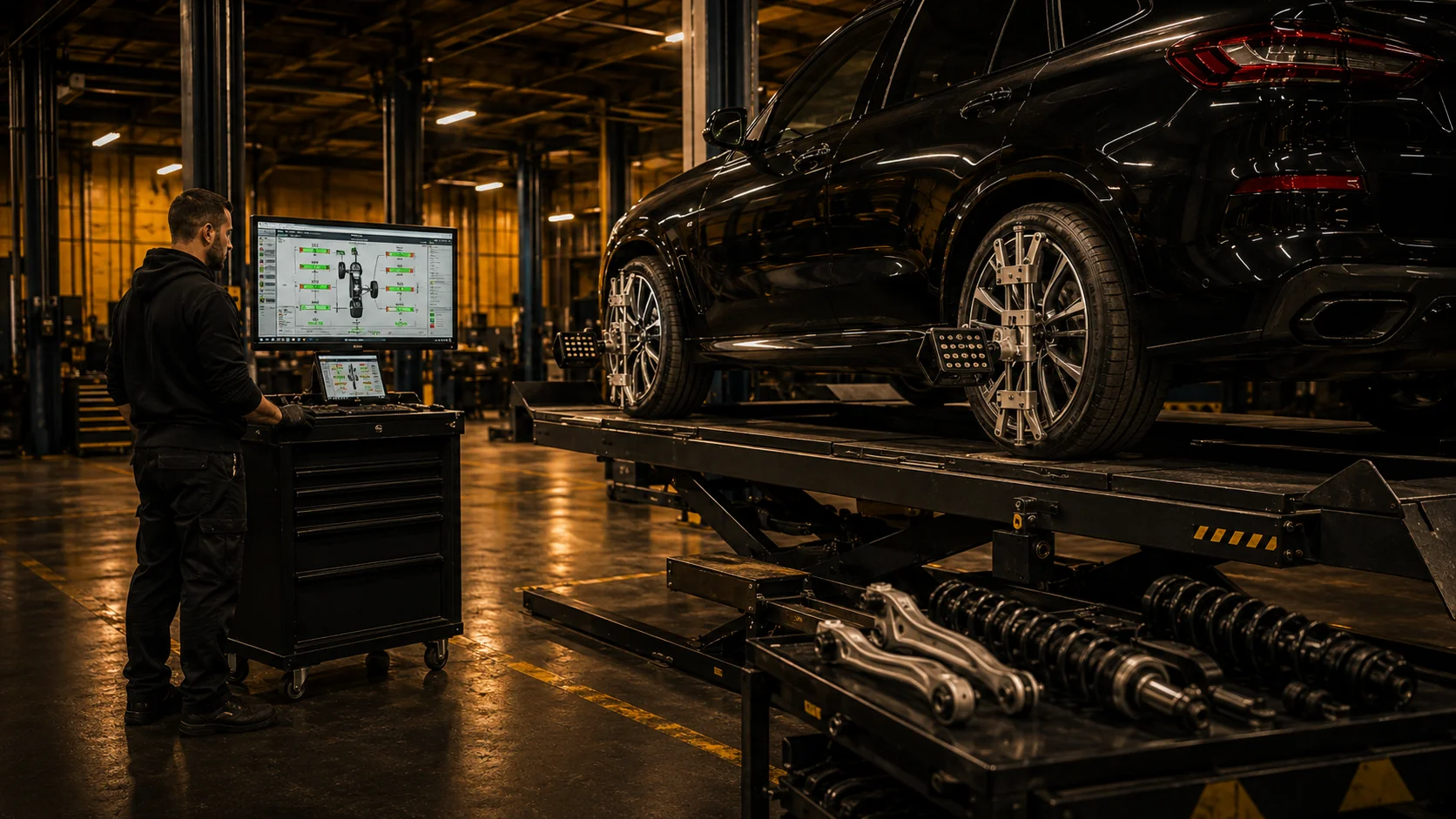
- the coating gauge showed factory paint thickness on every panel of that side (110–130 µm) — the car had never been repainted, so there were no surprises underneath
- one panel was damaged, not three
- the swage line on the door gives a natural edge to close the repair on
- silver metallic is a forgiving colour — slight differences in shade show far less than they do in black or red
With metallic paint we always blend onto the neighbouring panel
With metallic and pearl paints you cannot honestly close a repair at the edge of a single panel — the transition would show at an angle. That is why the base coat is carried onto the neighbouring panel (here: the wing) and faded out under the clear coat. It costs slightly more than "just painting the door", but without it the repair is visible on every sunny day.
How the repair went — step by step
- Washing and degreasing the panel — without this any dirt gets sealed in under the paint.
- Measuring the coating thickness on the door and the wing, so we know how much material can safely be taken off.
- Colour matching: the paint code from the VIN plate plus test sprayouts on a sample card, compared with the car's roof in daylight.
- Sanding the scratch and feathering the edges, with spot filler at the deepest point.
- High-build primer, drying, wet sanding.
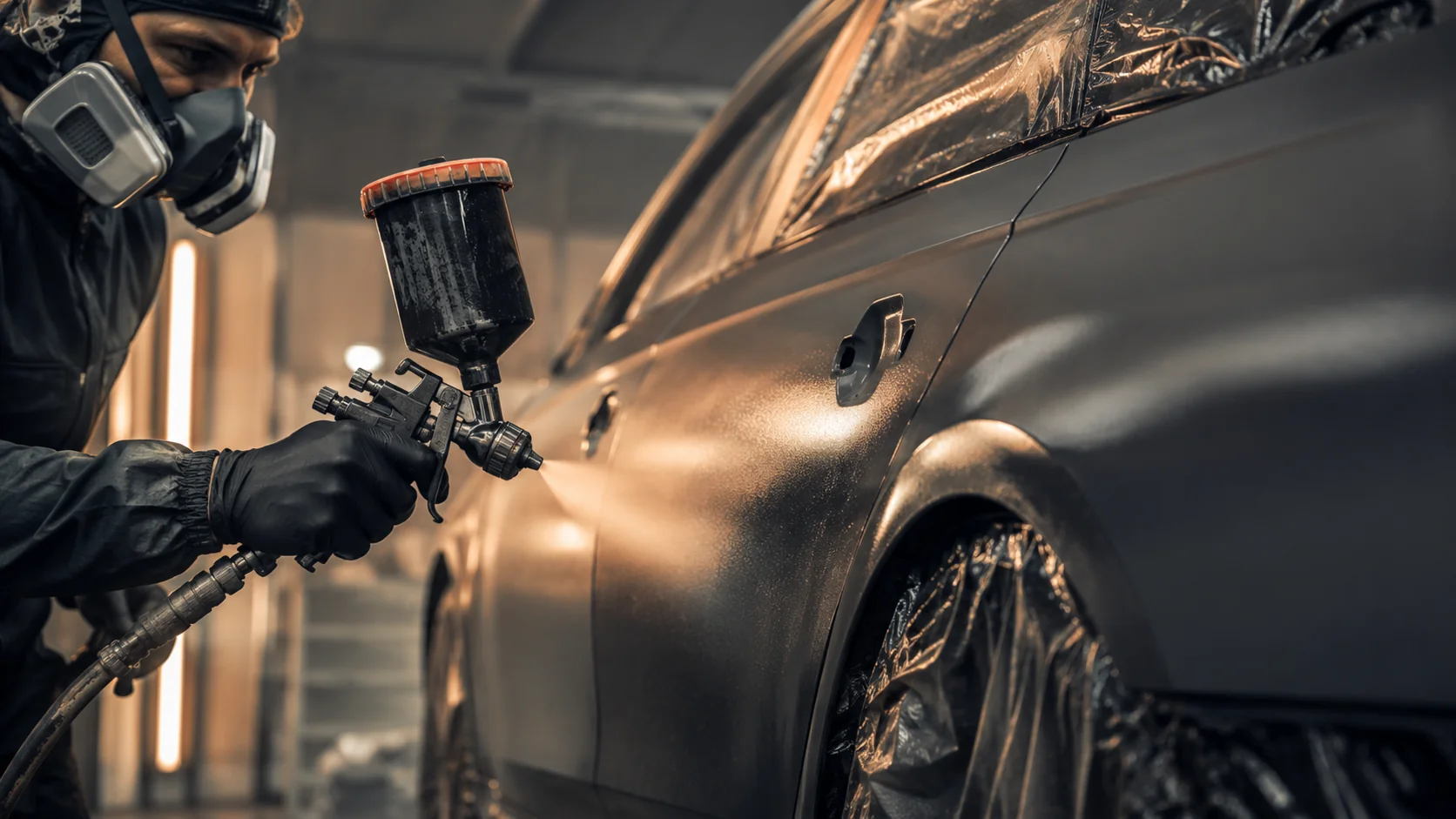
- Masking the car and laying down the base coat — full coverage on the door, faded out on the wing.
- Two coats of clear over the door and the whole wing.
- Baking in the booth, leaving the car for 24 hours, then polishing the transition and the whole panel.
The whole job took two working days — one of which was purely drying and letting the paint harden before polishing. The customer picked the car up on the morning of the third day.
The result and the cost
A summary of this case:
- Scope: right front door (full coverage) + right front wing (blending)
- Cost: 1,100 zł gross, labour and materials together
- Time: 2 working days, car ready on the third day
- The alternative the customer expected — painting three panels of the side: about 3,000–3,400 zł
- Saving: around 2,000 zł for the same visual result
A week later the customer came back — but only for a wash
We asked him to bring the car back after a few days in the sun, because that is the most honest test of a paint repair. The transition on the wing is invisible both from the side and at an angle. The texture of the paint matches the rest of the body, because the panel was sprayed in a booth rather than "in the workshop with a gun".
What this case teaches other drivers
The most common mistake is estimating the scope of the repair yourself over the phone — or the opposite, trying to hide the scratch with solvent and polishing compound. In the first case you overpay; in the second you lose time and a month later the same problem is back, this time with rust underneath. We covered the difference between a local repair and a full respray in Local paint repair or a full respray — which to choose?, and this year's ballpark rates are gathered in our guide to car painting prices in Wrocław 2026.
Practical takeaways from this repair:
- Do not put off paint that has been cut through — with bare primer or metal exposed, rust starts working within weeks and the repair only gets more expensive.
- Before you agree to three panels being painted, ask for a gauge measurement and a justification of the scope.
- A shallow scratch your fingernail does not catch on is often a job for polishing alongside detailing at our car wash, not for the paint shop.
- A phone photo is enough for a first conversation, but we always quote with the car in front of us — a photo does not show how deep the damage goes.
How much does repairing a scratch on a door cost in Wrocław?
It depends on the depth. A shallow scratch in the clear coat alone usually means polishing for 150–400 zł. A scratch cut through to the primer, as in this case, means painting the panel with blending — realistically 800–1,500 zł depending on the panel and the colour. We give an exact price after seeing the car, because depth cannot be judged from a photo.
Is the colour difference visible after a local paint repair?
With the base coat matched properly and blended onto the neighbouring panel — no. The difference shows when the repair is closed at the edge of a single panel on metallic paint, or when the car's paint has faded badly in the sun. That is why we always spray test cards and compare them with the bodywork in daylight before taking the job on.
How long does the car stay at the workshop?
A single-panel repair is usually 2 working days, with collection on the third. We do not rush that: the paint has to harden before polishing, otherwise the finish deteriorates within weeks.
Can I wash the car right after it has been painted?
Hand washing, yes — but keep high pressure away from the edges of the repaired panel for the first two weeks. Do not apply wax or a ceramic coating for the first month; fresh paint needs time to fully cure.
Can a scratch like this be repaired under the other driver's insurance?
If the other driver is known and you filled in a statement, then yes — the claim goes through their third-party liability policy. In this case the driver left the car park, so the customer paid himself. For parking damage with an unknown culprit, comprehensive cover is the only route, but at around 1,000 zł it usually is not worth losing your no-claims discount.

Got a scratch and not sure whether it is a paint job or just polishing?
Come in for a free inspection at Grabiszyńska 241 in Wrocław. We will measure the paint thickness and tell you straight whether a local repair is enough or a wider scope is needed — with the price, before we start anything.