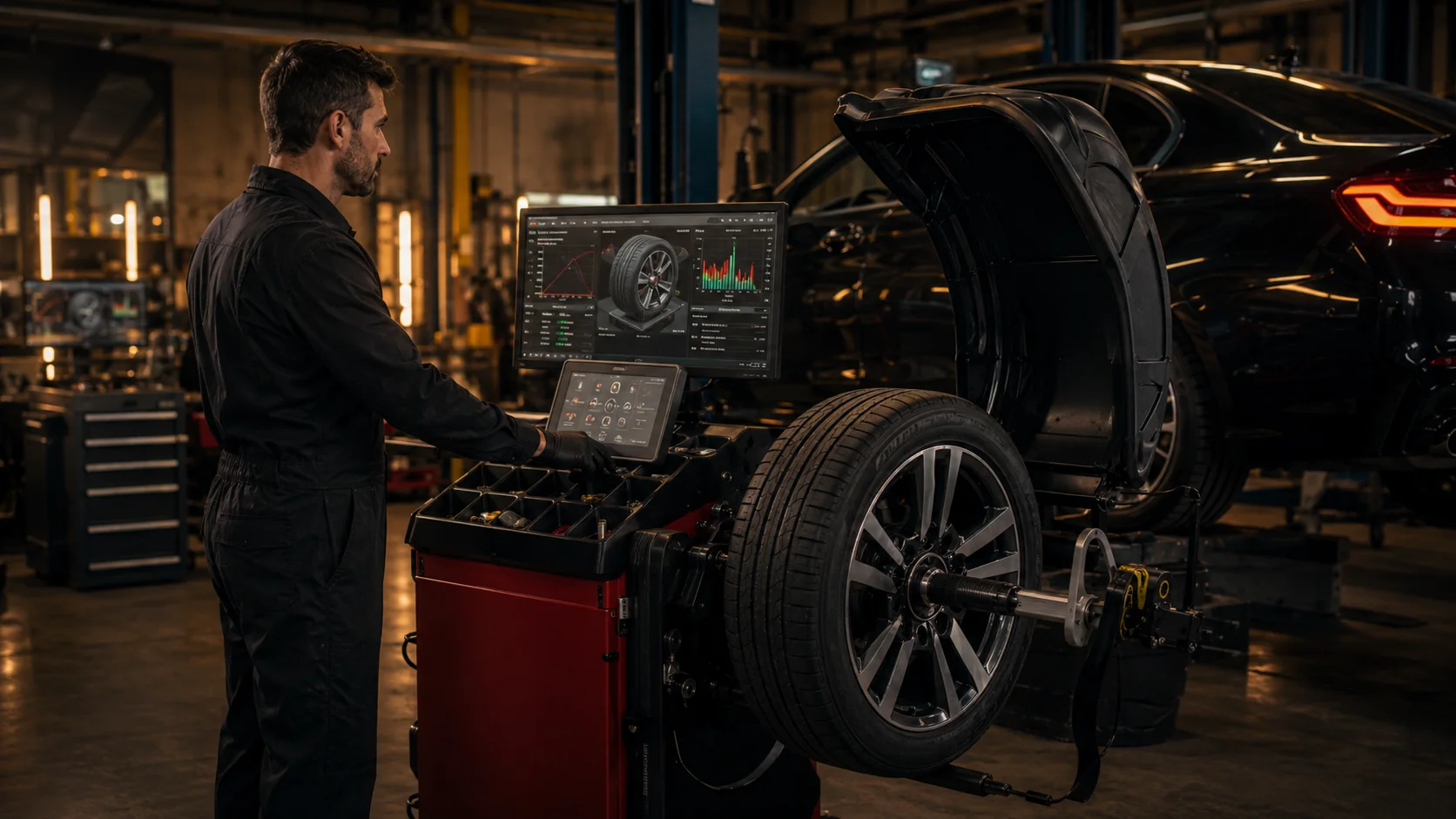


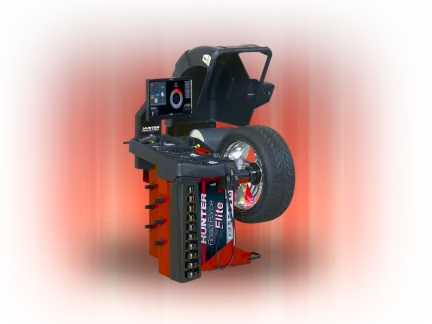






A road-force test on HUNTER equipment is a simulation of driving under load that detects problems invisible to plain balancing — wheel wobble, uneven tyre stiffness (so-called road force), a damaged rim, and signs of poor alignment and worn suspension. The machine presses a roller against the spinning tyre, mimicking the real pressure of the road, and shows where the vibration comes from — something a classic balancer can't “feel”. So instead of adding more weights, you know exactly whether the tyre, the rim, the fitting or the chassis is to blame. At Brutalny Podnośnik on Grabiszyńska 241 in Wrocław we do this tyre service when a car vibrates despite correct balancing. Below we explain what the test detects and how it works.
How does a road-force test differ from plain balancing?
A classic balancer spins the wheel alone in the air and evens out the mass distribution by adding weights. That's enough in most cases, but it doesn't account for how the tyre behaves under the road's pressure. The HUNTER road-force test presses a loaded roller against the wheel, simulating the car's mass in motion. Only then do faults appear that are invisible when spinning freely — for example a perfectly balanced tyre that still causes vibration because its sidewall stiffness is uneven.
What does the HUNTER road-force test detect?
- The tyre's lateral and radial force — uneven stiffness that “pulls” or vibrates under load despite correct balancing.
- Wheel wobble (radial and lateral) — deformation of the tyre or rim causing pulsing at speed.
- A damaged or bent rim — the machine shows whether the problem is in the tyre or the rim.
- Incorrect seating of the tyre on the rim — sometimes it's enough to rotate it relative to the rim to remove the vibration.
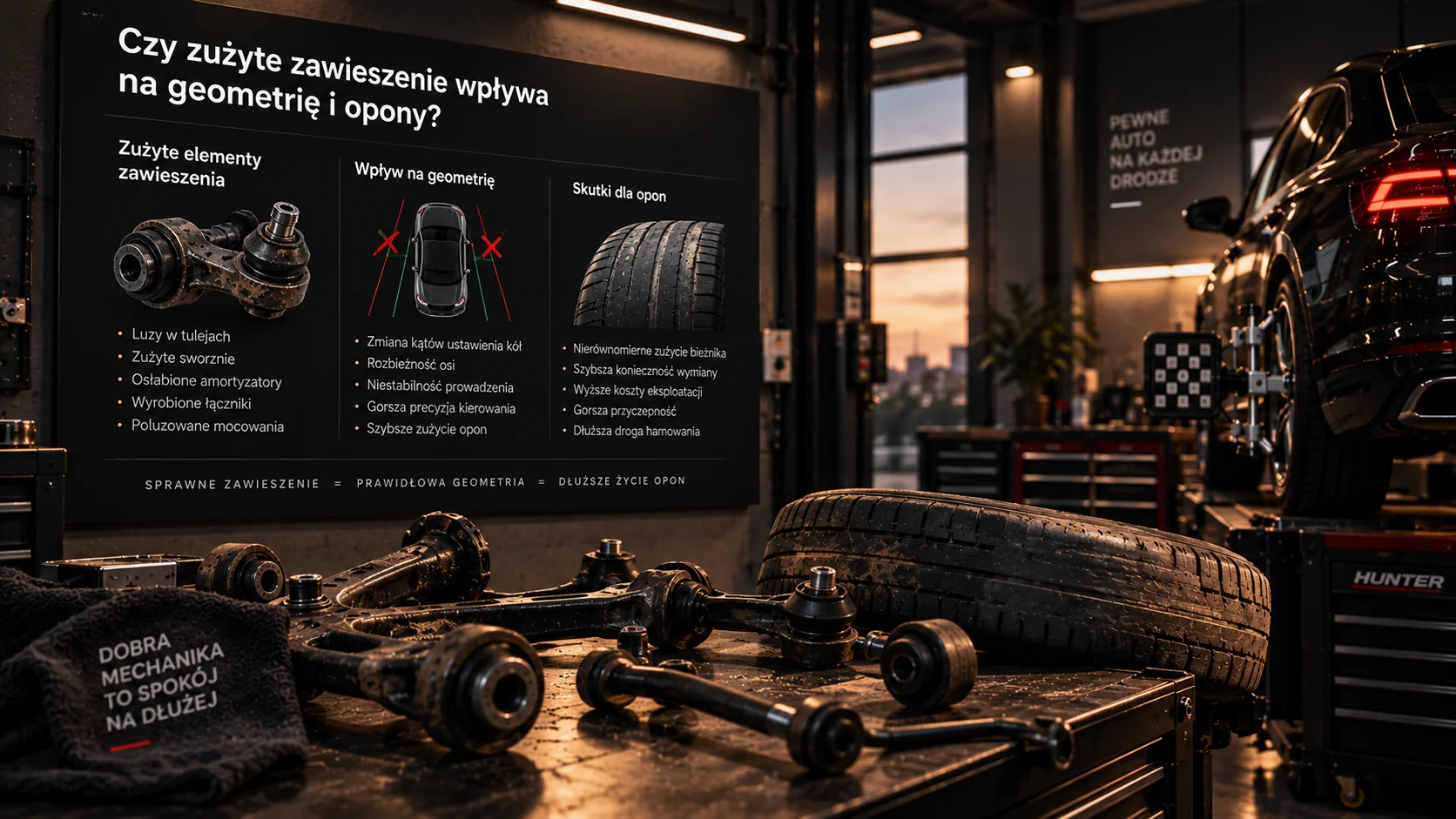
- Indirectly: signs of poor alignment and worn suspension if the vibration doesn't go away after correcting the wheel.
Why it matters
Without a road-force test, wobble gets “treated” by adding weights that don't remove the cause. The test shows the source of the problem, so you don't pay for repeated, ineffective balancing.
How a road-force test works step by step
- Mounting the wheel on the HUNTER machine and an initial measurement of the rim's own geometry.
- Pressing a loaded roller against the spinning tyre — simulating the road's pressure under the car's mass.
- Measuring lateral force, radial force and wobble — the machine shows a chart and points to the source of the vibration.
- If the tyre relative to the rim is to blame — rotating the tyre on the rim (match-mounting) and measuring again.
- Final balancing and a check — confirming the vibration is gone.
- A recommendation for next steps if the source is the alignment or the suspension.
When is a tyre service with a road-force test worth it?
- The steering wheel vibrates at 90–120 km/h despite fresh balancing.
- Vibrations that weren't there before came back after a tyre change.
- You've bought new tyres and want to be sure they're true.
- The car “floats” or pulls slightly, and the alignment seems fine.
- You suspect a damaged rim after hitting a pothole or kerb.
Vibration isn't always the tyres
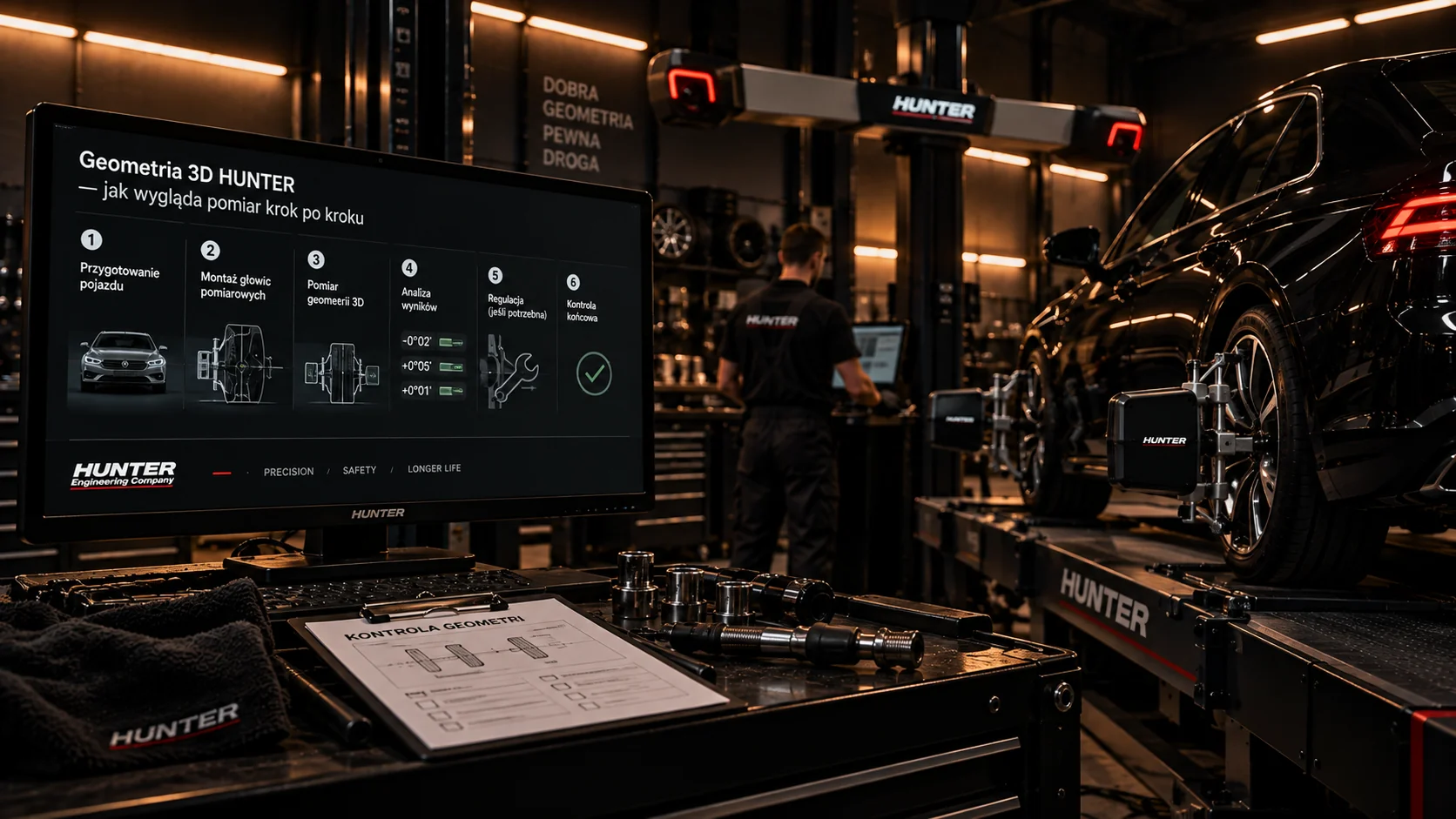
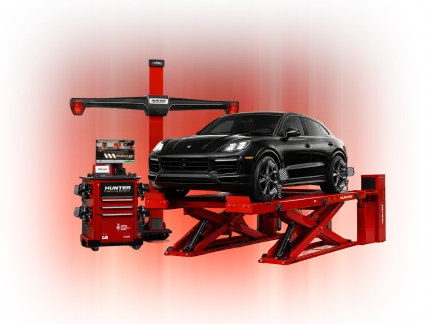
If the test rules out the wheel, the cause of the vibration is often the alignment or worn suspension components. Then it's worth checking the 3D alignment and the chassis before you replace another set of tyres.
Tyre service with a road-force test in Wrocław
We do this tyre service at Grabiszyńska 241 in Wrocław, on HUNTER equipment. If the vibration doesn't go away after correcting the wheel, we'll also check the 3D alignment. You'll find the prices for standard fitting, balancing and storage in the article tyre service Wrocław — prices, and we advise on choosing tyres in the piece changing tyres — when and how to choose.
Is a road-force test needed at every tyre change?
No — for most changes standard balancing is enough. A road-force test is worth doing when the car vibrates despite correct balancing, with new tyres, after hitting a pothole, or when you want to be sure the wheels are perfectly true.
What is a tyre's lateral force?
It's the tyre's uneven stiffness, which under load causes vibration or a slight pull despite the wheel being correctly balanced. A plain balancer won't detect it — only a road-force test under the roller's pressure shows it.
What if the vibration doesn't go away after testing the wheel?
If the test rules out the tyre and rim, the cause is usually the wheel alignment or worn suspension components. We then recommend a 3D alignment measurement and a chassis inspection to remove the source of the vibration.
Can you rotate the tyre on the rim instead of replacing it?
Yes — it's called match-mounting. If the source of the vibration is the pairing of tyre and rim, rotating the tyre relative to the rim often removes the wobble without replacing the tyre. The road-force test shows whether it will work.

Book a tyre service with a HUNTER road-force test
Steering wheel vibrating despite balancing? We'll find the real cause.