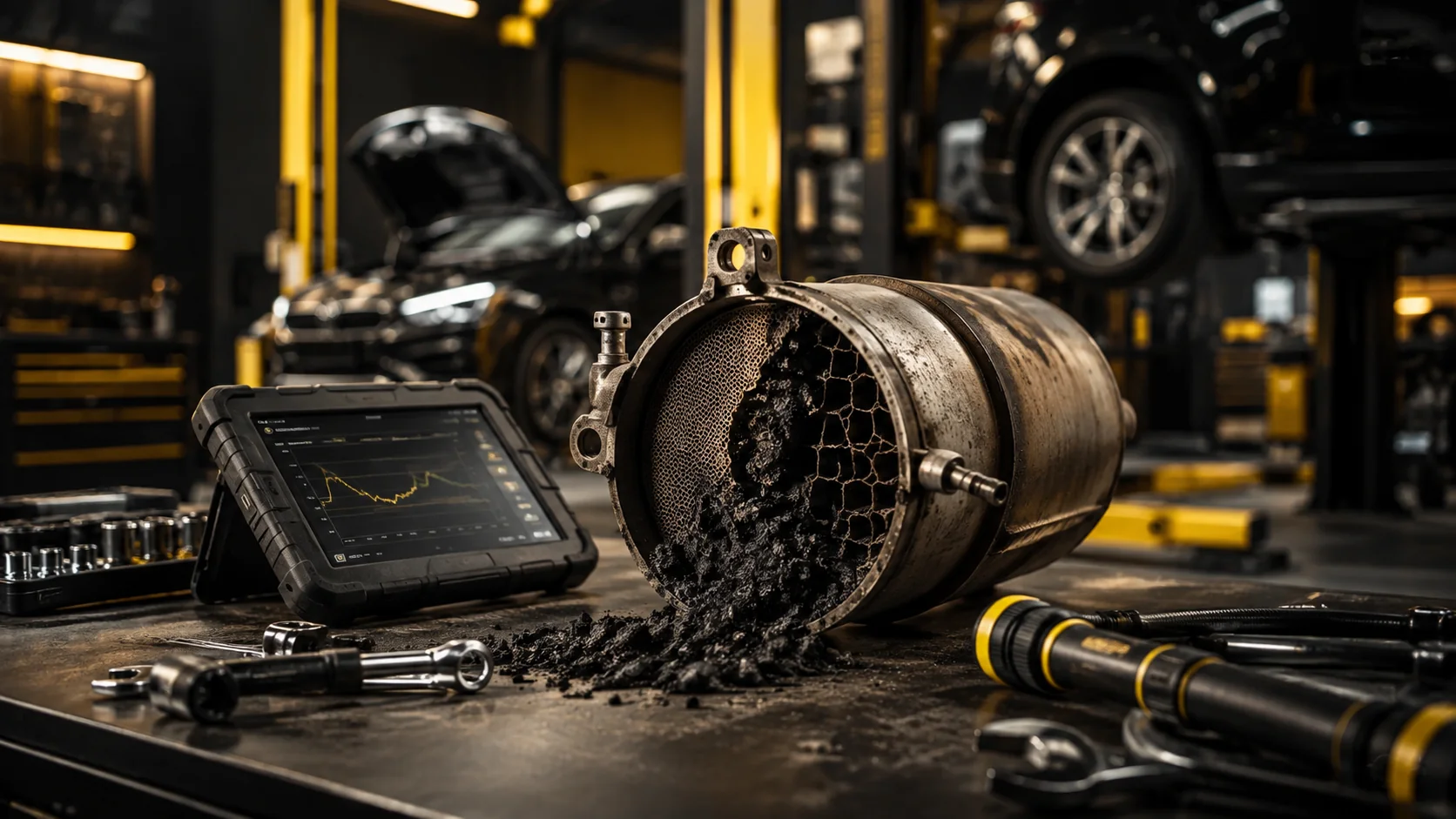





No, removing a DPF isn't worth it — driving with a cut-out filter is against the law in Poland and risks a fine of up to 5,000 PLN, having your registration document confiscated, and MOT failures. On top of that there's the loss of warranty, the risk of an insurer disputing a claim after an accident, and a noticeably lower resale value. In this article we explain exactly what the law says, why we don't remove DPFs in our workshop, and what's actually worth doing instead.
What does the law say about a removed DPF?
It comes down to Article 66 of the Road Traffic Law — environmental protection equipment, which includes the particulate filter, has to work properly and effectively in the vehicle. A car with a cut-out or blanked-off DPF doesn't meet that requirement, and the penalty for it is set out in the Code of Petty Offences.
- A fine of up to 5,000 PLN — imposed during a roadside check if an inspector finds the filter missing or not working.
- Confiscation of the registration document — police can hold the document until the system's condition is restored.
- Failing the MOT-equivalent technical inspection — the inspector sees the DPF is missing from the vehicle's data, or detects it visually/via sensors, and won't pass the car.
- Loss of manufacturer's warranty — interfering with the exhaust after-treatment system usually voids the warranty on the engine and related components.
This isn't a grey area
DPF removal is sometimes advertised as „legal after remapping” or „track use only”. In practice, a car running that remap on public roads in Poland is breaking the law — regardless of what the workshop that did it claims.
Why don't we remove DPFs in our workshop?
Because it's a short-term fix that passes the problem back to the customer — with interest. Instead of cutting the filter out, in our DPF/FAP service we look for the cause of the clogging and restore the system, so the car keeps meeting the requirements and passes its inspections without a hitch.
- After a DPF is removed, the engine usually runs louder, smokes more and genuinely pollutes more — a direct route to trouble at every roadside check.
- Cars that have had their DPF system tampered with are harder to sell — an informed buyer checks the service history and the data at the inspection station.
- After an accident, an insurer can dispute a payout if they find an exhaust system modification that doesn't match the vehicle's type approval.
- Whatever caused the DPF to clog in the first place (sensors, EGR, short trips) doesn't disappear once the filter is cut out — it comes back in another form, for example as a failed turbocharger or higher oil consumption.
Why is a DPF mandatory in the first place?
A particulate filter isn't a manufacturer's whim — it's a result of emissions standards (Euro 5 and later) which, since 2009–2011, have required diesels to limit soot emissions to a level safe for air quality. Since then, the DPF has been standard type-approval equipment — the car was registered and cleared for road use with the filter fitted, so removing it changes the vehicle's specification compared with what was approved at type approval. That's why roadside checks and technical inspections treat a missing DPF as non-compliance, not a matter of the owner's taste.
How to spot a car with a removed DPF before buying
This matters especially with cars imported from abroad, where DPF removal happens more often than in Poland. A few things are worth checking before you sign anything.
- Ask the seller for a computer read-out — the ECU data shows whether the filter is physically fitted and whether its control logic matches the factory setup.
- Check the car physically from underneath (on a lift, not by eye at the kerb) — a removed DPF is sometimes replaced with a straight pipe, which is easy to spot on a careful inspection.
- Watch out for a suspiciously low price combined with claims of a „more powerful” or „more economical” engine in the listing — a common line from sellers of cars with a removed filter.
- Ask for the service history — no entries for DPF regeneration or cleaning on a car with heavy city mileage can be a warning sign, though it doesn't prove anything on its own.
- If you're unsure, get a pre-purchase inspection done at an independent workshop — a one-off cost that can save you from a much more expensive problem after buying.
A removed DPF is a cost that comes back after you've bought the car
If you buy a car with a cut-out filter, you're the one responsible for its condition at every roadside check and inspection — regardless of the fact that the previous owner made the modification. It's worth pricing that in and factoring it into your offer before you negotiate.
What's actually worth doing instead of removing the DPF?
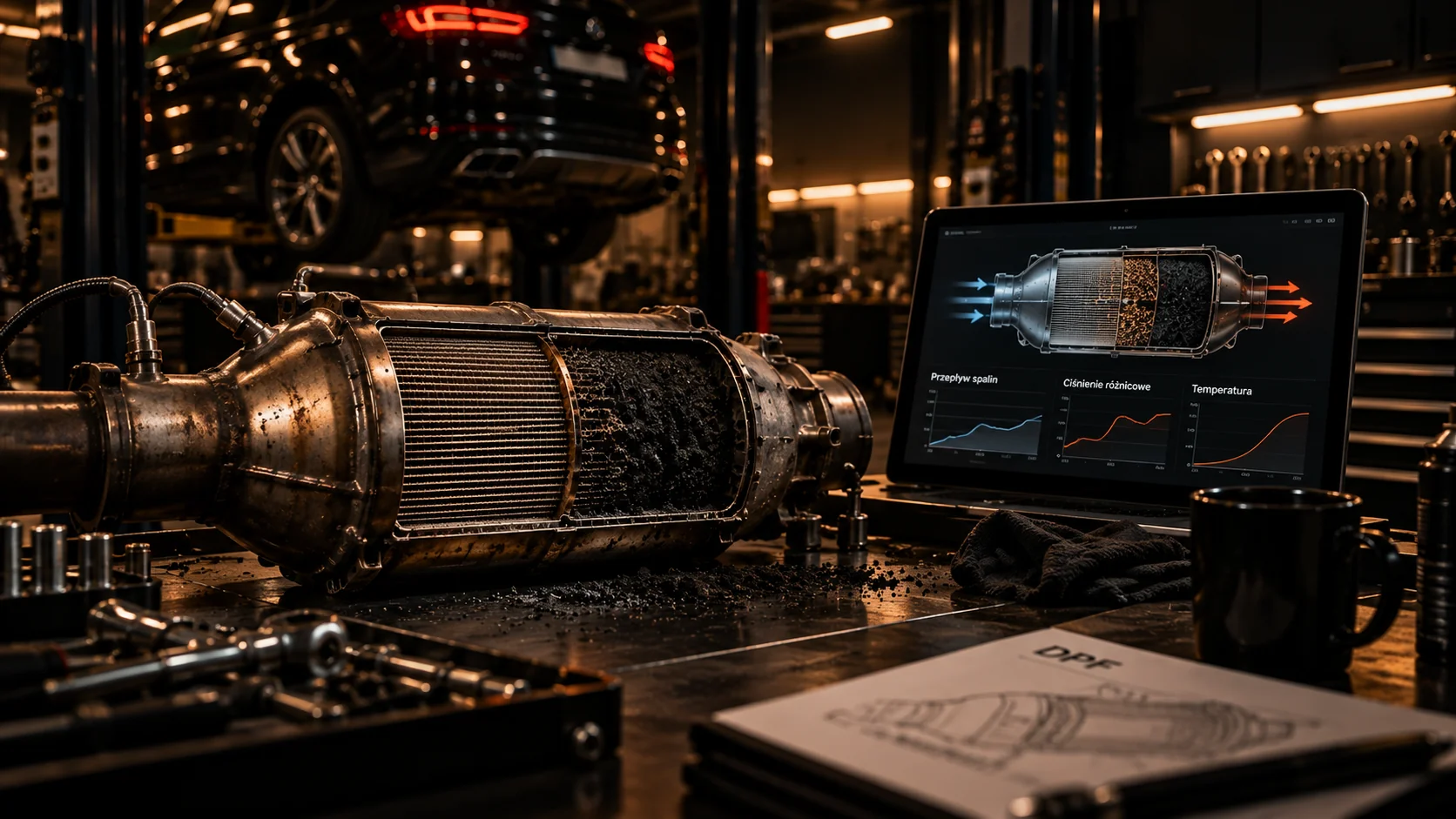
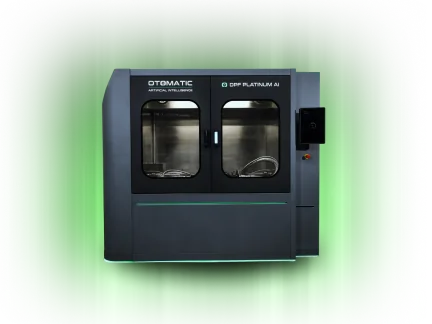
In most cases, regeneration is enough — cleaning the filter on a rig using the hydrodynamic method restores full flow, as long as the core isn't mechanically damaged (cracked, melted). Only once regeneration is no longer possible does replacing it with a new or aftermarket filter make sense. We compared the costs and the situations where each option makes sense in a separate article: DPF cleaning or replacement — which pays off.
Regeneration instead of removal
Professional DPF/FAP cleaning restores parameters close to factory levels and costs a fraction of a new filter — and the car stays fully road-legal, with no risk of fines or inspection failures. Process and pricing details for Wrocław: <a href="/blog/czyszczenie-dpf-wroclaw-cena">DPF cleaning and regeneration — price, process, how long it takes</a>.
What if I've already bought a car with a removed DPF?
It happens more often than you'd think — especially with imported cars. In that situation, the safest move is to restore the system to a type-approval-compliant state: fit a working filter and restore the correct ECU mapping. It's a one-off cost that protects you from a fine, having the registration document confiscated, and problems at your next inspection. We always start with diagnostics to choose the right fix for that specific car.
You'll find service details, scope of work and FAQ on the DPF/FAP cleaning and regeneration page.

Bring your DPF back into line with the law
DPF diagnostics and regeneration in Wrocław — legally, with no risk of a fine and no loss of warranty.
Is removing the DPF legal in Poland?
No. Driving with a cut-out or blanked-off DPF violates Article 66 of the Road Traffic Law and risks a fine of up to 5,000 PLN and confiscation of the registration document during a roadside check.
Will a car with a removed DPF pass its technical inspection?
Usually not. The inspector checks whether the exhaust after-treatment system is present and working — a missing or faulty DPF is grounds for refusing a pass certificate.
What else does driving with a removed DPF risk, besides a fine?
Loss of the manufacturer's warranty, the risk of an insurer disputing a payout after an accident, a noticeably lower resale value, and genuinely higher exhaust pollution with a louder-running engine.
Can your workshop remove a DPF for me?
We don't carry out DPF removal. Instead we offer regeneration or replacement, which restore the system to full working order in line with the regulations.
What should I do if I bought a car with the DPF already removed?
The safest option is to restore the system to a type-approval-compliant state — fit a working filter and correct the ECU mapping. We start with diagnostics to choose the right fix for that specific car.
Is DPF regeneration a good alternative to removal?
Yes, in most cases. Regeneration restores full flow to the filter and costs a fraction of a new one, while the car stays road-legal with no risk of fines.