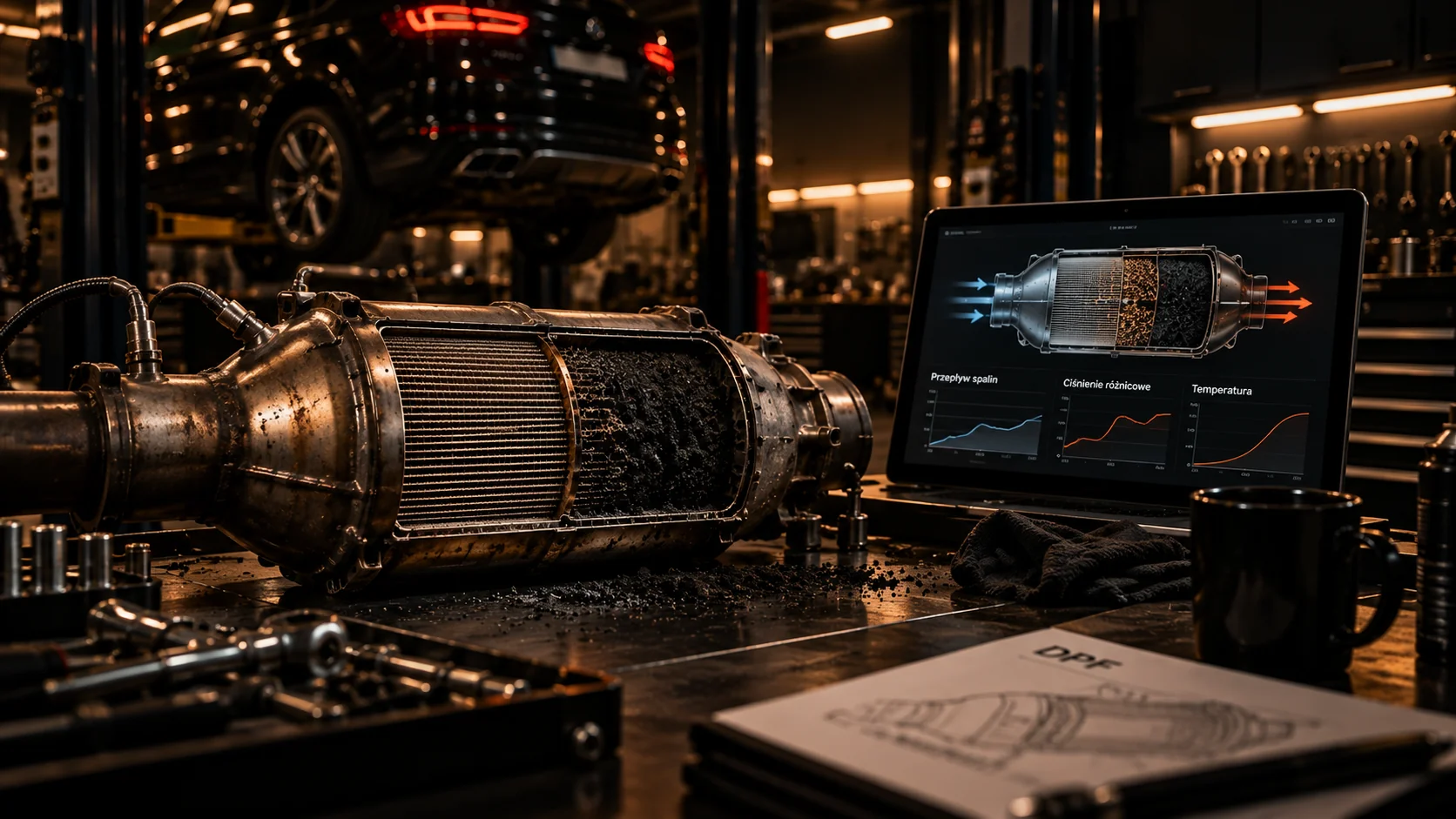





Burning off a diesel particulate filter is thermal regeneration — a process in which the soot collected in the filter is burned at high temperature and turned into a small amount of ash. This happens in three ways: passively while driving, actively at the initiative of the engine control unit, or forced diagnostically in a workshop when the car couldn't manage it on its own. The catch is that burn-off has its limits — it removes soot, but not ash, and once a filter is heavily clogged, raising the temperature alone is no longer enough. We explain how each of these mechanisms works and when hydrodynamic cleaning or a filter replacement is needed instead of burn-off.
Why does a DPF clog up in the first place?
A particulate filter traps the soot produced when diesel fuel burns — that's its job. The problem starts when soot builds up faster than the engine can burn it off on its own. The usual culprits are short city trips, low-rev driving and frequent cold starts — the engine never reaches the temperature and rev range needed for regeneration, so soot piles up layer by layer.
Three types of regeneration — how they differ
- Passive regeneration — happens on its own, with no input from the ECU, when you drive for longer at higher speed (typically above 2,000–2,500 rpm for ten to several dozen minutes, e.g. on a longer trip). Exhaust temperature rises enough that soot burns off continuously, and you don't notice a thing.
- Active regeneration — initiated by the engine control unit once sensors detect the filter starting to fill up. The engine injects extra fuel during the exhaust stroke to raise exhaust temperature to the point where soot burns (around 550–650°C). This can come with a temporarily raised idle, a louder-running engine or a distinctive exhaust smell — that's all normal.
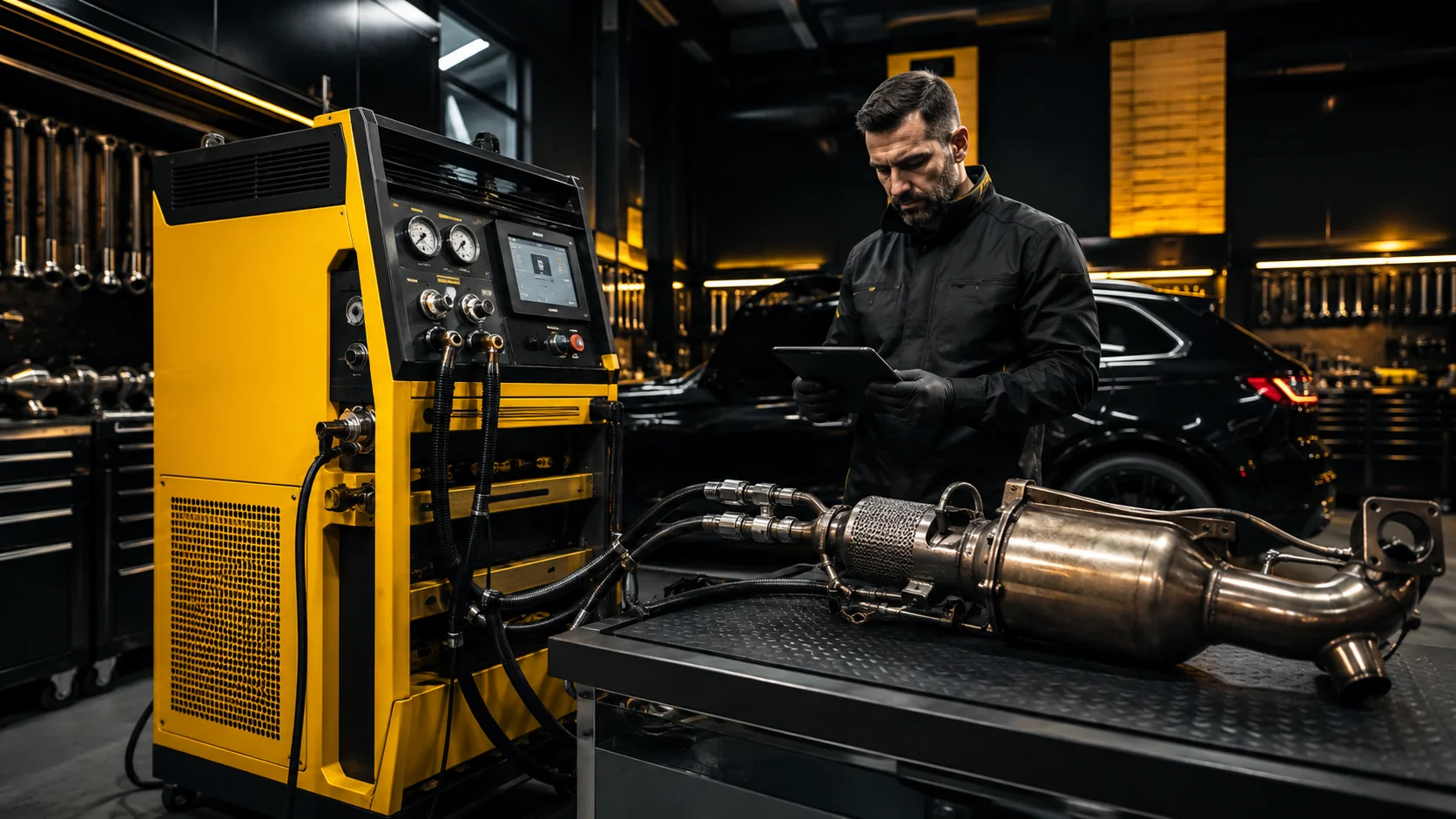
- Forced (service) regeneration — carried out diagnostically, while parked, when the car hasn't managed to regenerate the filter on its own (for instance because you only ever drive short trips) and the warning light has come on. A mechanic connects a diagnostic computer and runs the process manually, at a fixed rev range and controlled temperature.
Burn-off removes soot, not ash
This is the key distinction that gets forgotten most often. Soot burns away, but the mineral ash — left over from burning oil and fuel additives — stays in the filter for good and, over tens of thousands of kilometres, gradually reduces its capacity. No amount of burning off will remove it — the filter needs to be physically washed out.
When burn-off helps, and when it isn't enough
Forced regeneration works well when the filter is clogged with soot, not ash, and when the problem was caught relatively early — usually at the first signs: the DPF warning light, a loss of power, higher fuel consumption. In that situation, one properly run regeneration cycle can fully restore the filter's flow.
- The filter is largely filled with ash rather than soot — burn-off won't change anything, because ash simply can't be burned.
- The clogging has passed the safe threshold for forced regeneration — trying to burn off a heavily clogged filter risks damaging it (the ceramic core can crack from uneven heating).
- The car has repeatedly signalled clogging and the regeneration kept getting interrupted halfway (e.g. by switching the engine off) — the soot then hardens into a tougher form that's harder to remove.
- The clogging is caused by a fault — a faulty differential pressure sensor, a leaking EGR system, a worn turbocharger. You'll burn the filter off, and it will clog again within a few weeks if you don't fix the underlying cause.
Forced regeneration and engine oil
During active and forced regeneration, the extra fuel injected during the exhaust stroke partly ends up in the oil sump, diluting the engine oil. On cars that regenerate very often (because they mostly drive around town), it's worth keeping an eye on oil-change intervals — diluted oil lubricates the engine less effectively.
Burn-off vs. hydrodynamic cleaning — which method to choose
Burn-off works on the filter while it's still fitted to the car and only removes soot. Hydrodynamic cleaning is a completely different process — the filter is removed and flushed under high pressure on a dedicated rig, which also removes ash and restores flow close to factory levels. If a car has already been through several regenerations, or the DPF light keeps coming back despite regular longer drives, that's a sign thermal regeneration alone is no longer enough and it's time for a wash. We compared the methods, prices and situations where each one makes sense in a separate article: DPF cleaning or replacement — which pays off.
How much does DPF burn-off cost in Wrocław
A diagnostic forced regeneration costs roughly 150–300 PLN, plus a system diagnostic check (around 100–200 PLN, usually deducted from the regeneration price) — because before we burn anything off, we check the sensors and the EGR system, so we're not working blind and the filter doesn't clog again within a few weeks. If it turns out regeneration alone isn't enough, the next step is hydrodynamic cleaning — its price and process are covered in the article DPF cleaning and regeneration — price, process, how long it takes. The full DPF/FAP service price list is on the DPF/FAP cleaning and regeneration page.
Don't cut the filter out instead of regenerating it
Removing a DPF is against the law in Poland and can mean a fine of up to 5,000 PLN plus having the vehicle registration document confiscated. Even a heavily clogged filter can almost always be restored — through regeneration, washing or replacement. Details: <a href="/blog/usuwanie-dpf-czy-sie-oplaca">removing the DPF — is it worth it and what does it risk</a>.
How to help passive regeneration along yourself
If you mostly drive around town and the DPF light hasn't come on yet, it's worth giving the engine a chance at passive regeneration every so often — a 20–30 minute drive on an out-of-town road holding higher revs, instead of constant crawling in traffic. It's the cheapest form of prevention and is often enough to avoid ever needing forced regeneration in the first place.

Let's check your DPF before the warning light comes on
DPF diagnostics and regeneration in Wrocław. We'll quickly check whether burn-off is enough or a wash is needed.
What's the difference between burn-off and DPF cleaning?
Burn-off (thermal regeneration) burns soot in the filter while it's fitted to the car, but doesn't remove ash. Hydrodynamic cleaning washes the removed filter under high pressure, which also removes ash and restores full flow.
Can I burn off the DPF myself by driving faster on the motorway?
That can support passive regeneration if the clogging is light, but if the DPF light is already on or the car has clearly lost power, driving alone usually isn't enough — a diagnostic forced regeneration at a workshop is needed.
How long does forced DPF regeneration take?
The process itself usually takes from around ten to several dozen minutes, depending on how clogged the filter is. Together with diagnostics, it usually fits into a single visit.
Does frequent DPF burn-off harm the engine?
Regeneration itself doesn't cause harm, but if it happens very often (because the car mostly drives short trips), the extra fuel injections can dilute the engine oil — it's worth keeping an eye on oil-change intervals in that case.
What if burn-off doesn't help?
That usually means the filter is already partly clogged with ash, or the problem lies in a fault (sensors, EGR, turbo). The next step is hydrodynamic cleaning, and in extreme cases, replacing the filter with a new one.
Is forced regeneration safe for a heavily clogged filter?
Not always. With very heavy clogging, forced regeneration can damage the ceramic core through uneven heating. That's why we always start with diagnostics, to judge whether burn-off is safe or it's better to go straight to washing.